Here is my guide to the Texas public hunt Draw and APH (Annual Public Hunting) system and how it works. TPWD tends to change things and how they are done so I will try to update this guide as changes come to my attention. However, it is possible that things stated herein are already outdated.
Draw Hunts
In years past, of which there have been an alarming number of, TPWD would mail out a hunt booklet to hopeful applicants. The Applications for Drawings on Public Hunting Lands booklet was the eagerly awaited means by which hunters would apply, by mail, for one hunt in each category, i.e. Gun Deer, Feral Hog, etc. These applications would be placed into a lottery and drawn at the applicable time. Winners would then be notified by mail or phone.
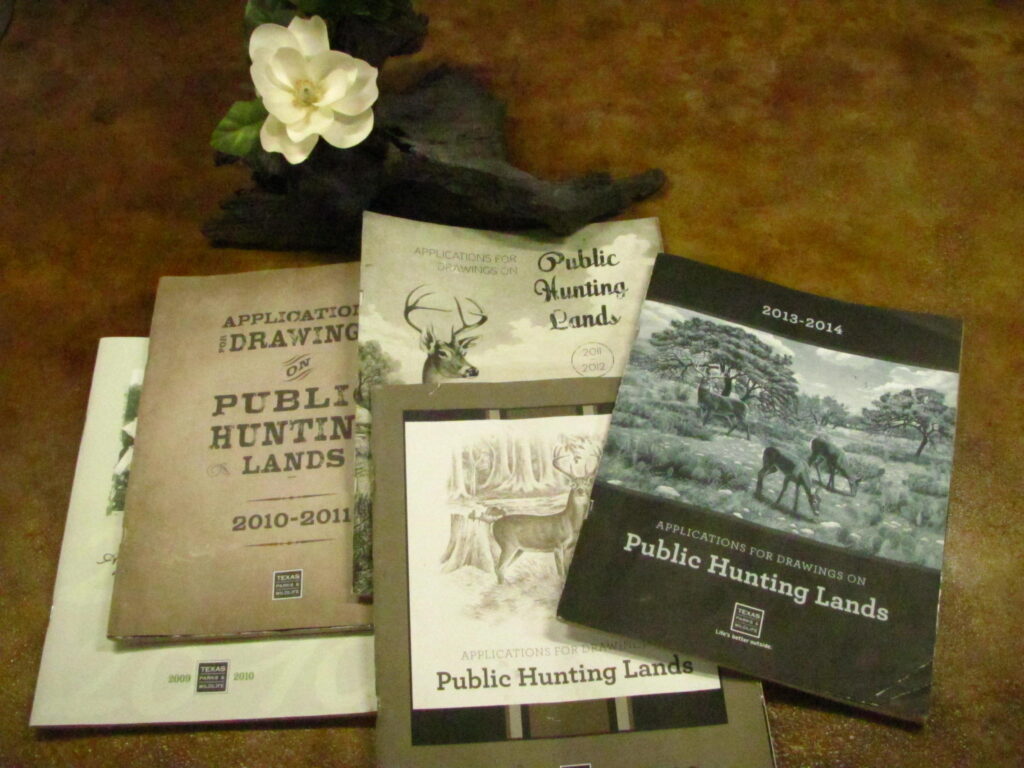
The days of excitement and anticipation of waiting for the hunt book to arrive are long gone. Now all drawn hunts are provided on-line, even the “post card” hunts which used to require mailing in a simple post card to each hunt area for an in-house draw. Today, all hunts are available through the on-line system only. As an added benefit a hunter can apply for as many hunts as they wish in each category. Also a hunter can check the status of their application at any time and quickly learn if they had won a hunt and pay for their permit.
Today the system is much different. As stated, everything is on line. Each year, around early to mid July, TPWD updates the draw hunt site with the new hunts for that year. To apply you only need to review the hunts offered, pick the hunt you want, add it to your cart and then pay the fee. Usually $3 per person per hunt. Some hunts are $10 PP and a few don’t cost anything.
Then you wait.
A day or two after the deadline (on the 1st or 15th of the month) for the hunt a drawing is conducted. If you were lucky enough to win a hunt you are usually notified by email. But the impatient among you, like me, can check the status of all of your applications anytime.
________________________________
So how does each area determine how many permits to give out? WMA’s (Wildlife Management Areas), State Parks, SNA’s (State Natural Areas) and even private land and Federal properties will each have done studies and taken censuses of their deer/target species populations and determined how many animals needed to be/could be taken to maintain healthy numbers.
Some areas, although public land, never allow hunting because the deer numbers are at or below optimal. Some areas are temporarily impacted by weather, fire, or other events which may close hunting for a time while the land and animal populations recover. Other areas may need to thin out their populations to help them through rough years or remove older animals. And, unfortunately, some areas don’t have public hunts because the area manager doesn’t want to be bothered by them. It takes experience and intimate knowledge of each specific area and it’s carrying capacity to decide what would be best.
Once these harvestable numbers are arrived at, formulas, tables and and a bit of magic are used to decide how many hunters could be allowed to hunt and how many animals could be taken so as to not adversely impact the property. All to arrive at one simple number. The amount of permits which will be drawn for that hunt.
But it isn’t even that simple because the style of hunting is also taken into consideration. Most hunts fall into two types. By Compartment, or By Assigned Blind. By compartment hunt areas usually have a bit of flexibility on how many hunters the area can accommodate. By assigned blind areas are pretty much limited by the number of blinds available,
By Compartment
Generally, this means that the hunter (or group of hunters) is given a specific area within the property in which to hunt. A map is provided to detail the boundaries of the area. Usually bordered by roads, fences or other easily recognizable barriers. Hunting is allowed only within these boundaries. This style of hunting is often used on larger, more primitive areas without significant people populations nearby.
Compartment hunting allows hunters to scout out likely areas and set up where and how they prefer. It also allows groups of hunters, families or buddies to hunt together.
By Assigned Blind
With this type, a hunter is assigned a “blind” from which to hunt. This can mean anything from a cattle panel wrapped in burlap, a tripod or a “pop-up” ground blind to a lovely tower blind with sliding windows and carpeted floor.
Whichever the case, it is from this spot, and usually ONLY this spot, That you may hunt. In most cases you are not allowed to leave the blind except to place bait (if allowed) or retrieve a downed animal. Sometimes not even then.
The reasons for this strict control are varied but usually have to do with safety. Sometimes hunters are very close to one another due to the size of the property. Wandering about could allow them to ruin another hunters hunt or unknowingly place them within range of another hunter. Sometimes it is because the hunt is within a populous area and only a few spots are safe to shoot from without putting other people in danger from stray or misdirected projectiles. By setting the area, and even direction, in which shots are taken, safety can be better maintained. And sometimes it is because the hunt manager just wants it that way.
In some cases hunters may actually be taken to and from their assigned blinds by department personnel. This helps to ensure everyone is where they should be and gives a better idea of who is actually out hunting. In the unfortunate event someone is injured or has an emergency their exact whereabouts are known and help can arrive quicker. It is also wonderful when you have an animal down because extra help loading it is available.
Hunt Manager
This is the person who has ultimate say over how the hunt is conducted, what type and number of species may be taken, the type of weapon which may be used and even what times your are allowed to hunt. The Hunt Manager has the ability to modify your permit on the spot. In other words, the Hunt Manager can change how many animals you are allowed to take or add animals they want removed. It is quite possible during orientation you learn that an extra deer may be allowed or some other species not listed on your permit are now legal game. You could easily be there for a deer hunt but find out you could also take an exotic or predator if the opportunity presents. It is also possible to learn that some unforeseen circumstance has suddenly affected the area and your two deer limit just got cut to one. The Hunt Manager has the final say regardless of what your permit states.
Orientation
This is when all the rules and regulations affecting your hunt are laid out. Sometimes this is an informal gathering stating the rules before cutting you loose and other times everyone files into a building for a lengthy PowerPoint presentation. Remember, just because your permit states that such and such animals may be taken, the Hunt Manager has the ultimate say and things can change. Pay attention. It has been my experience that hunters who find themselves in trouble during their hunt could have avoided it if they had only LISTENED during orientation.
Picking where to hunt.
It is not un-common, once every one is checked in, for hunters to do a secondary draw on site to pick their hunt locations. Sometimes you randomly draw for blinds or compartments. Other times the hunt coordinators assign the blinds or compartments to you. Since each hunt area seems to do things differently I won’t go into it too much. The most important thing I have found is what you do after your blind or compartment is assigned.
If possible approach the hunt coordinator/s and ask them about your specific spot. Remember. They know their areas. It is what they do. If they have put on many hunts they also know what other hunters have seen in or taken from your area in the past. Pick their brains. Ask questions. This will help you make decisions on which areas to set up in or watch closely while you hunt.
Standby Positions
On the day of the hunt some areas may still have room for even more hunters. These extra spots can become standby positions if the Hunt Manager allows. Standby positions can come about in many way. After all of the drawn hunters are notified some may choose not to hunt or they don’t pay for their permits in time. Sometimes life happens and hunters can’t hunt after all. Sometimes the area sets aside spots for standby positions. And sometimes things can be re-arranged to allow for more hunters.
However it happens, standby positions are a way to hunt an area you were not drawn for. Most areas publish whether they will allow standbys. Calling ahead is a great way to know if any are available. Otherwise you may make a long trip for nothing. In general you have to show up the first day of the hunt, usually around 10 am. and fill out a standby card. Then, after all of the drawn hunters are checked in, the hunt coordinators will know how many spots are still open. If there are less standby applicants than spots everybody gets to hunt! If there are more applicants than room then a quick on-site drawing is held. If you are one of the lucky ones, you get to hunt! You will still have to pay the permit fee like everyone else. Again, check the website or call the area ahead of time to see how this permit is paid. Some areas will not accept cash.
__________________________
Annual Public Hunting
This is different from the public hunt draw system detailed above, although some properties may participate in both types. Texas public hunting lands are open to each person who purchases an Annual Public Hunt Permit (currently $48). Once you have purchased this permit over a million acres of public land are open to you.
But you don’t just get to run out and start hunting. You are gonna need to know where all of these glorious places to hunt are. You are going to need… a treasure map!
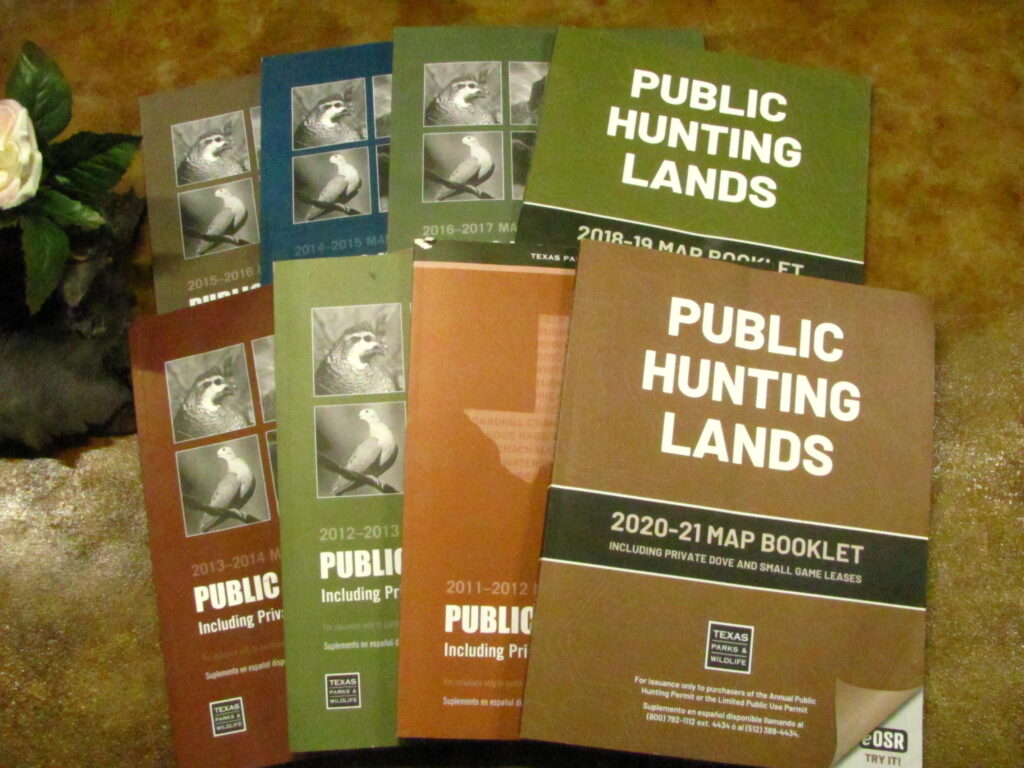
The most important tool for this purpose is the Public Hunting Lands map booklet. Sometimes you are given this when you purchase your permit. More often than not it will be mailed to you. But don’t despair. You can find everything you need to know on-line.
Looking over the hundreds of properties available and trying to pick one can be a bit overwhelming at first. But TPWD had made it easy. By using the tables and indexes in the booklet, or the search feature on-line, you can quickly narrow down your choices by type of game and area. If you know what you want to hunt and about where you want to hunt it then picking the right property is fairly straightforward.
But not so fast…
Each hunt area has its own specific rules. Deer or pigs may be allowed but only with a shotgun or with archery equipment. Baiting may or may not be allowed. Once you have narrowed down your area be sure to check out the details specific to that property.
Sign In
Most APH properties do not have on site staff. To help keep track of who is using the area, on site registration (OSR) may be required. Sometimes this is in the form of a slip of paper, available on site or in the back of the map booklet, deposited into a box. Some areas allow sign in by electronic means (eOSR). Once again the map booklet will state whether registration is necessary or not and in what form. Either way make sure you register. Otherwise, APH or not, you are there in violation.
E-Postcard hunts
These hunts bridge the gap between both drawn hunts and and annual public hunting. They are “drawn hunts” in that hunters utilize the on-line site to apply and the drawing is done through that system. But, unlike most draw hunts, they don’t charge a fee if you “win” a permit. You do, however, have to possess an Annual public Hunting Permit to apply.
_________________________
I hope this overview helps you feel a bit more confident in using the Texas Public Hunting system.
Check out this link to read about our adventures in the Texas Public Hunt System.

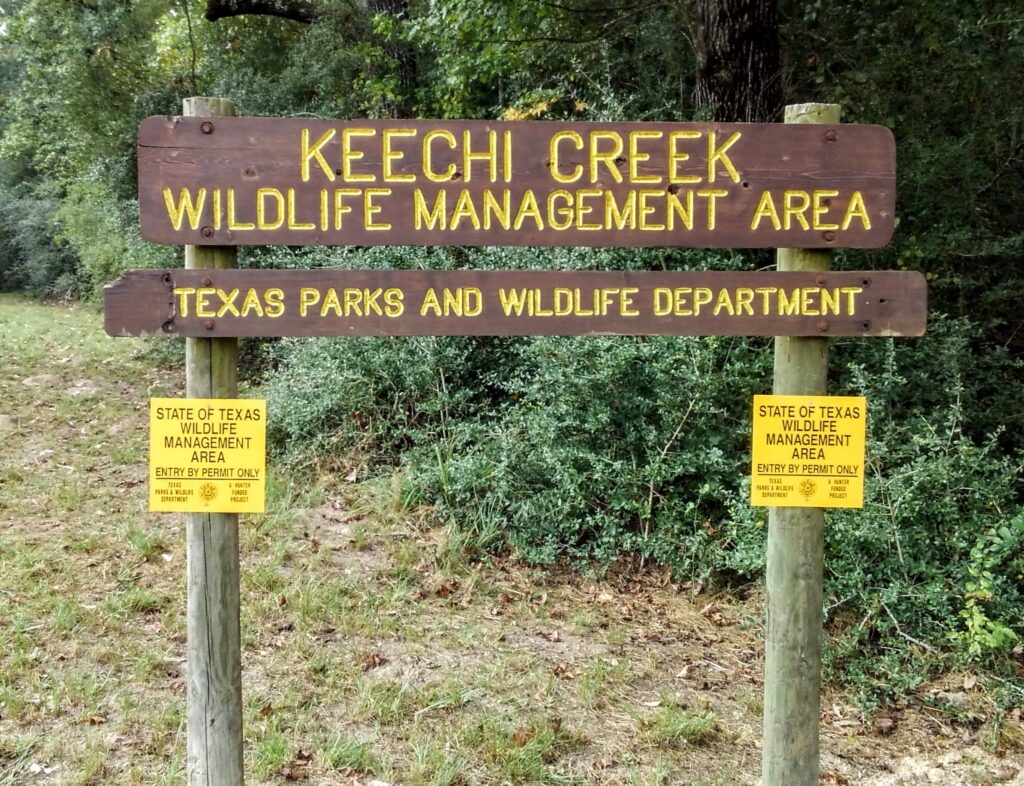
Of all of the Texas Public Hunt systems Wildlife Management areas, Keechi Creek WMA holds a special place in our hearts. It was at Keechi Creek, about 25 years ago, that Steve and I started our public hunting adventures.
Without any property to hunt of our own I looked for public hunts to scratch my bow hunting itch. Neither of us had ever gone on a Texas public hunt but were willing to give it a try. After many hours of research I decided that we should try to go standby at Fort Boggy for their bow hunt. So we spent days packing and then headed North to put our name in the hat, or bucket, for any available spots.
Unfortunately, when we arrived at Fort Boggy we were disappointed to hear that they had no open positions. But, here is where everything changed. The hunt co-coordinator told us about Keechi Creek WMA, gave us directions, and said that they usually had openings. With time running out we followed the winding back woods roads and found ourselves at the check station just in time for the draw. Several compartments were available and we were in!
That hunt was a blast and both of us had opportunities at deer. Steve even stalked up on some does but couldn’t get a shot. For the next several years we hunted Keechi and usually had opportunities. Steve shot his very first pig there.
But times, managers and management styles changed and we didn’t go back. One of our last hunts there, a waterfowl hunt, actually ended on a very sour note when the hunt coordinator threatened to call the sheriff on us for trespassing because we were almost late (11:48) getting out of our compartment. Never mind that we had to fix the gate that had broken hinges and wouldn’t close properly. Leaving it open wasn’t an option because it kept cattle out of the area. And the permit said our shooting time was until noon. He was in a hurry to get home, obviously hated conducting the hunts, and irritated that he had to work out in the middle of nowhere and we were slowing him down.
As someone who loves rules and regulations and could read perfectly well that we were allowed to hunt until noon I took his anger personally. During orientation he never once stated that we needed to be off of the WMA by noon or we would have started back even sooner. I know that what the hunt manager says supersedes anything published but he never once told us to be GONE by noon. When he started in on us and said he was about to call the sheriff and have us cited we were not happy. I think we hunted there a couple more times but that incident really stuck in my craw. So we just quit going.
Until now.
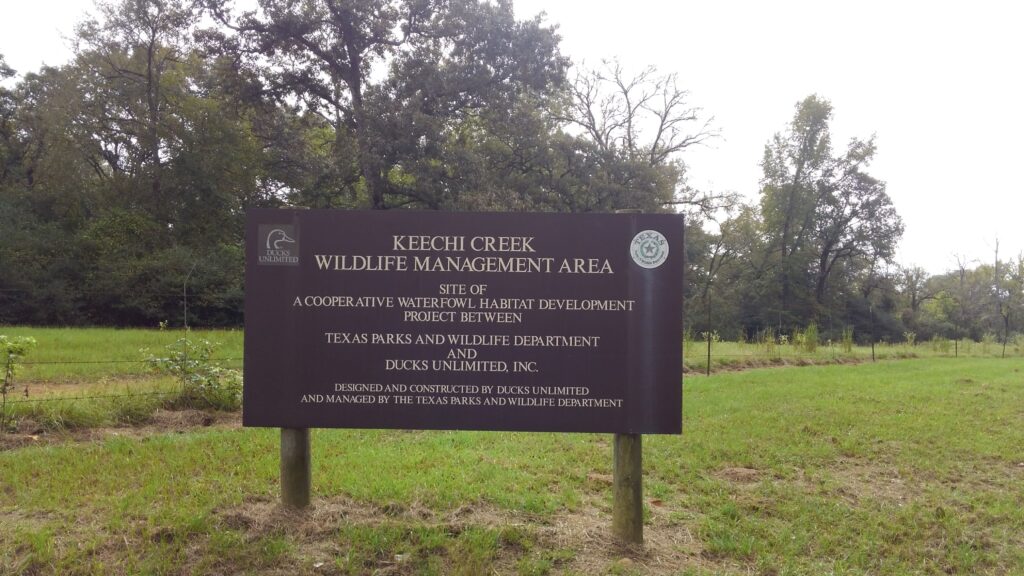
This year (2020) we were drawn for the E-postcard archery only deer hunt. Since we had not been drawn for any other hunts this would be our only guaranteed opportunity this year. It was with mixed feelings that we one again headed to the thick, post oak savannah, of north east Texas.
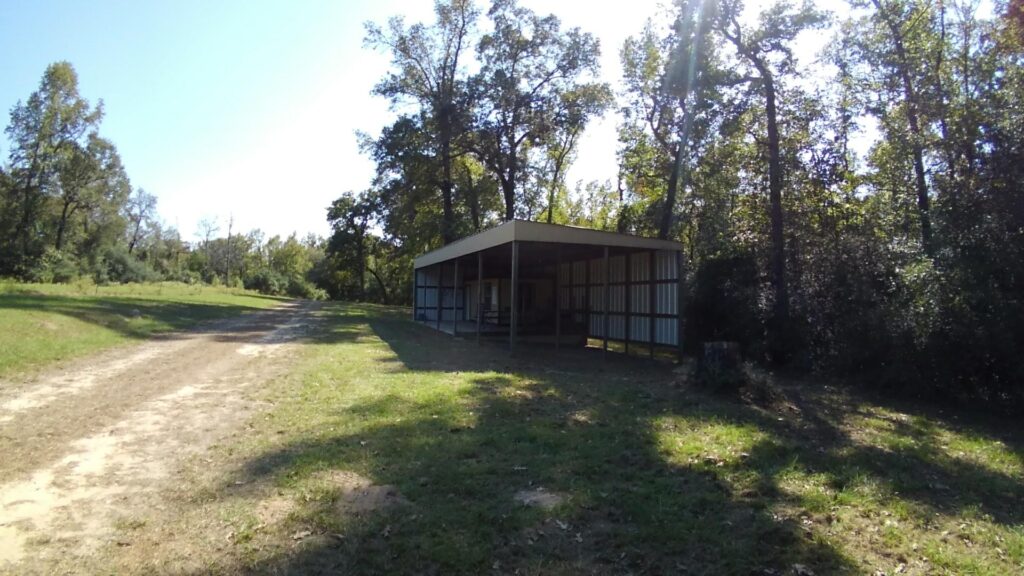
There were some changes from the Keechi Creek of our past but, in truth, it was much the same. The check station was now much larger. There was a simple cleaning station and the primitive camping area was a bit larger.
Check Station
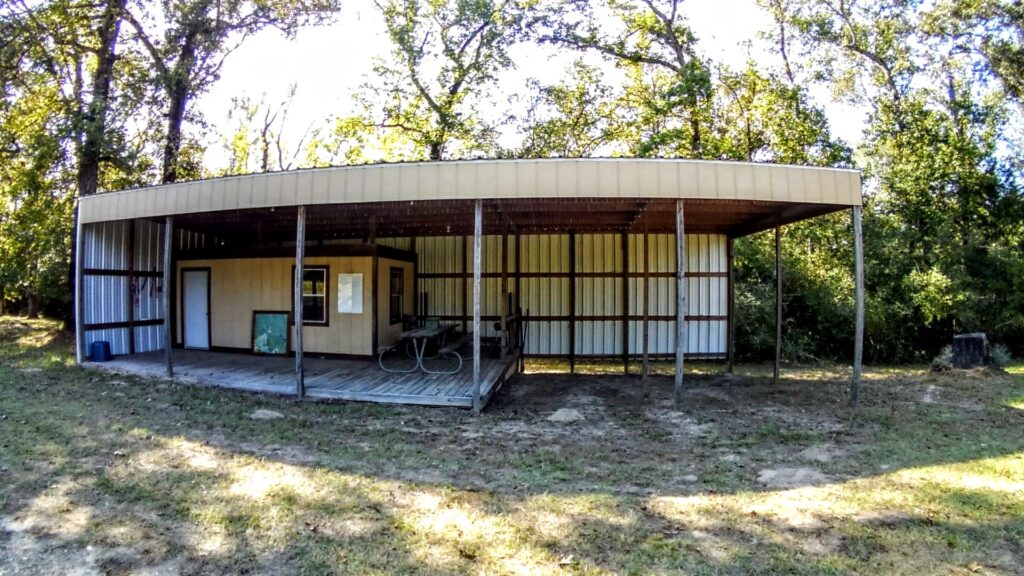
Cleaning station
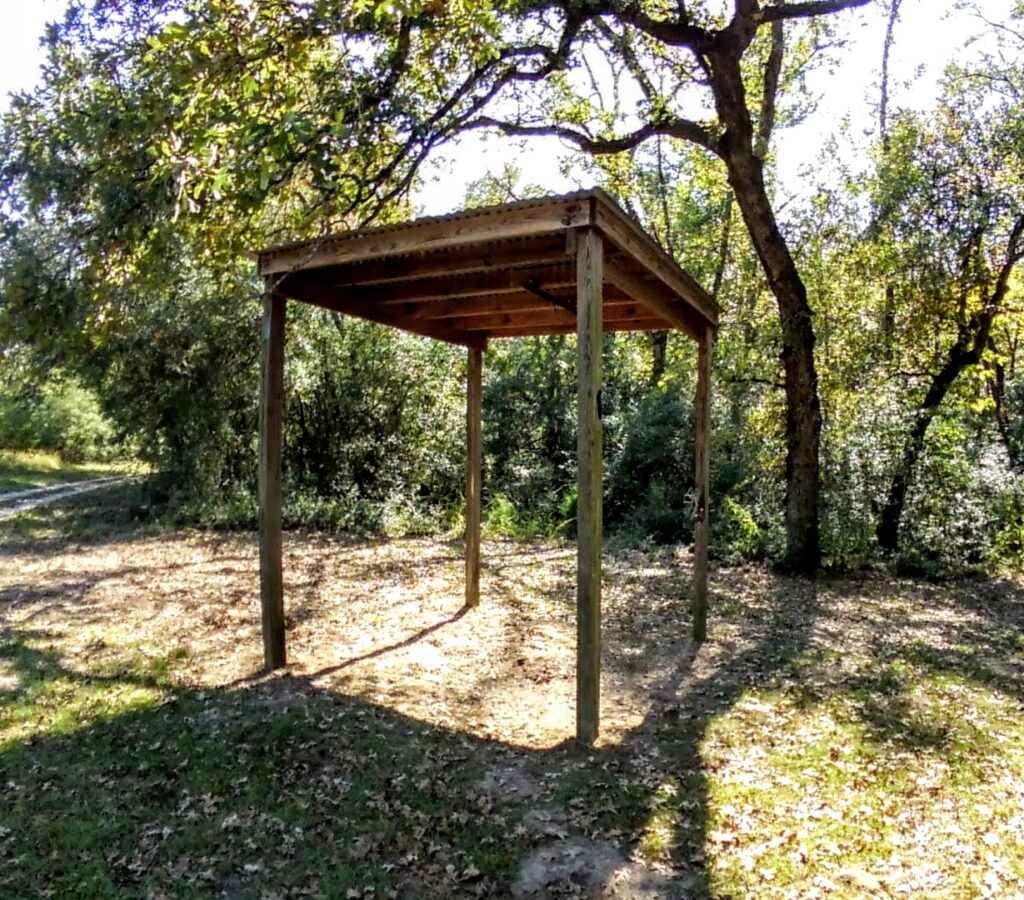
Primitive camping.
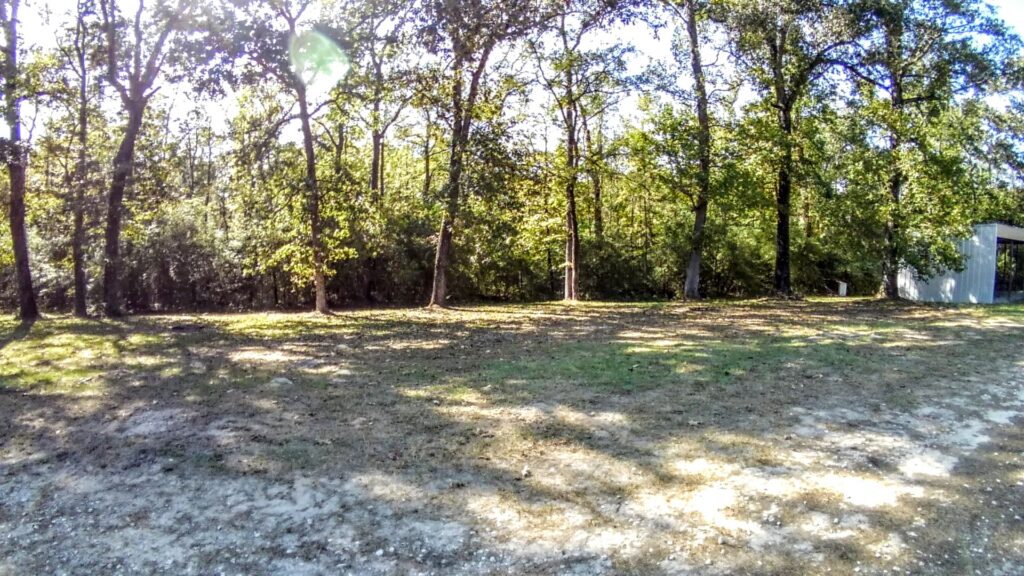
A note about the camping area. This is truly a primitive camp. There is no electricity, no water and no restroom. Some simple fire rings are available and that is about it. It you like “roughing it” then this is absolute paradise. There are even hoards of mosquitoes to sing you to sleep. Several hunters chose to camp during our hunt and they seemed to enjoy it. We chose to do our camping at the Days Inn in Centerville.
Another change from our previous time was that you log in your own deer. Detailed instructions were given during check in about this process. It seemed pretty straight forward.
In addition, instead of assigning compartments, every hunter had free reign of the entire area. Most of us communicated where we would likely be so there were no conflicts. I did hear of one hunter setting up near another (in the dark) but no one was mad and everything worked out.
While scouting Steve even found the very first tree he had ever bow hunted out of. He was happy to see it still standing. It is a bit larger now and a little old and worn but aren’t we all? That large oak right there in the middle.
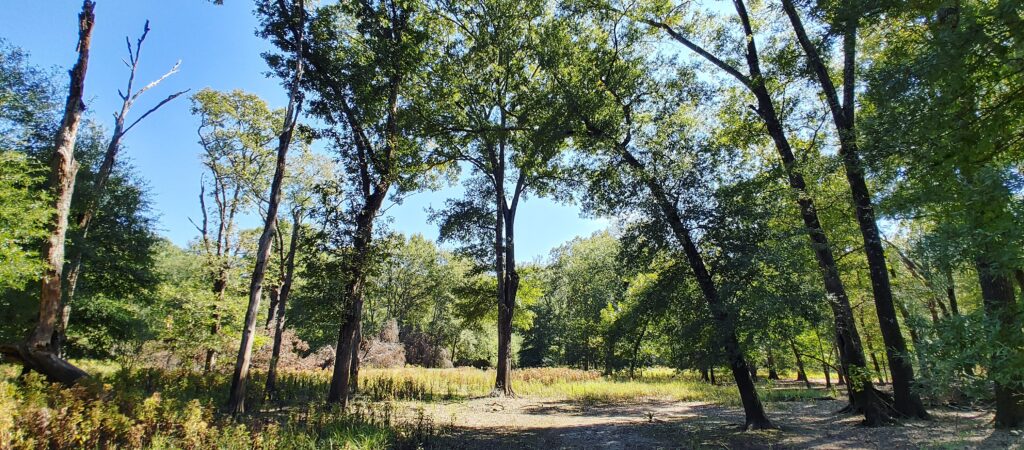
During our hunt we saw a few deer. Most seemed in poor shape for some reason. We set out several game cameras and caught many thin and skinny deer on camera. Even the pigs seemed starved. Perhaps this was due to the floods? Either way we didn’t really want to shoot them because there was no meat on them.
As seems to be the case the only deer we had come in during shooting hours was illegal. It was also in the best shape. This young fork horn is one lucky deer.
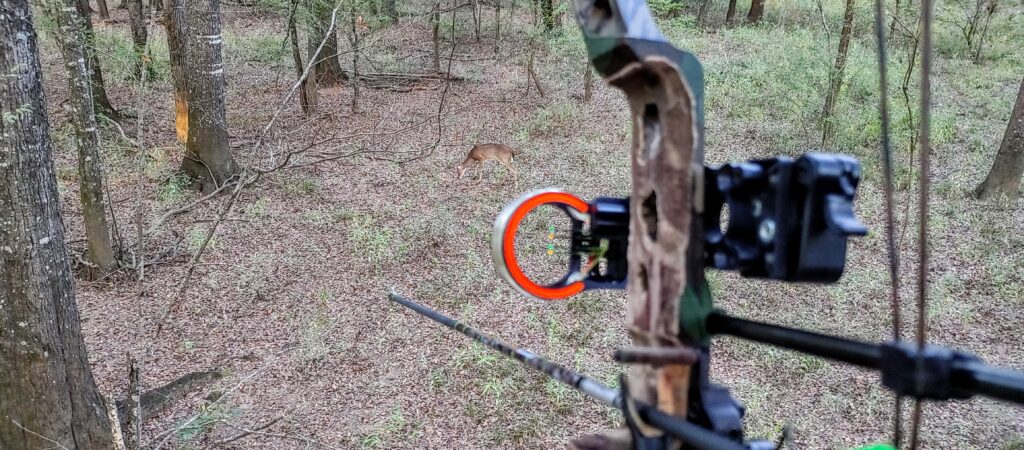
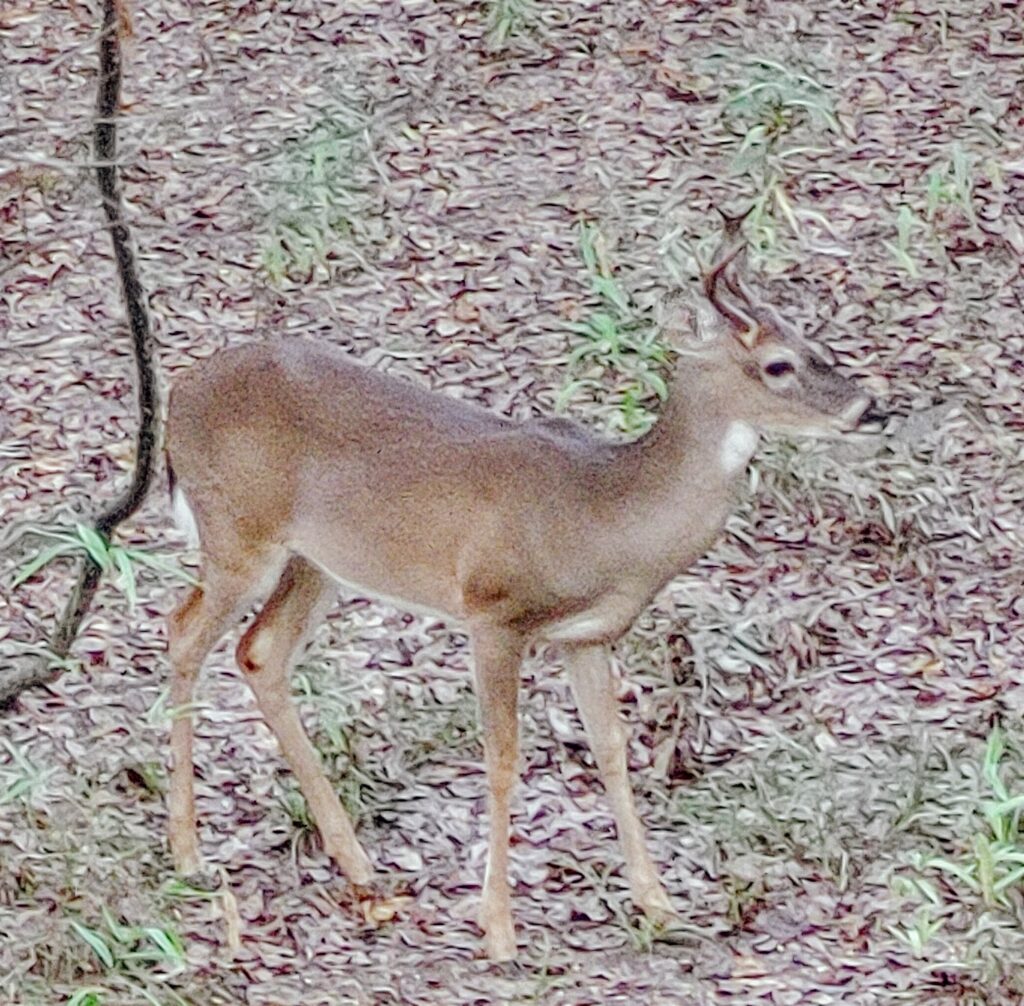
In truth, we didn’t even have many deer show up even at night and the ones that did were pretty skinny. Including the pig. We heard from another hunter that had a chance at a doe but passed because she was so thin.
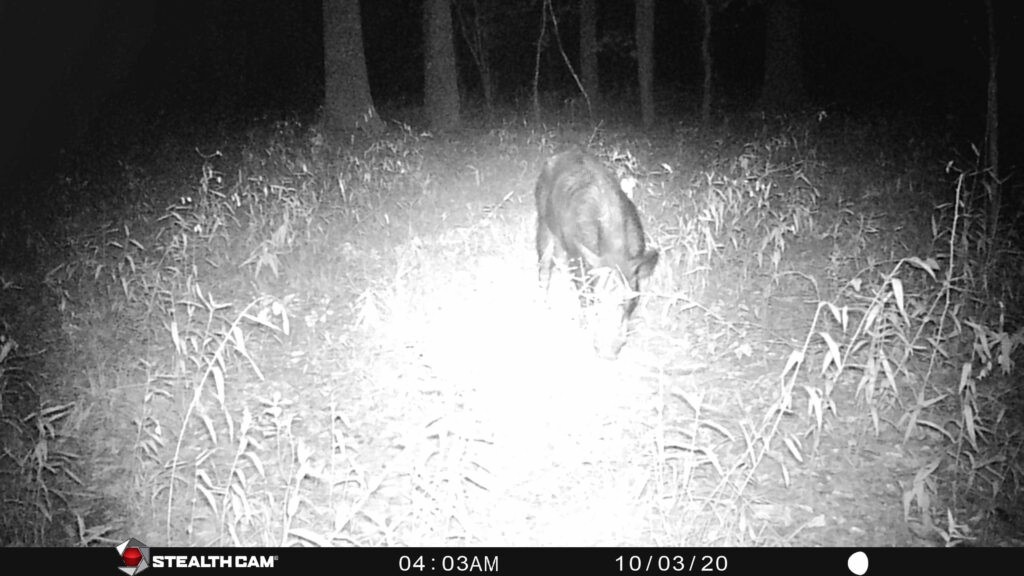
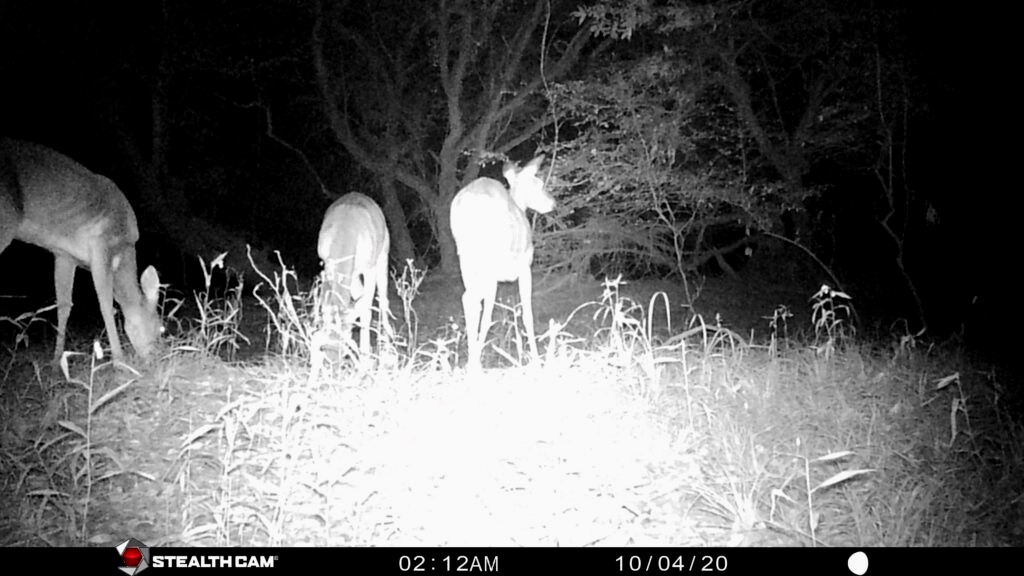
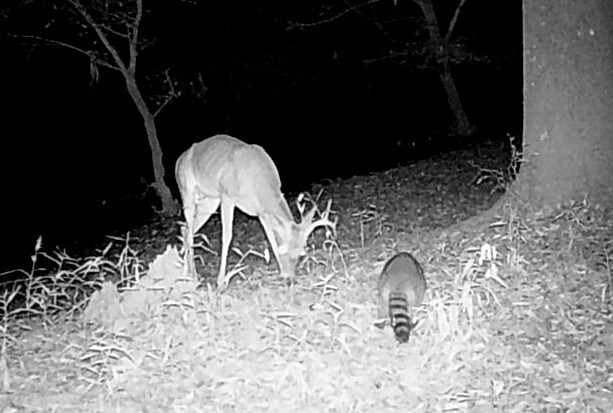
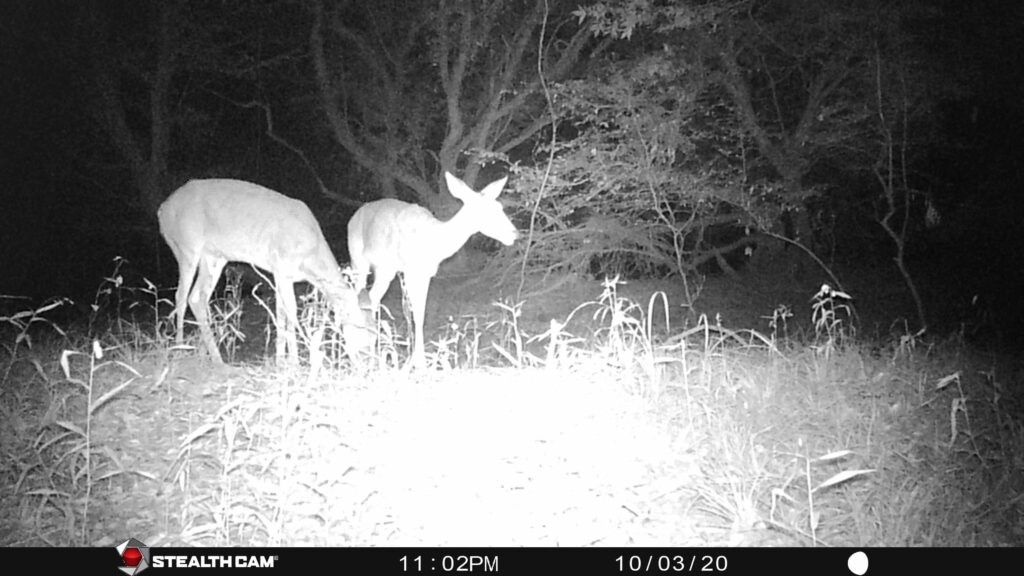
Note the back bone and hips. His neck is the fattest thing on him.
If you are thinking of trying your luck at Keechi Creek here are some observations. The main road was mostly drivable. There were many very large downed trees which made navigating the other roads a challenge. We were there between rains so, while there were large ATV eating puddles, most could be worked around. An ATV is pretty much a necessity if there has been any amount of rain. Otherwise you will have a long hike to get to the better areas.
The mosquitoes are VICIOUS! The thermacell only thins them out a bit. They are so thick you can see large dark clouds of them. Maybe they are why the deer are so skinny?
Make sure you have good directions. Google Maps will flat get you LOST. The road to the area is mostly dirt and sand. If you are not driving a tan vehicle, you will be! Also, remember to blow out your air filter after the hunt.
While the hunt coordinator was only there for our first day he was very friendly and helpful. He answered all of our questions and made sure everyone was happy before he left.
While our hunt was not exactly successful, in fact only one hunter of the twelve who hunted took any deer, the area is beautiful. Large oaks predominate the flats and numerous creeks, washes and gullies crisscross throughout. Evidence of the recent flooding and high winds was everywhere.
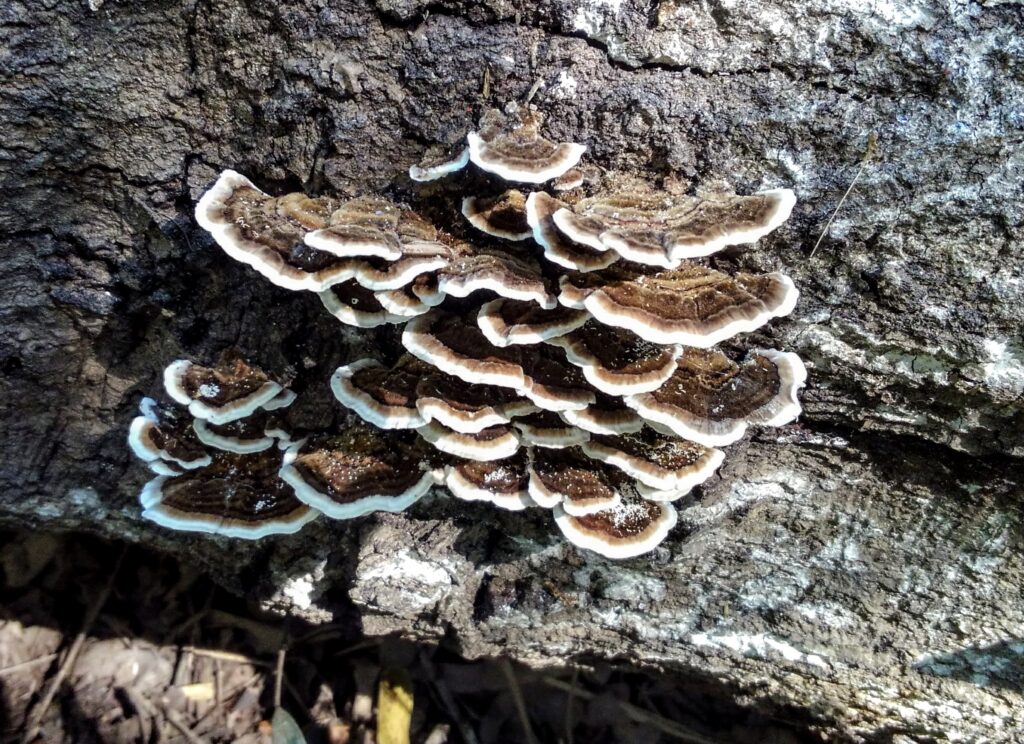
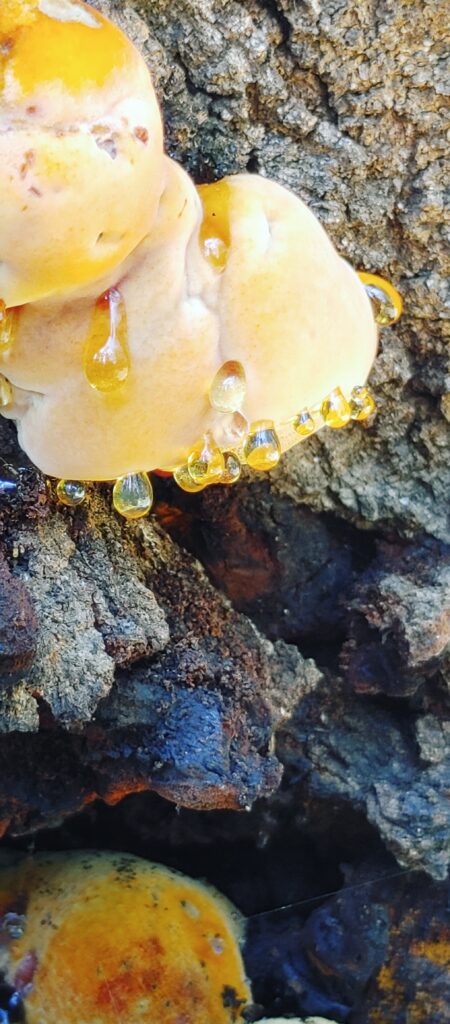
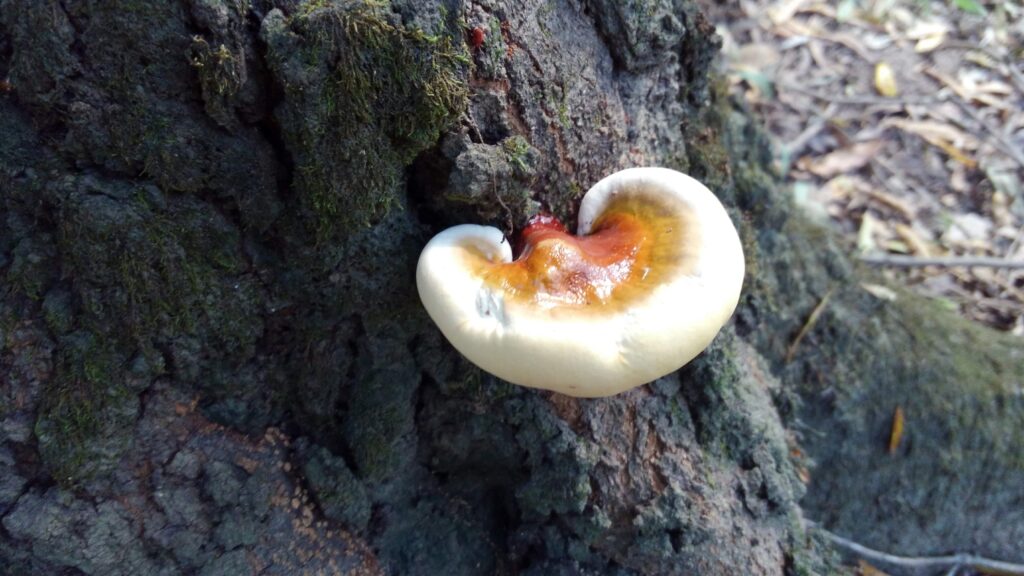
Because of all this wetness and downed wood mushrooms were everywhere. As an aspiring forager I loved seeing the diverse variety.
Turkey Tail
(Tremetes Versicolor)
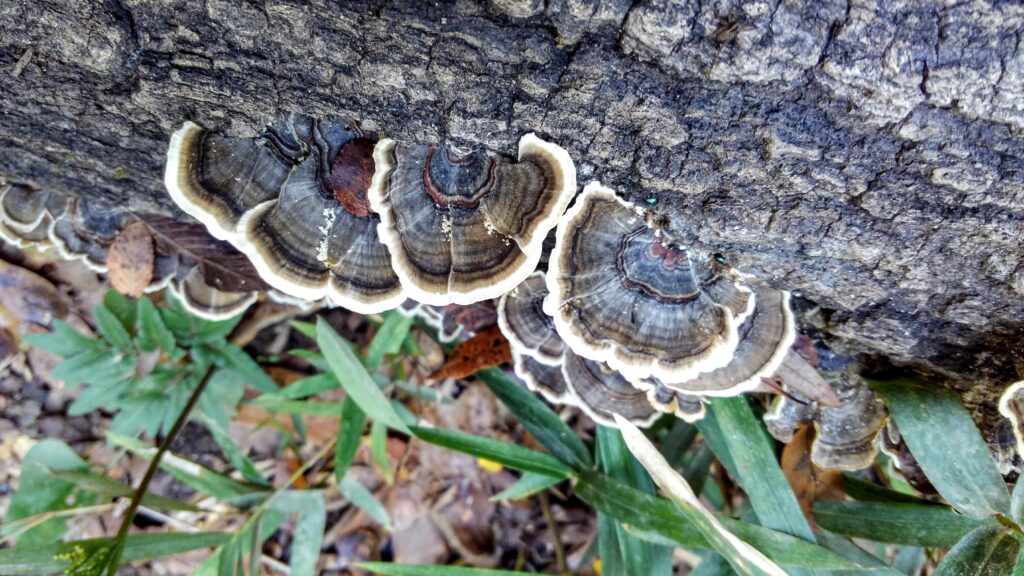
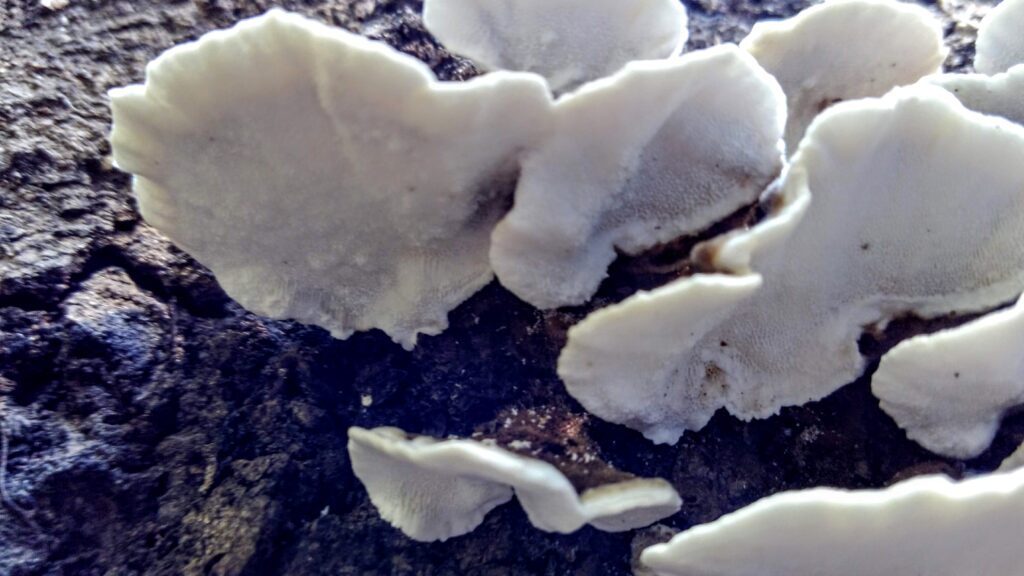
A large group of Inonotus quercustris
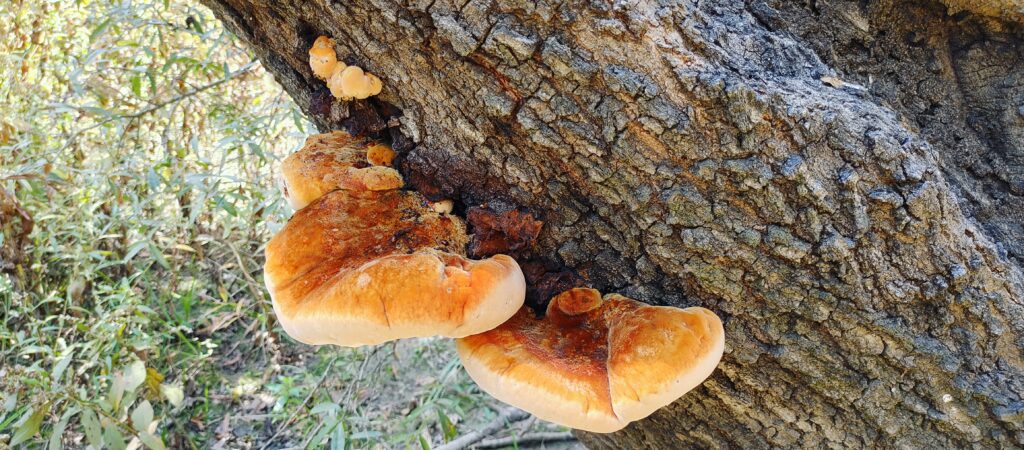
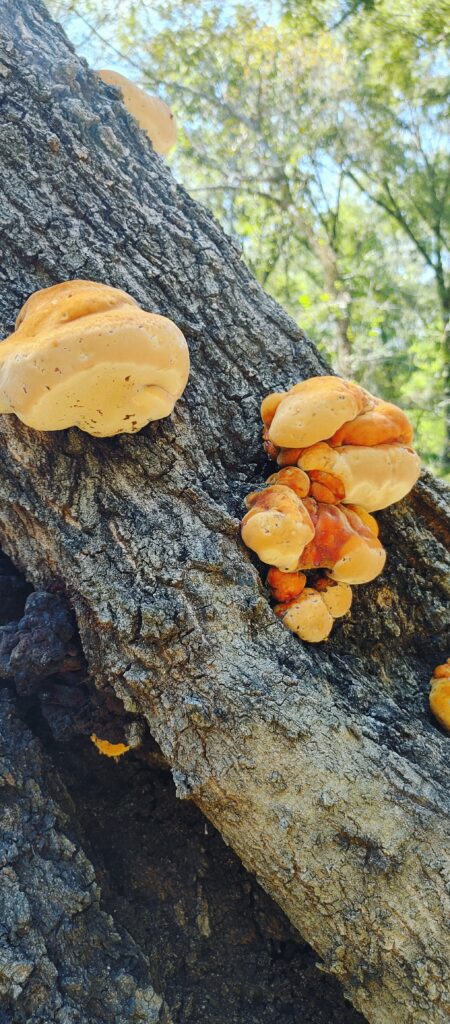
Reshi (Ganoderma sp.)
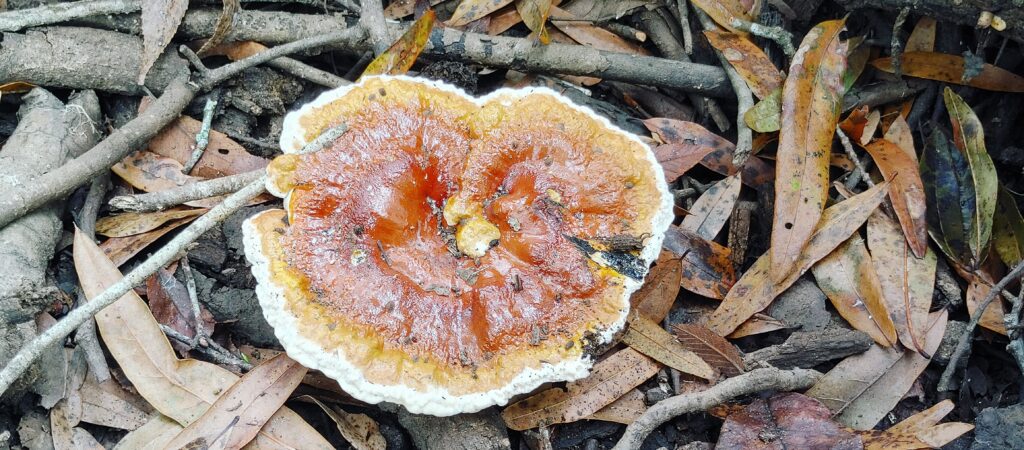
Probably Russula sp.
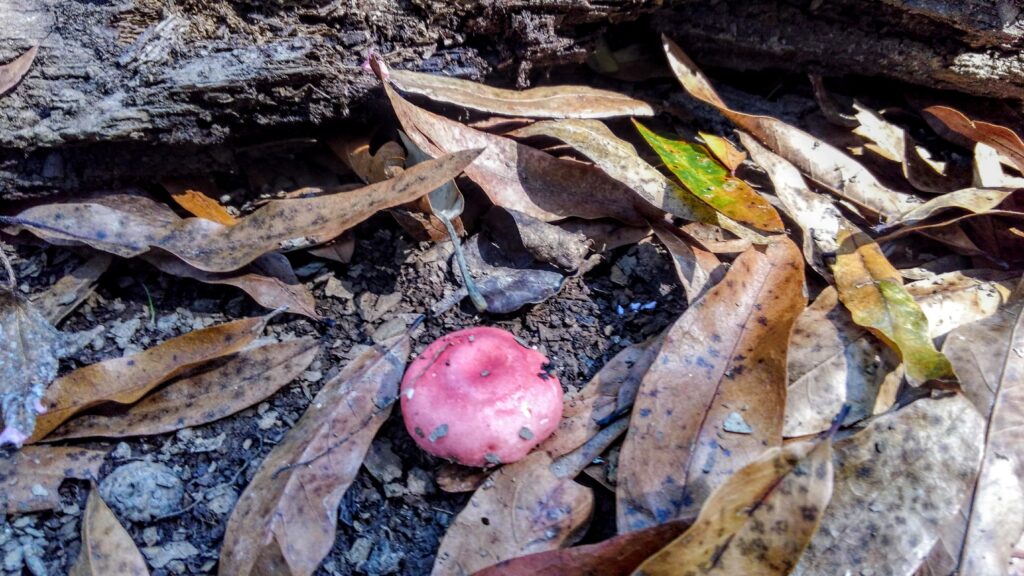
Unknown.
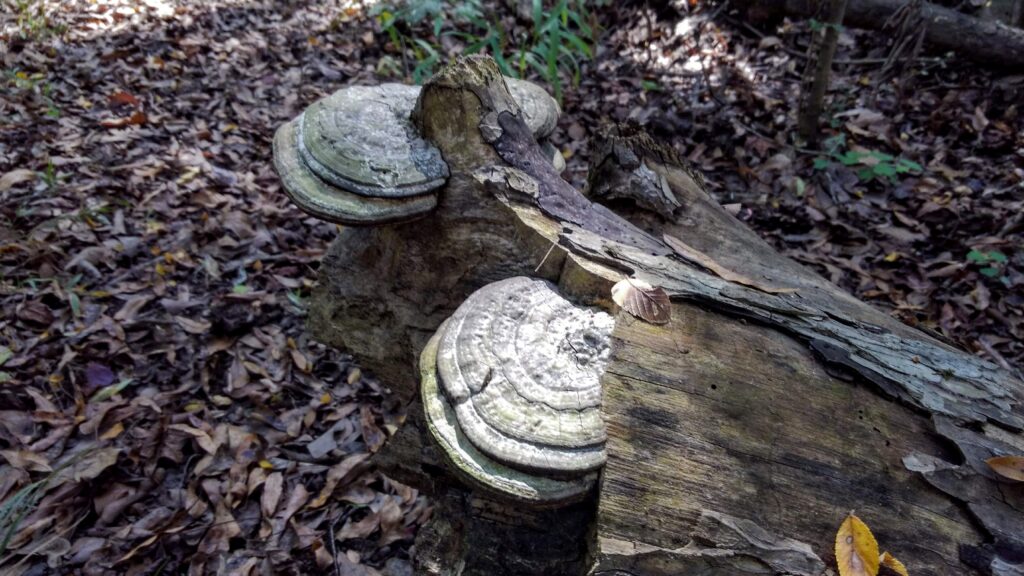
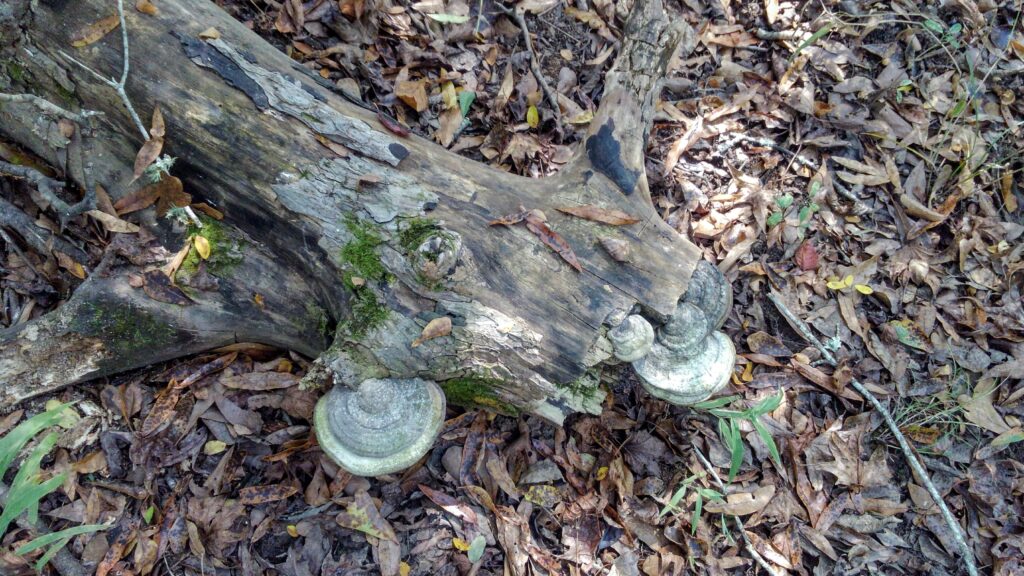
Very old Artist Conks (Ganoderma Applanatum)
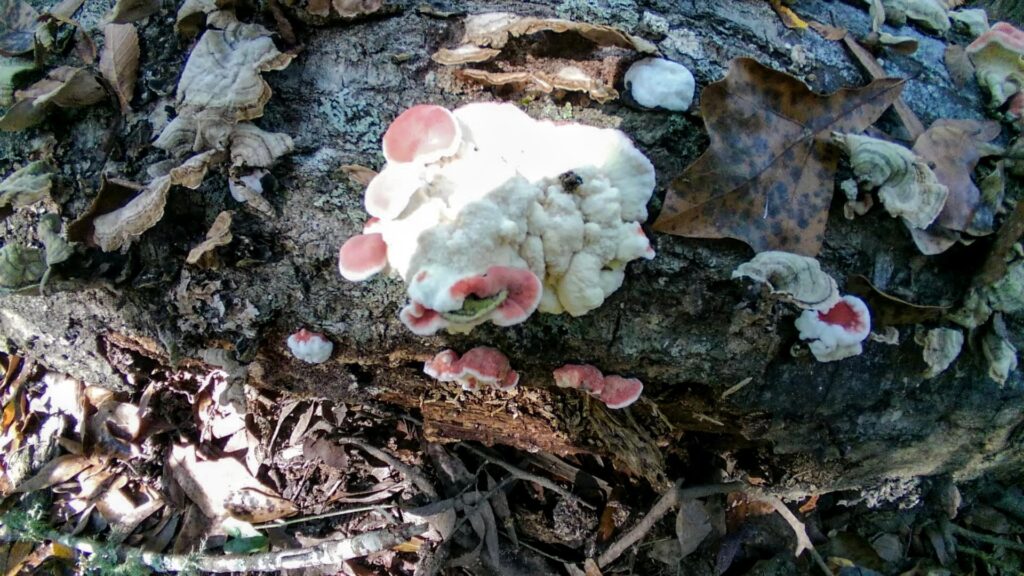
Probably (Merulius Incarnatus)
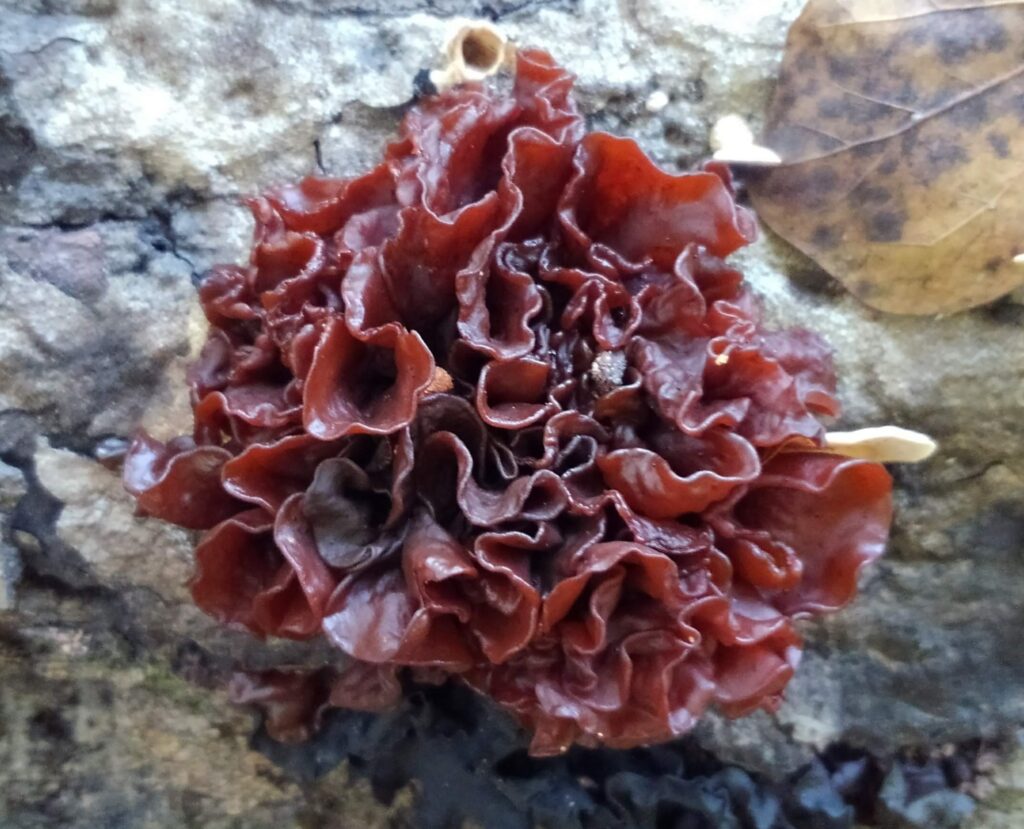
Leafy Brain Fungus
(Tremella foliacea or Phaeotremella frondosa depending on who you ask)
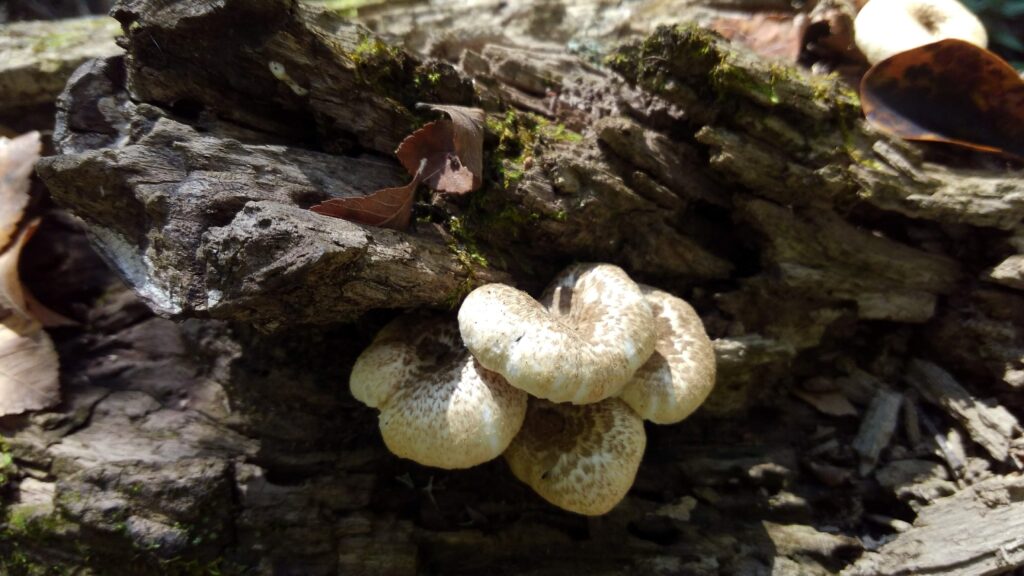
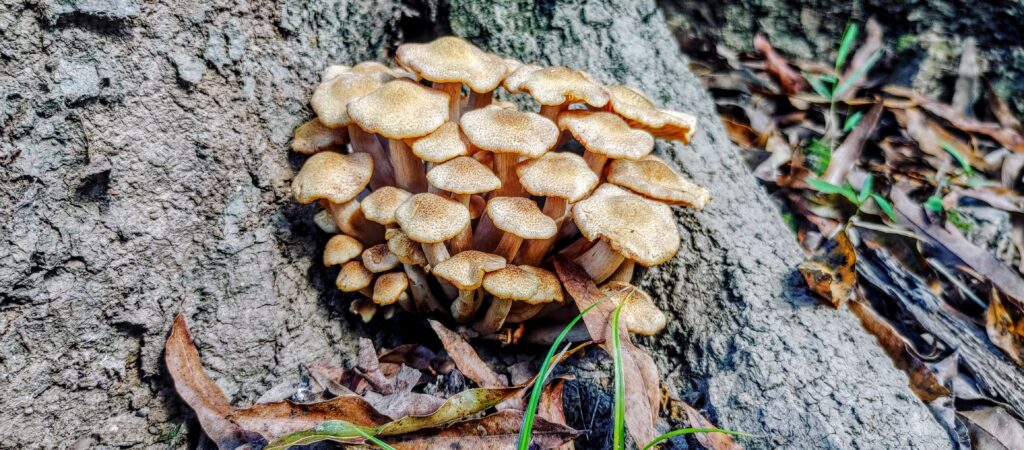
Ringless Honey Mushrooms (Armillaria Tabescens)
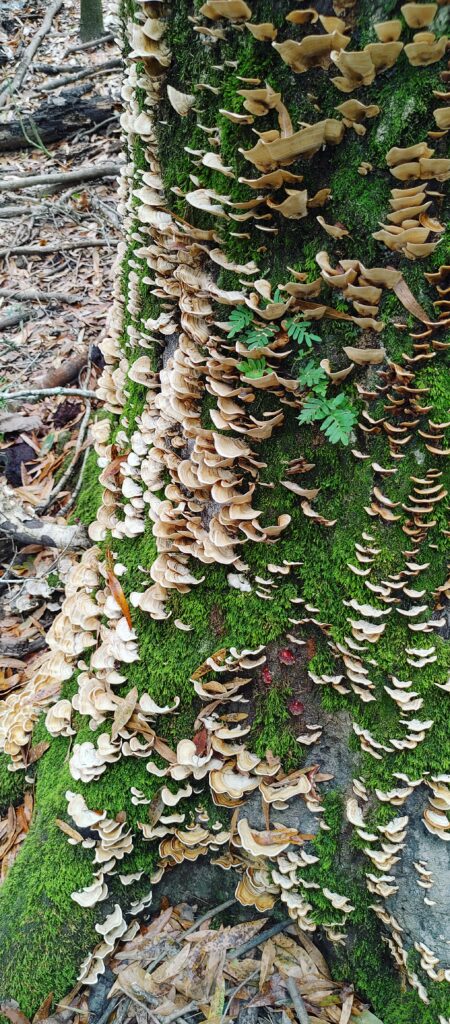
Stereum Ostrea
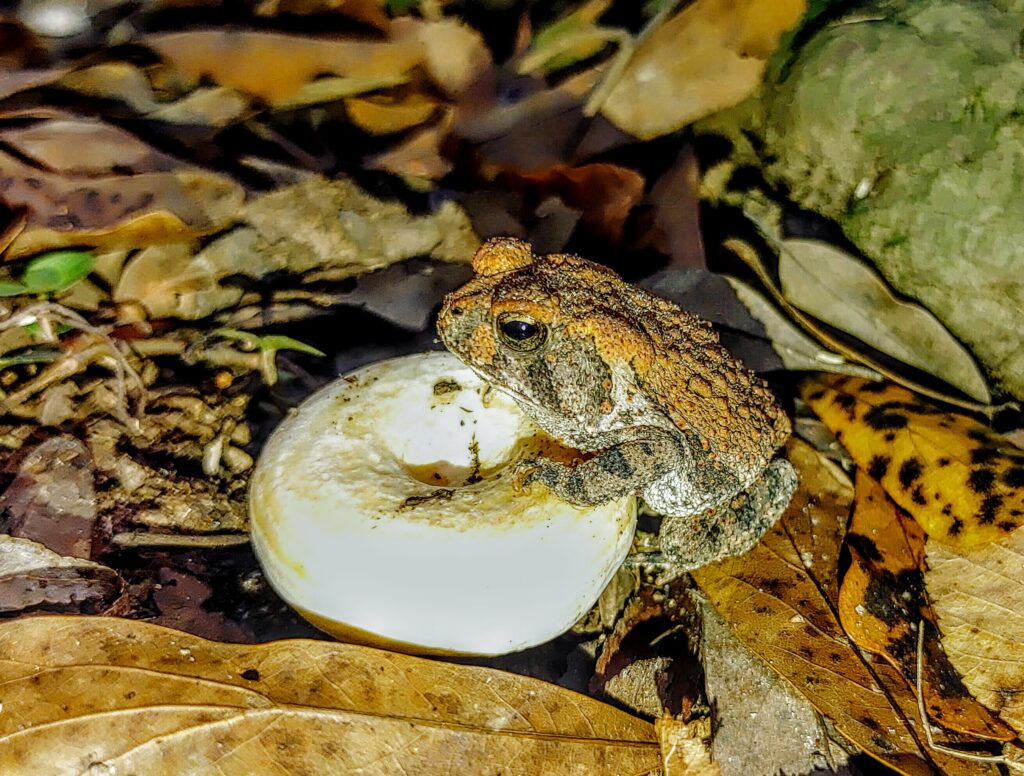
East Texas Toad (Anaxyrus velatus or woodhousii x fowleri)
I saw that Elephant Mountain WMA had over 3,500 applicants last year and that there were only 4 permits available this season. Chances of us drawing two of those 4 available permits was beyond slim. Perfect. So, with minutes to spare, I completed the on-line form and sent it on its way.
A few days later I opened up my email to discover that we had miraculously been picked for the Elephant Mountain hunt! This would be my first mule deer hunt in over two decades and Steve’s very first try at a mule deer. Not to mention getting to see a new part of Texas. We were excited!
To add to the specialness, the first day of the hunt would be on my birthday.
Elephant Mountain is located in West Texas about 20 miles South of Alpine, Texas. Since Alpine was so close we elected to stay there instead of tent camping on the WMA.
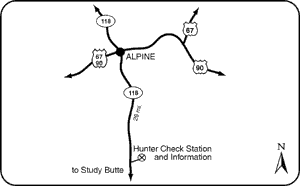
The trip to Elephant Mountain would take us about 10 hours. Instead of driving it all at once we left a day early and drove to Sonora, Texas and stayed the night. The next day we drove the rest of the way to Alpine. The country there is rugged but beautiful with lots of wildlife.
Of course, since we drove all that way, and Marfa, Texas was only a few miles further, we had to check out the Marfa lights. That side adventure is here.
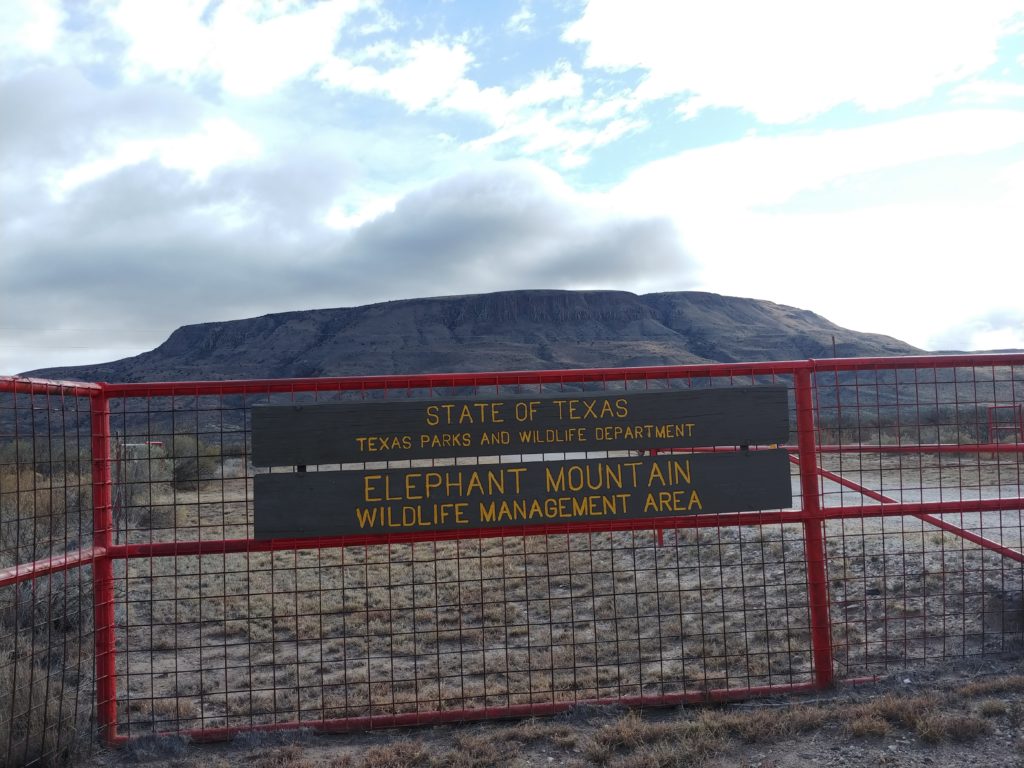
Elephant Mountain WMA consists of over 23,000 acres. The mountain itself rises nearly 2,000 feet above the surrounding area. Ground level here still sits between 4,800 and 5,300 feet above sea level.
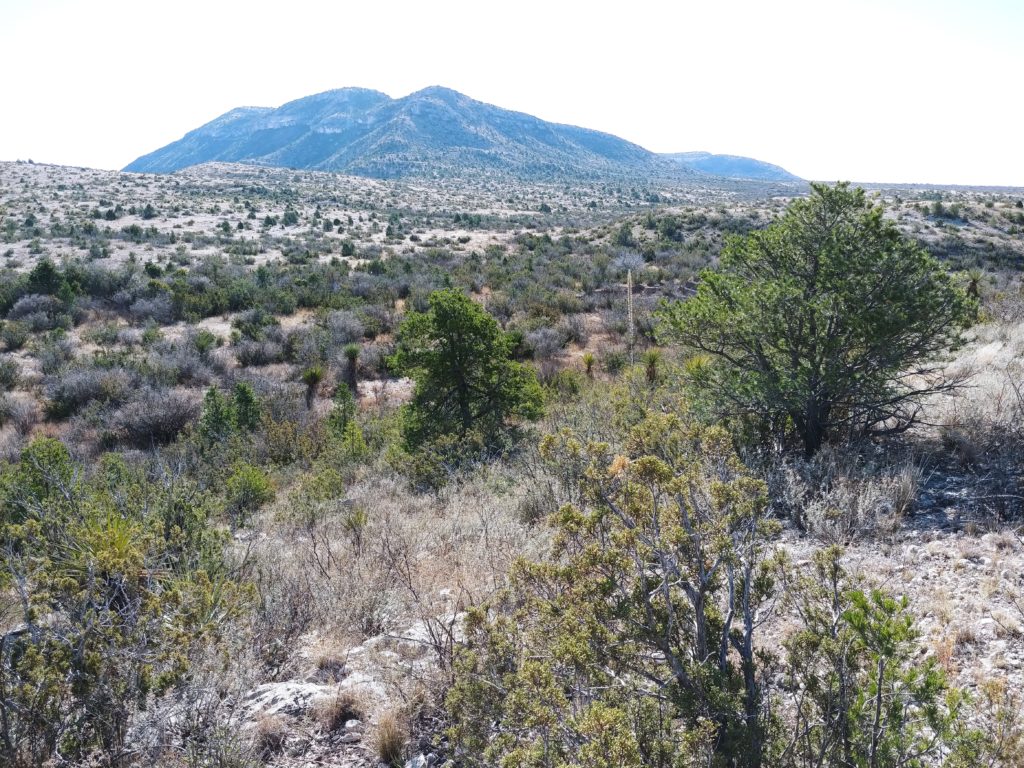
Vegetation is mostly desert scrub and grasslands with juniper, pinyon and oak trees scattered around and in larger pockets.
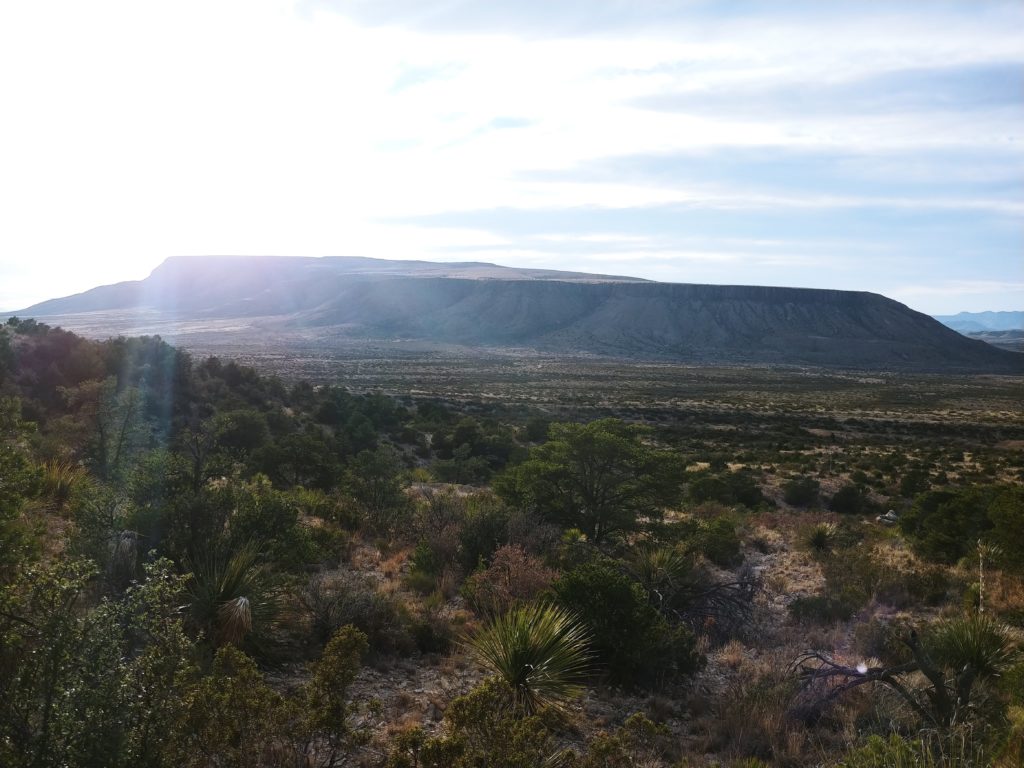
The first day of the hunt was clear, almost painfully bright, and only a little windy. After checking in we were assigned our compartment. Dewy Stockbridge, the Hunt Coordinator, told us that had seen a couple of decent bucks working a doe in our compartment. He showed us on the map where they were last seen and wished us the best.
For this hunt we would each be allowed one buck each. It could be a whitetail buck with no antler restrictions, or a mule deer buck. The mule deer had to have an outside spread of at least 18 inches or have two points or less on one side. We could also take one elk each if we happened to come across any. In addition we were allowed unlimited feral pigs and coyotes.
Our compartment was located on the “back side” or north side of Elephant Mountain. It was about a 20 minute drive through back roads, some of them pretty rough, to get to it.
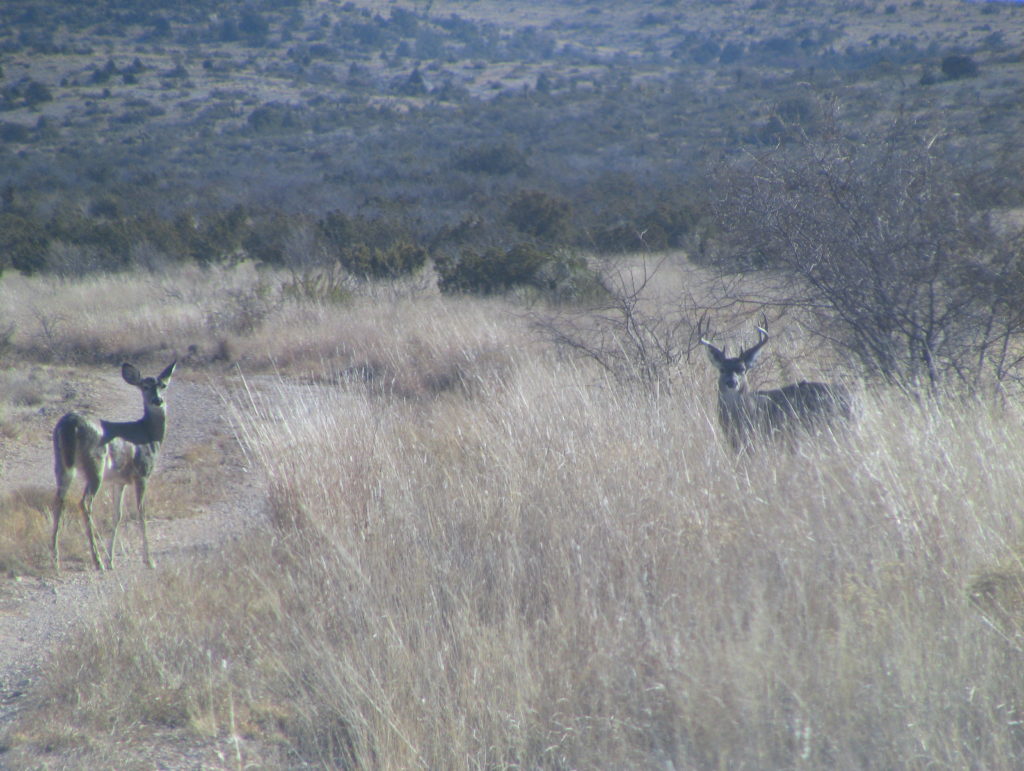
Right after entering our compartment we came across these two whitetails. On almost any other public hunt that buck would be tempting and we could have easily taken him. But we were looking for mule deer bucks so this guy got a pass. Still…
Tempting.
Video
Once we got to our area we drove to the furthest corner near where we thought those bucks had been seen the day before. Just as we were about to make a decision on where to go next Steve spots something BIG cross the road. We parked the truck and bailed out to see what it was he had glimpsed. After cresting a ridge we saw a very nice muley buck on the next ridge over. He was on a mission and walking steadily away. I tried to get closer and actually got within shooting distance twice but I was so winded from climbing the ridges I couldn’t steady my gun well enough to make a shot. And there was no way I was going to try a marginal shot or fancy neck shot. We tracked that buck for over a mile, up and over rocks, hills and ridges. He just wasn’t stopping.
I made the decision to go back to the truck and try to get in front of the buck. The truck was pretty far away at that point and we were tired. Remember, ground level there is almost a mile above sea level in places. For us coastal flat-landers the going was… well… slow.
We got back to the truck, eventually, and checked the maps to see if we could find a road near where the buck was heading. Since it had taken so long for us to return there was no telling if we would be able to find the deer again. We picked a road that looked likely and scraped our way in the general direction the buck was last seen.
Note to future hunters:
Take a 4WD truck that you are not worried about the paint job on. Just sayin’.
After the obligatory number of dead ends and wrong turns we finally found a road that looked to head in the general area of where we thought the deer might have been going. It was pretty much all guess work and prayers at that point.
Was I ever surprised to top a ridge and see the buck only a couple hundred yards away feeding in some scrub. Somehow we had stumbled across him again.
We parked the truck and began working our way into the wind to get into a better position to take a shot. The buck was slowly foraging up a ridge and unconcerned about our presence. He knew we were there, he just didn’t care. I closed the distance to about 75 yards but had to wait. I wanted a nice clear broadside shot and most of the time he had his hindquarters toward me. He finally turned and I let him have it. The shot was good!
At the sound of the shot the brush around the buck exploded with deer. Three other smaller bucks and a doe we hadn’t even seen came boiling out. They boinked their way to a distant hillside and disappeared.
Yep, I said boinked. Mule Deer have this way of pogo-stick hopping that is almost comical. It’s like they have springs on their feet. I’m telling you they boinked away. I swear I could hear it. Boing, boing, boing.
My buck ran about 50 yards before crashing. When we got to him I looked over to see a road not twenty yards away! And it was a good thing too because that deer was BIG. We are used to dealing with deer a bit smaller than this guy. A 100 pound buck was considered huge where we usually hunted and this fellow was pushing 200. We were not looking forward to dragging him all the way back to the truck. Now we wouldn’t have to. I gutted him then Steve brought up the truck. It still took both of us and a lot of grunting to load him up but we got it done. I had just killed my biggest mule deer buck ever! This was the first day and we had only been hunting about three hours.
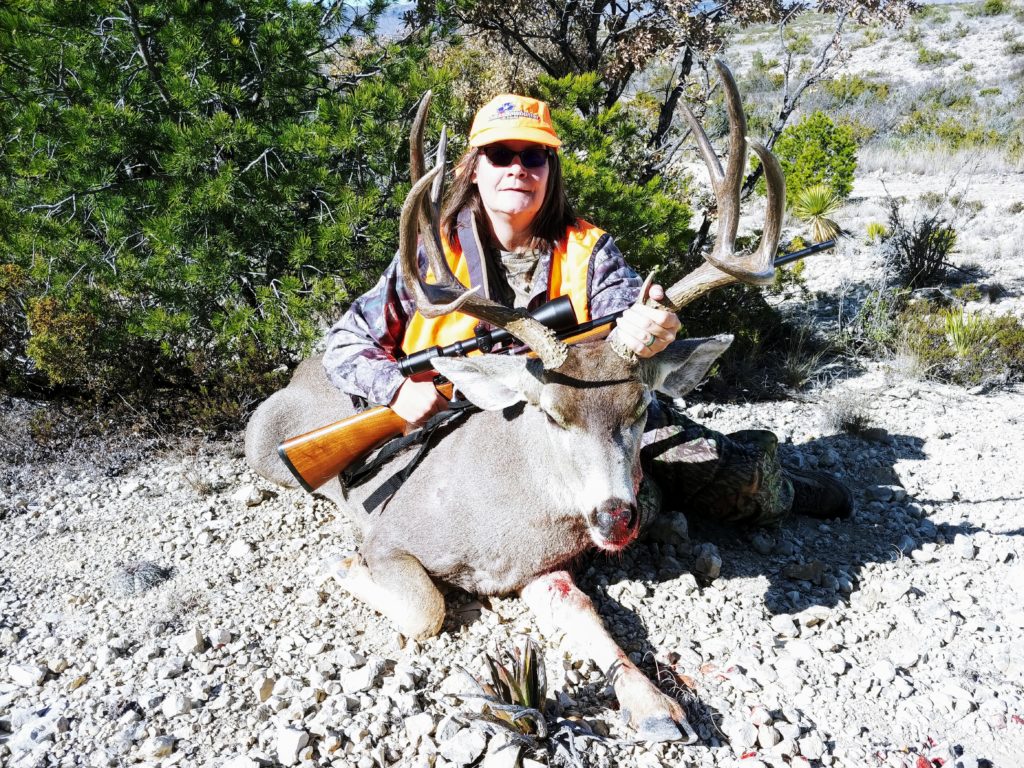
We took my deer back to the check station to get it logged in. Having an electric hoist for processing and a walk in cooler to put your deer in afterwards is awesome!
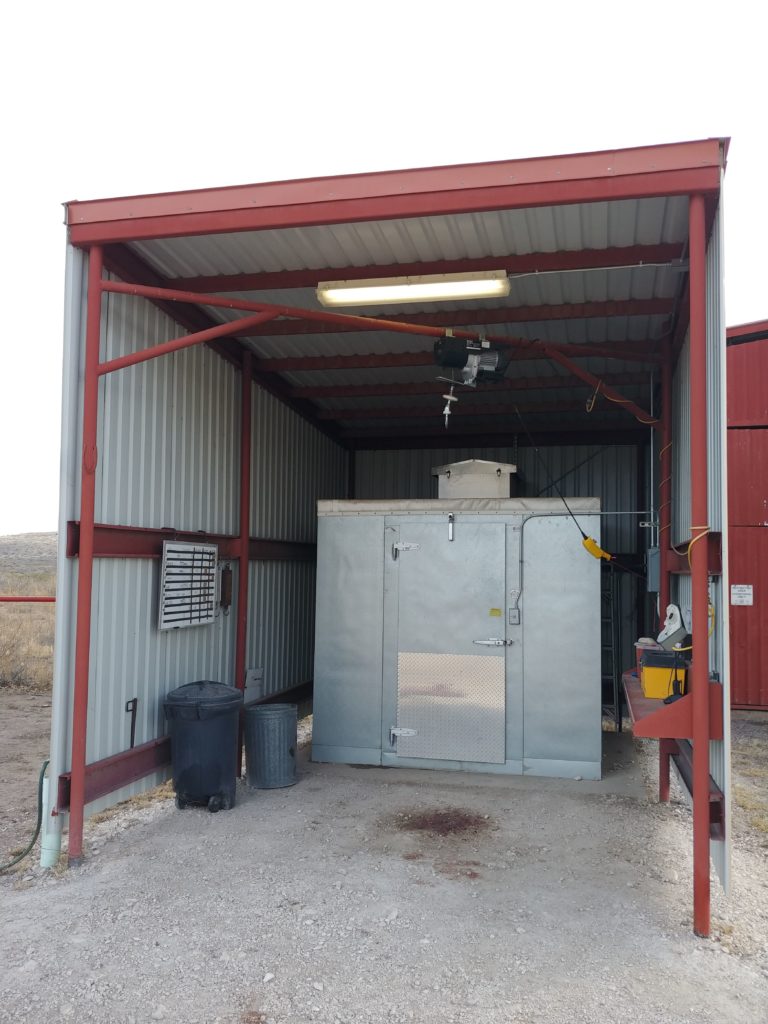
Dewey, the hunt coordinator, had told us exactly where he had seen the deer the day before, we listened, and it paid off. We have learned to pay close attention to anything the hunt managers say. They are the ones who work the property all the time and know the animals and terrain intimately.
As he was looking over my deer, Dewy recognized it and said he was definitely one of the ones he had seen the day before. We told him about the other deer we had seen with my buck. Dewey said that the deer we had scared after the shot shouldn’t go far and that there was likely still a nice buck with them or close by. Our ears definitely perked up.
With my deer taken care of we headed back to try and find the deer we spooked and see if there was another good buck with them. Knowing where the deer went is one thing. Trying to find a road heading even remotely close to that direction is another. We finally found a road near the hillside where we last saw the deer. We got out and glassed for a long time before finally seeing a buck on a different ridge line. He was young and small but nice looking. He would likely be a very nice deer next season.
We watched him for a long time and then finally saw a second deer. It was a spike. Both bucks were intently watching a clump of juniper trees. We kept an eye on them and waited. When a doe walked out from behind the juniper we were pretty sure these were the deer we were after. Still there was no sign of anything bigger. Not discouraged we kept glassing. Finally we spotted a much larger deer. It had a huge body and the main beams were longer than it’s nose. But when it turned its head toward us it was evident that, while his antlers were indeed long, they were not near wide enough.
Dang it! After watching the deer bed down we decided to keep moving and see if we could find something a bit larger. The next ridge over held what we were looking for.
We had just parked the truck and Steve took his camera and headed out to get some nice shots of the area. I took my binoculars and glassed around. Within a few minutes I found a decent deer. He looked a lot like my buck. I called Steve over and he traded his camera for his gun. We spotted a couple more bucks and some does. Surely there was a big deer around. Then I saw him. A huge bodied buck with nice antlers walked out from behind some brush. He was definitely wide enough. He even had that white face older mule deer bucks got.
Steve didn’t hesitate and quickly settled the cross-hairs on him. One long slow breath out and he squeezed the trigger. The buck kicked and then dropped. While I congratulated Steve on his shot the buck got back up. Steve hit him a second time and the buck stumbled then went down for good.
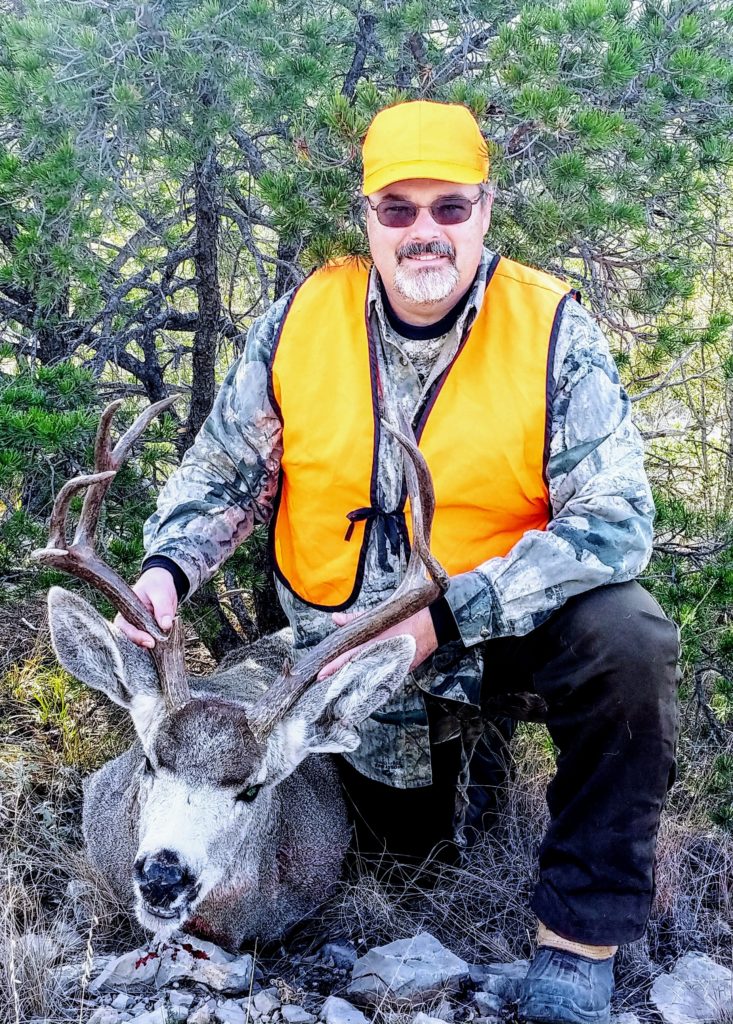
Steve’s very first mule deer buck had a much bigger body than mine and, even though it doesn’t look like it, was wider. His buck came to rest far from the road but it was all downhill and it didn’t take too long to gut then load him up. And just like that we were done. The first day, with hours left, we had both gotten nice deer on public hunting land. ON MY BIRTHDAY!
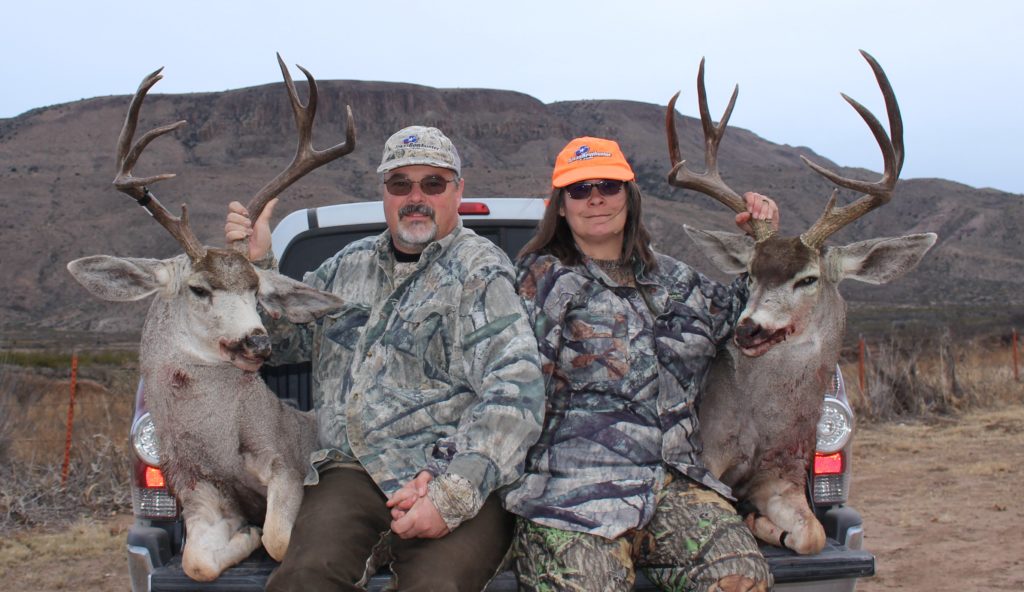
Now that we had both gotten our deer, the next day we turned our attention to the possibility of taking an elk. Dewy told us that a small bull was often seen in our compartment and gave us some pointers on where to look. Steve had never even seen an elk in the wild and would love the opportunity to get his hands on one. Not to mention that they are very tasty.
______________________________________
It is at this point I would like to add a side plot to this story. The first night after the hunt I woke around 3 am to a sharp aching pain in my throat. The next morning my lungs were bubbling and my sinuses were on fire. I was miserable, coughing horribly and running a slight fever. It turns out that the predominant vegetation in our hunt area, and pretty much everywhere else, is juniper (Juniperus ashei) AKA “mountain cedar”. The day before, while huffing and puffing our way over hill and dale, I was sucking in huge lungfuls of the crap. This time of year it was in full “bloom” and blanketed the area in vast amounts of pollen. I was learning painfully that I am very allergic to juniper pollen. I would continue to suffer for several weeks afterward.
______________________________________
That second day the weather had turned, it was overcast, cold and the wind had picked up stirring up even more juniper pollen. Oh joy. The last thing I felt like doing was hiking all over that blasted mountain, breathing in even more of the accursed pollen, looking for an elk that may or may not be in our compartment. What I really wanted to do was go back to the hotel, climb into bed and curl up into an antihistamine induced coma. But let’s face it, we would probably never get a chance like this again. I would forever regret not trying my very best to find an elk for Steve. I could be miserable in the hotel or I could be miserable out hunting. The choice was obvious. Alas, the only animal we saw was a small whitetail buck which we almost stepped on before it took off. The weather had everything hunkered down and nothing was moving. We also didn’t see any elk sign despite covering most of our compartment. There weren’t even any tracks at the watering holes. It wasn’t looking good.
That day no deer were taken by other hunters. In fact very few hunters even saw a deer. We were very thankful we had taken our deer early since the forecast was calling for more of the same.
As we checked ourselves out that second night Dewey told us that he had seen a spike elk in a different compartment just that morning. No one was hunting that compartment so if we wanted to switch we could. We agreed.
The next day was more of the same. No deer, not that we were hunting for them, and no elk. Our new compartment had a deep mostly dry river bed running through it. We were told the elk love to use the river bed as a highway. We spent all of that day walking and glassing the entire stretch of river bed without so much as a glimpse of an elk. At least the view was nice.
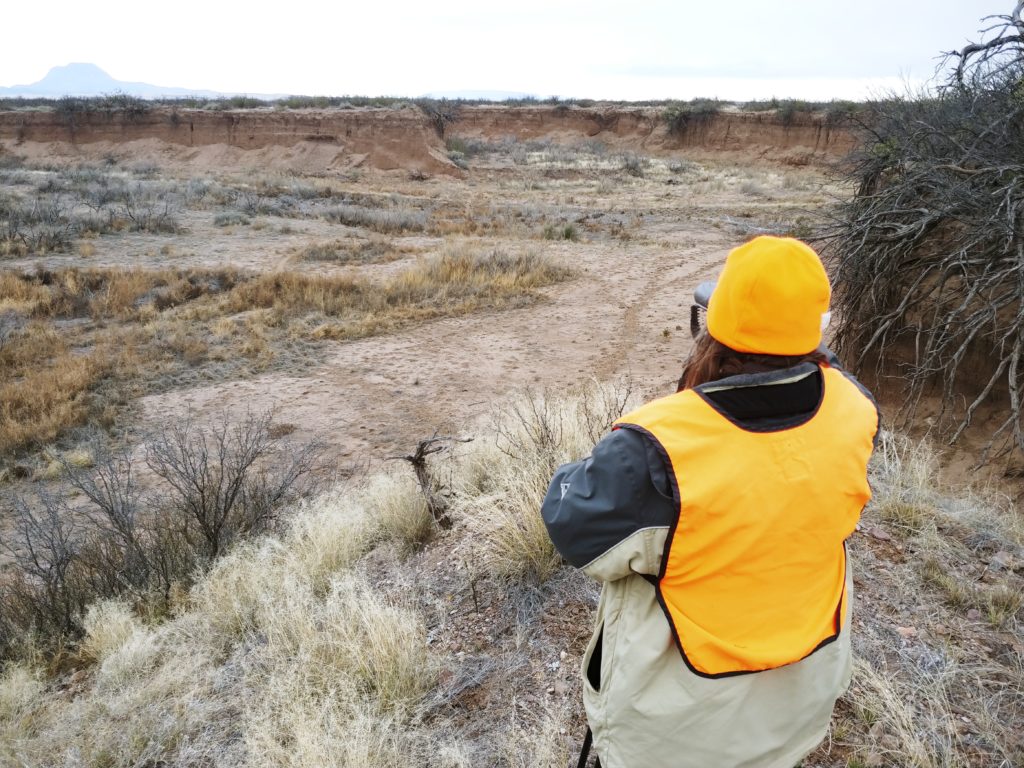
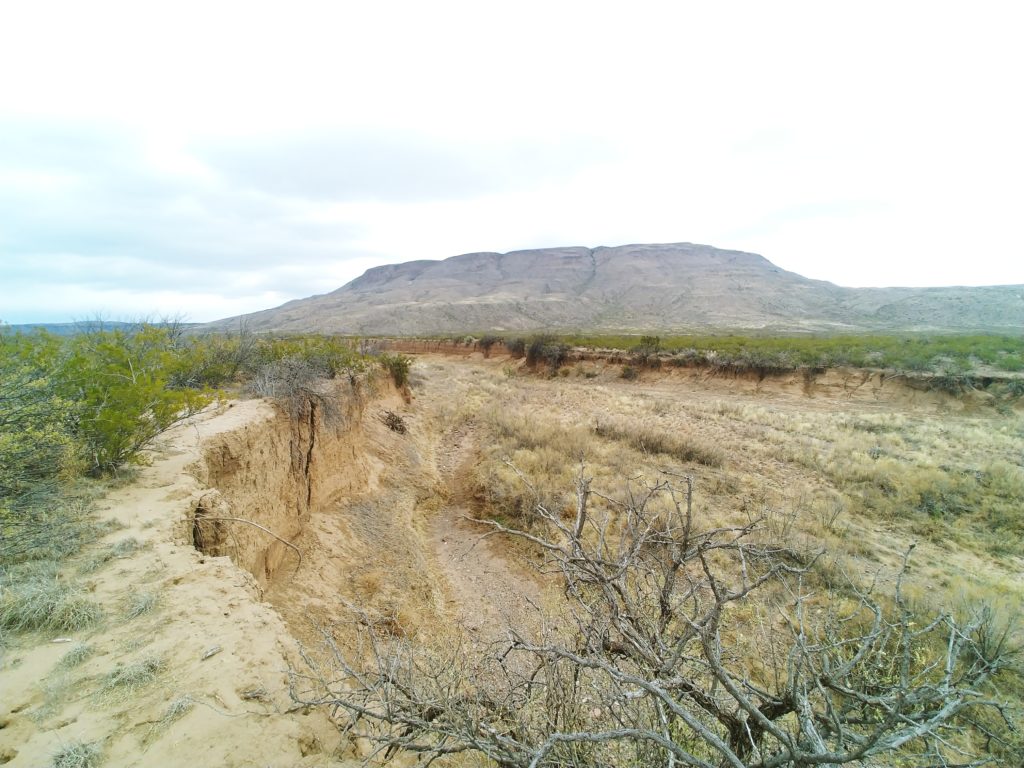
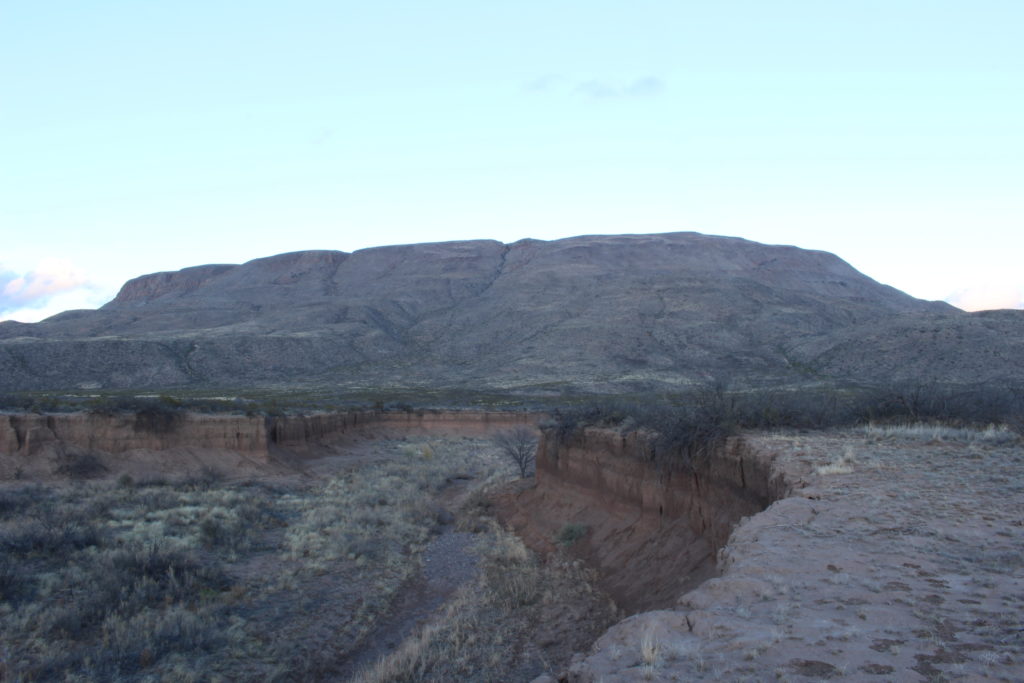
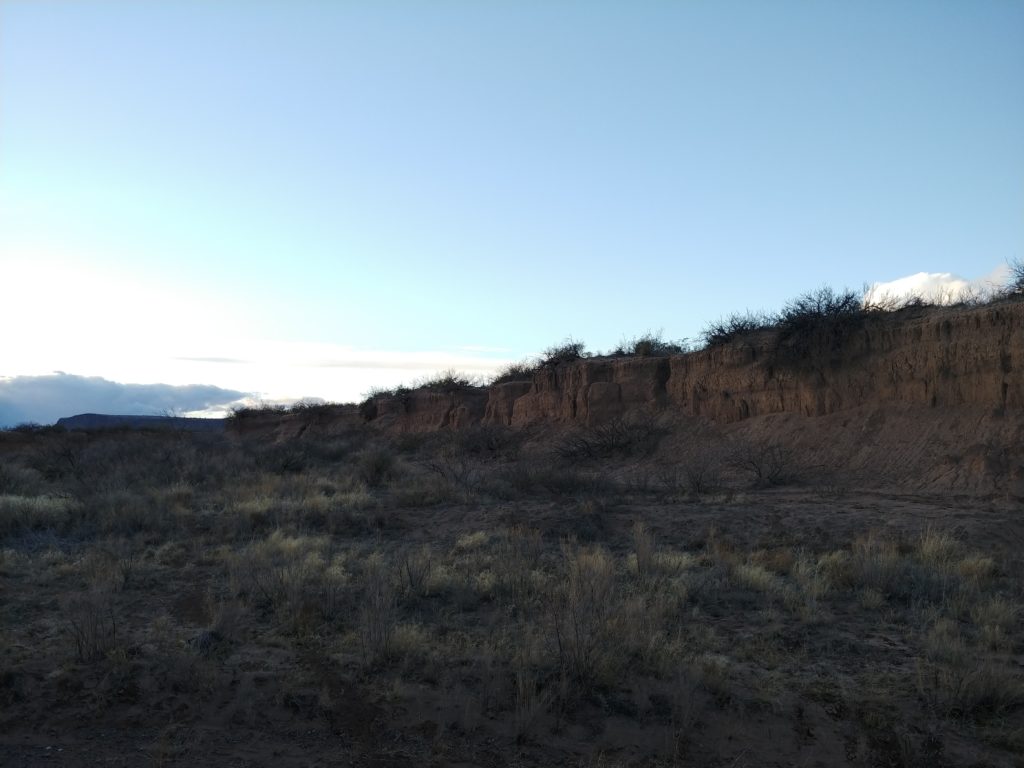
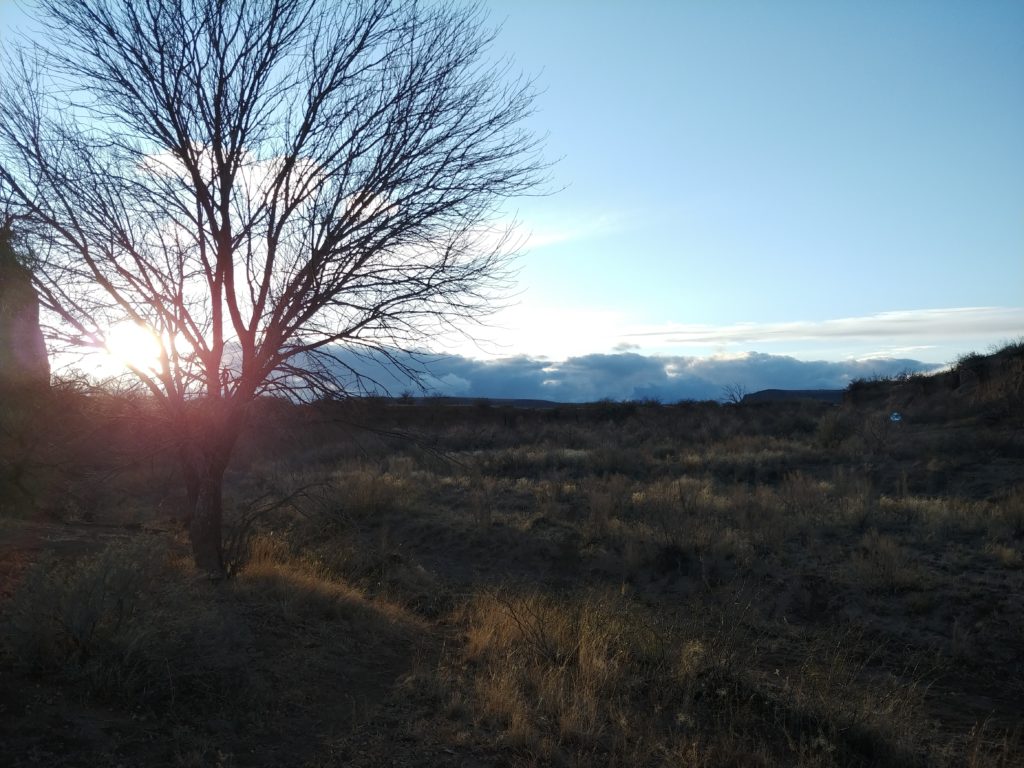
We never did see an elk and Steve was pretty disappointed about that but we were both beyond happy to have gotten two gorgeous mule deer bucks.
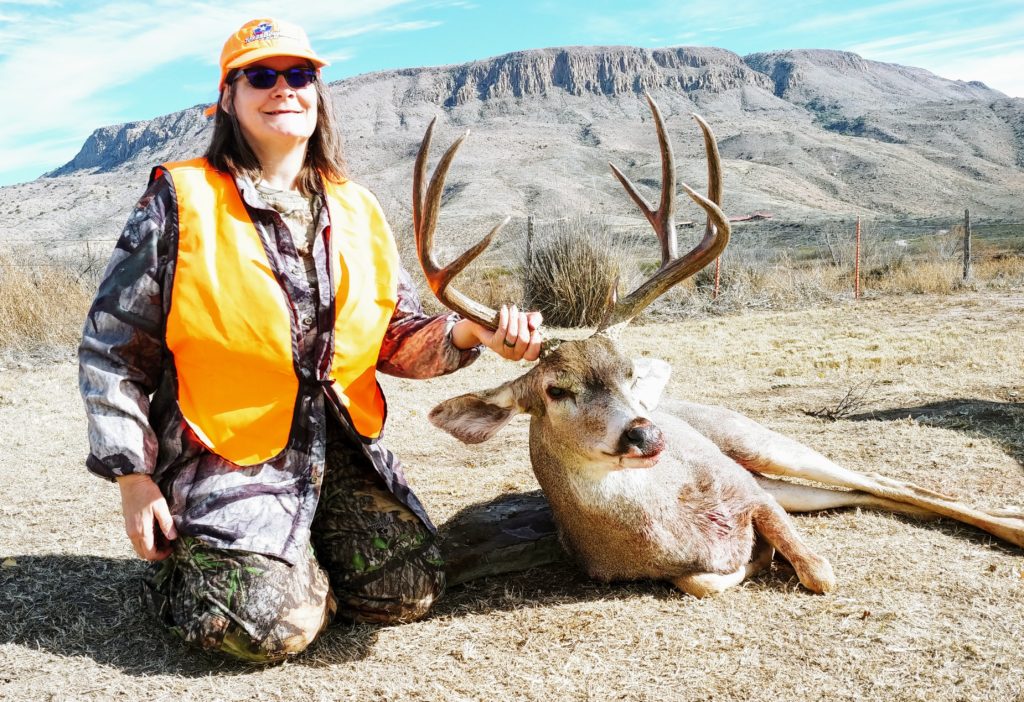
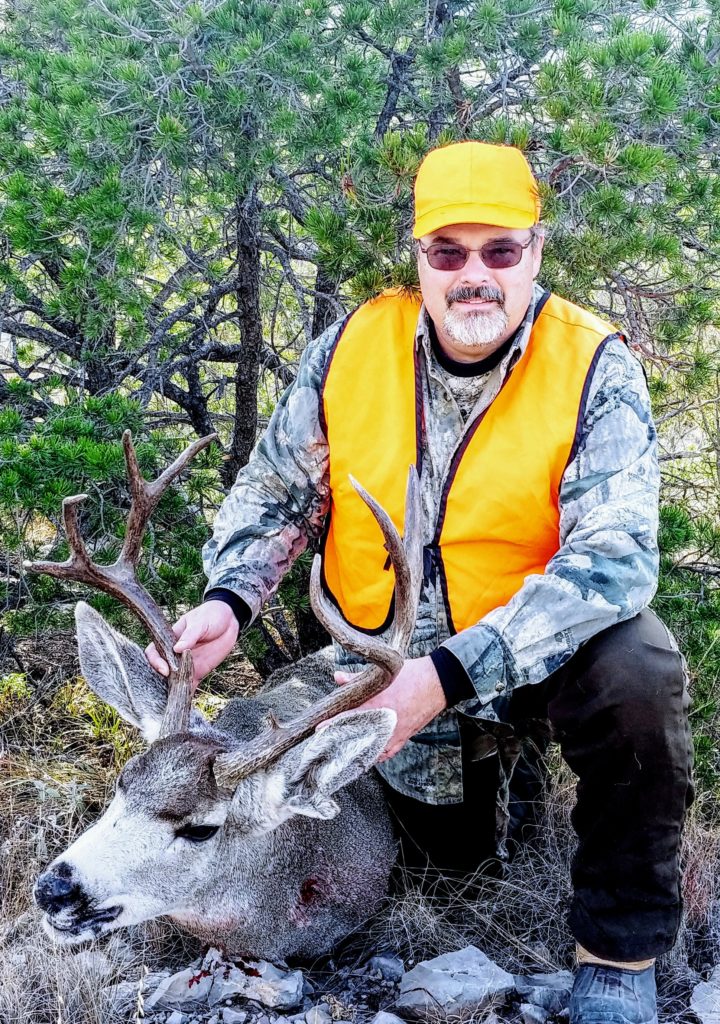
A couple of other hunters also brought in great bucks and left with smiles on their faces. I will never forget this hunt, even though I was sick as a dog through most of it. If we ever have an opportunity to hunt this part of Texas again I know to take my allergy pills way ahead of time.
Thanks to Dewey Stockbridge and the rest of the staff at Elephant Mountain WMA. They did a great job and tried their very best to get every hunter on a decent buck. We are grateful for their hard work and give all credit for our success to them.
Video
For more stories of our Texas Public Hunt Adventures go HERE.
We unloaded the boat and set up camp and then decided to go fishing. Matagorda is known for the great fishing opportunities so we came prepared. At first I couldn’t keep the sheepshead off my hooks. They were ravenous and big! While I was playing with them Steve started pulling in speckled trout. Within a short time he had his limit so I took up his rod and caught a few myself. Only one of mine was a keeper but they were all a blast to catch.
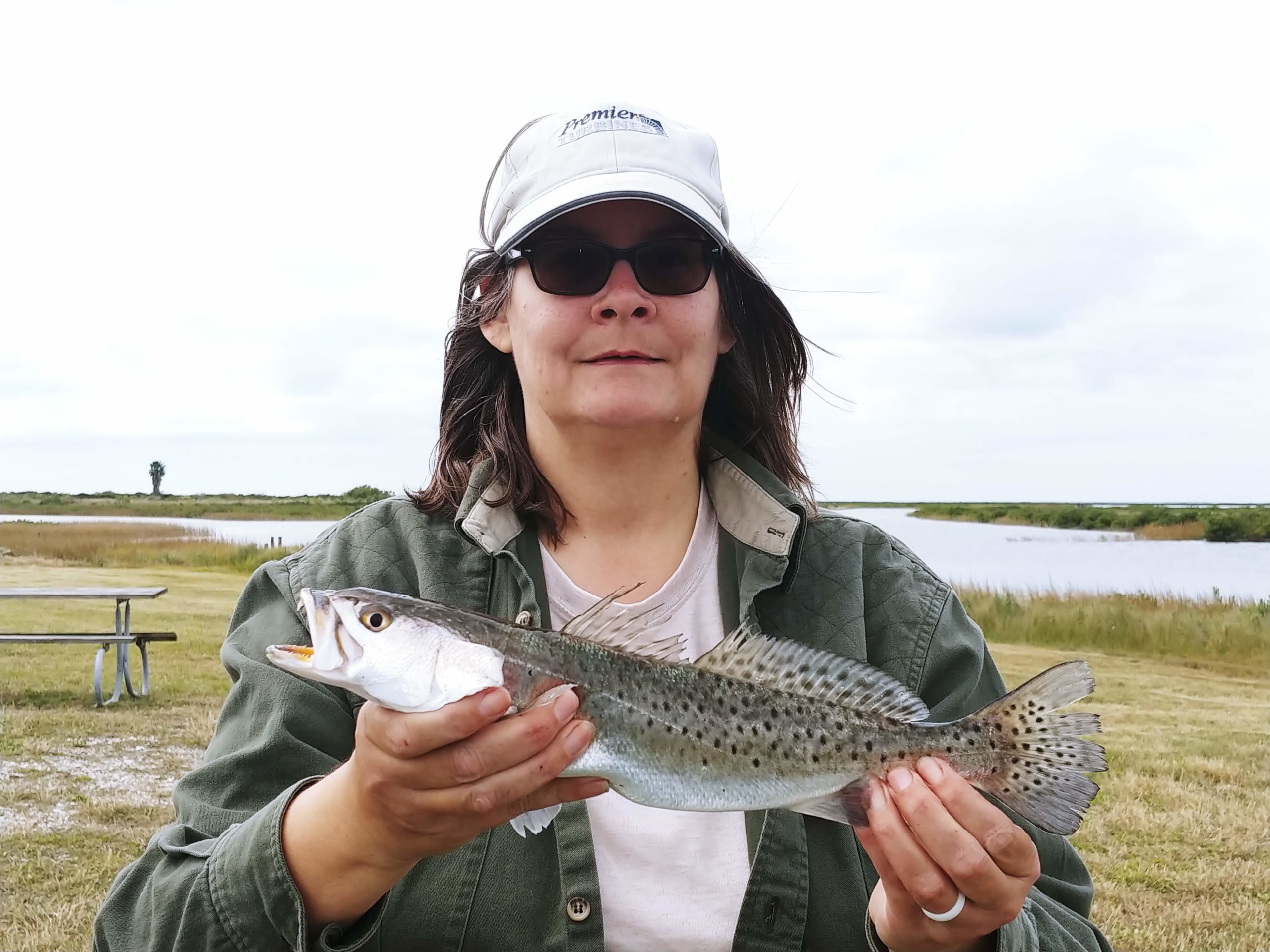
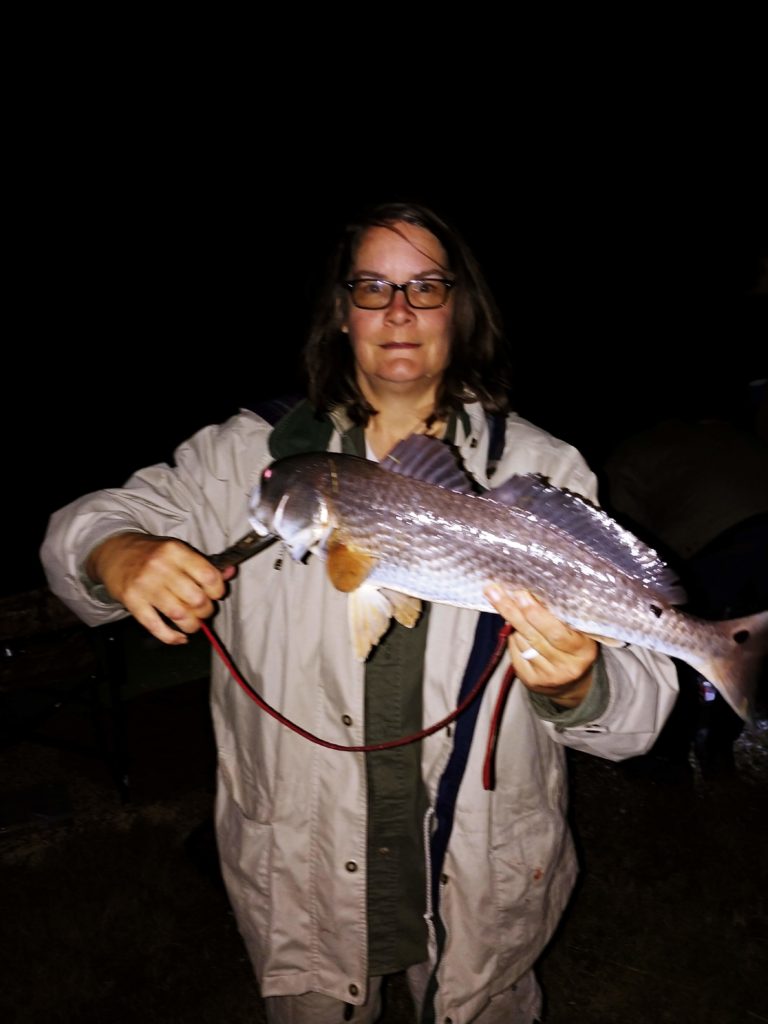
But this trip wasn’t about fishing. We were there to try and participate in the either sex gun deer hunt put on by Texas Parks and Wildlife which started the next day. We arrived a day early so we could get camp ready and do some fishing. We were not drawn for the hunt and so were hoping to fill a couple of standby positions if they were available. We wouldn’t know if we could hunt until the next day. As we fished other hunters, both drawn hunters and standby hopeful hunters, began arriving and setting up camp.
As the sun set I filleted out our catch and then battered them up with a bit of toasted coconut and flour. There was way more than Steve and I could eat so I went from camp to camp offering up the freshest fried fish you are ever likely to eat. No one turned down fresh fried speckled trout and everyone seemed to like it.
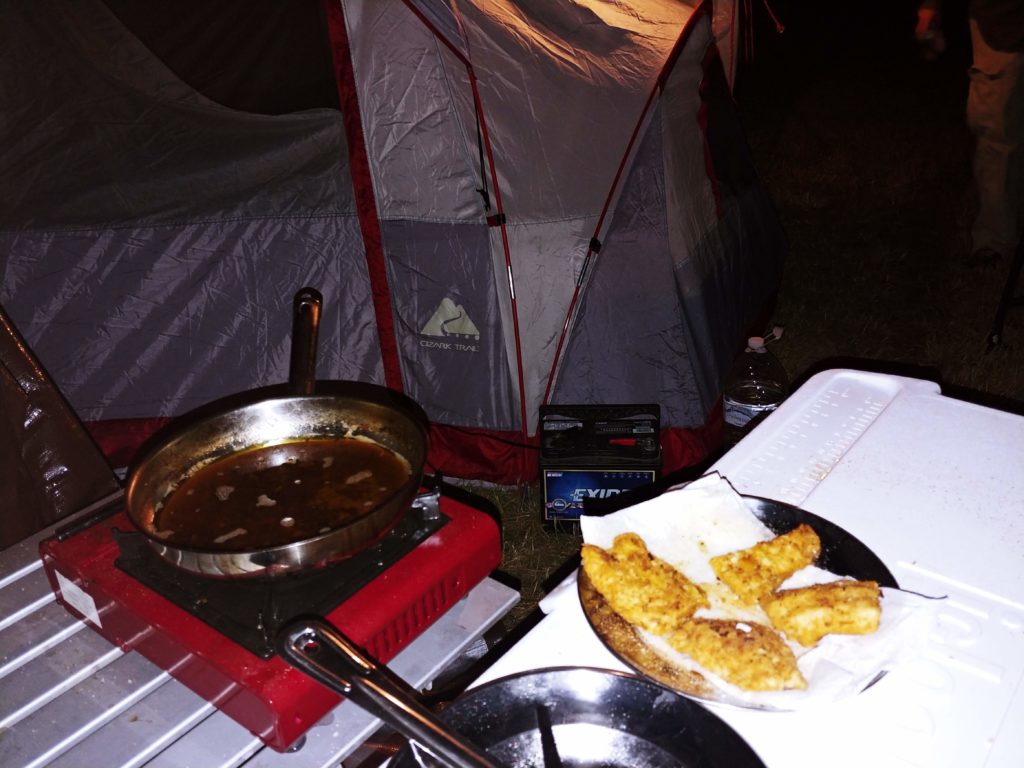
The next morning even more hunters began arriving. We knew our odds of getting picked for one of the few standby positions got less likely with each boat load. By our rough count several people would not get to hunt. It has been our experience that TPWD hunt coordinators tried their best get everyone in but the simple truth is that there were only so many stands available.
Once the cutoff time came and all the drawn hunters had been checked in it was clear that there were far more hunters than positions available. Drat! Steve and I waited anxiously as all the standby hunters cards were placed in a bucket and the on-site drawing began for the few stands still open. I was elated when our card was the third pulled from the bucket. WE WERE IN! WOOHOO! Unfortunately, five other hunters did not get drawn. I have been in their shoes and totally understand the crushing disappointment of walking away as other hunters prepared to head out.
Next we drew for stand positions and Steve and I got stands about half a mile apart. Speaking of stands… a unique and un-explainable phenomena sometimes happens when the weather is just right. Unique, but definitely not welcomed. About half of the stands on the island were absolutely shrouded in a cloud of wasps! Hundreds of wasps swarmed around and through the stands. Not just one kind of wasp either. Red wasps, dirt dobbers, yellow-jackets, heck even honey bees and bumble bees swarmed around the structures. As Steve is allergic to these, his intense concern upon seeing them was understandable. The same thing greeted me at my stand and I struggled with what to do. I did not look forward to wading through the fog of irritable insects just to sit in a small wooden box among them.
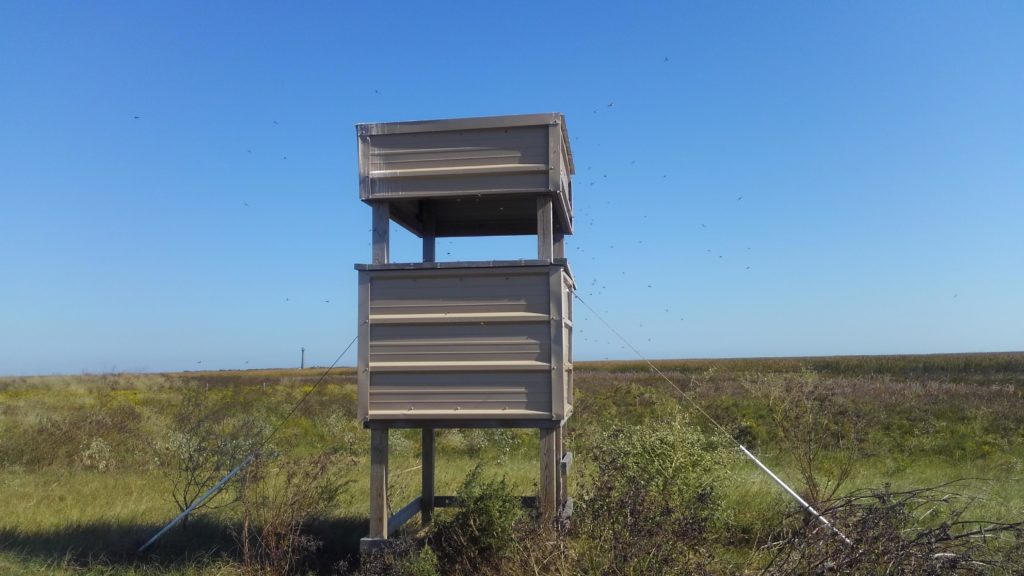
Wasp Frenzy
Inspired, I started up my Thermocell, made sure it was warmed up and working, and threw it in the stand like a grenade. It landed in the middle of the floor and began spewing forth a mist of insect repellent. I swear the wasps laughed! I fully expected them to throw it right back at me. Dejected, I grabbed up some nearby fluffy weeds and began to do battle for my stand. I only got stung twice but did manage to get myself and my gear into the stand. Even then I had to keep swatting at wasps for over an hour as they formed ranks and mounted several counter attacks. In the end they departed and I was left in relative calm.
Steve, on the other hand, didn’t dare try a frontal attack. One of the hunt personnel brought him a can of wasp spray and he doused his stand liberally. The wasps simply ignored the spray and continued swarming. Steve elected not to chance a trip to the emergency room and returned to camp. With luck the spray would do its job and Steve could hunt in the morning. At least the fish were still biting so he wasn’t completely bored.
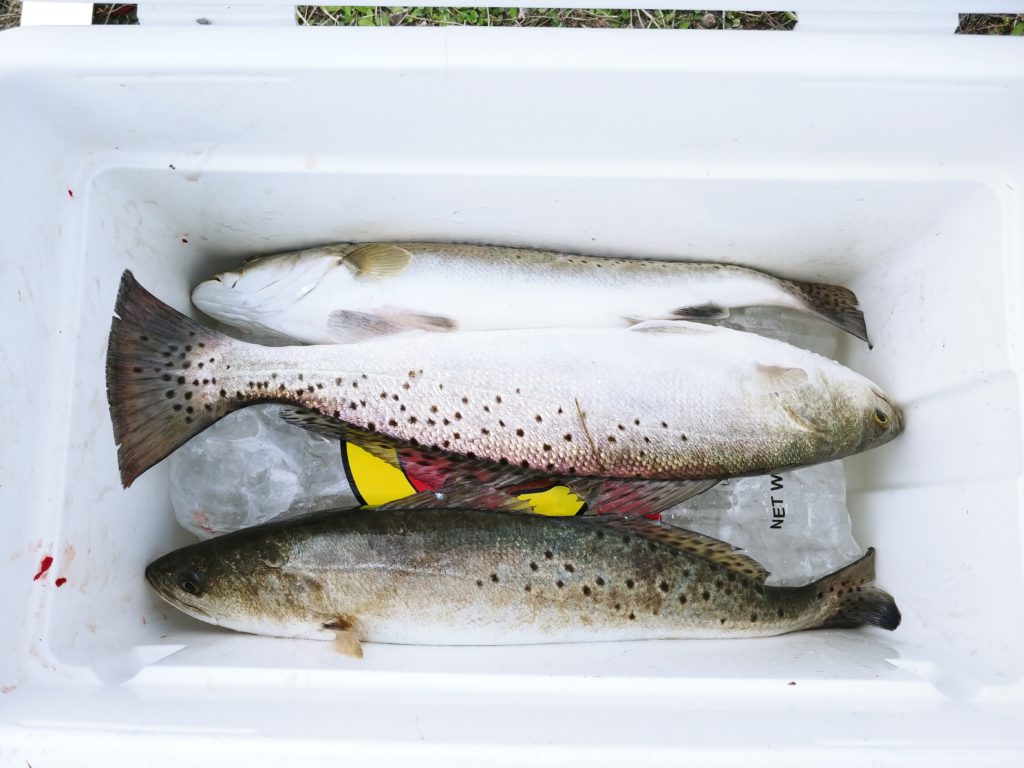
I had several deer come by my stand. Then a decent eight point strolls by. His antlers were nice and wide enough to make him a legal target. I watched him in my scope for several minutes with my finger poised on the trigger as I debated with myself on taking him. In the end I let him walk. He was a young deer and I just didn’t want to kill him.
I sat watching deer off in the distance as the sun began to set on my first deer hunt of the year. I had seen many deer that first sit and was happy. Then I noticed movement in the corner of my eye. There was only about 30 min of shooting light left but there was more than enough to clearly see the buck walking straight to my stand about 100 yards away. When I put the binoculars on him I knew, without a doubt, that he was more than big enough. I re-positioned my rifle and watched as he closed the distance between us. I had my finger on the trigger as I watched him get bigger and bigger in my scope. As long as he kept coming I was more than willing to let him. Once he was within 40 yards of my stand I decided the time was right and pulled the trigger. The shot was good and he piled up within sight. I was beyond happy when I walked up on him and saw just how nice he was. Taking any deer on a public hunt is always great but this guy made it extra special to me. He was gorgeous.
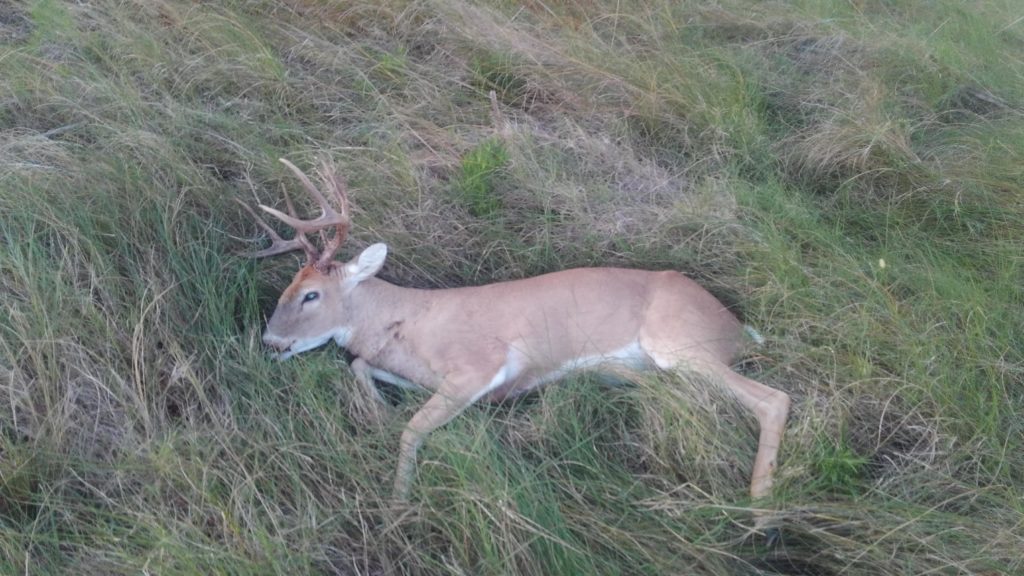
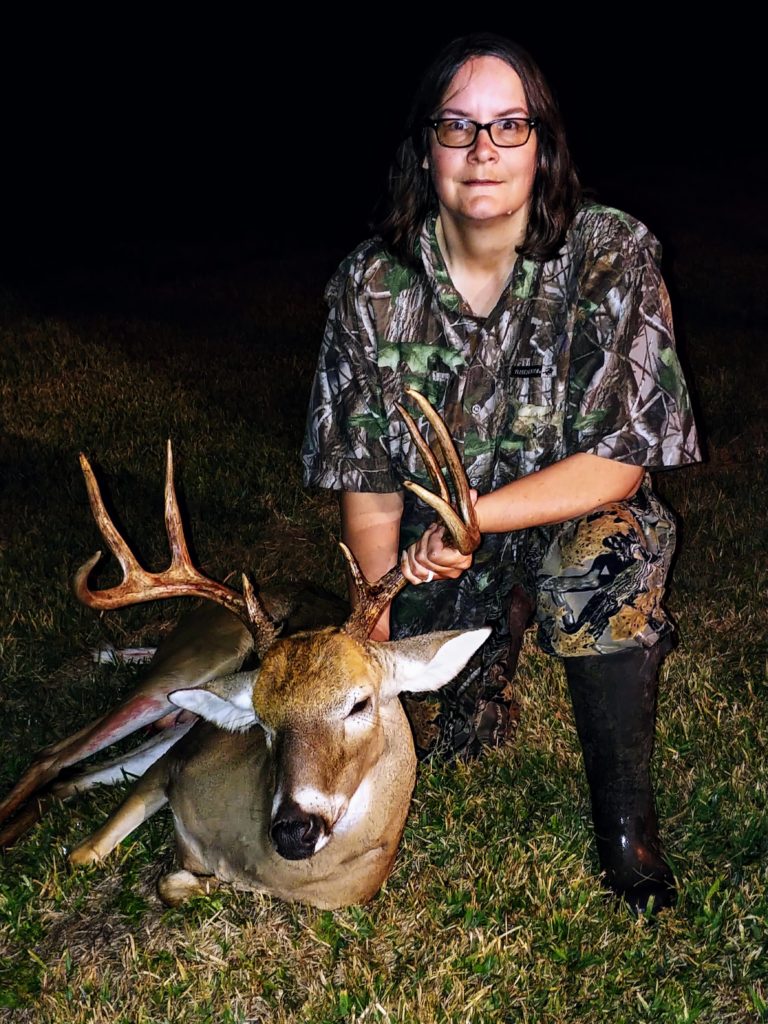
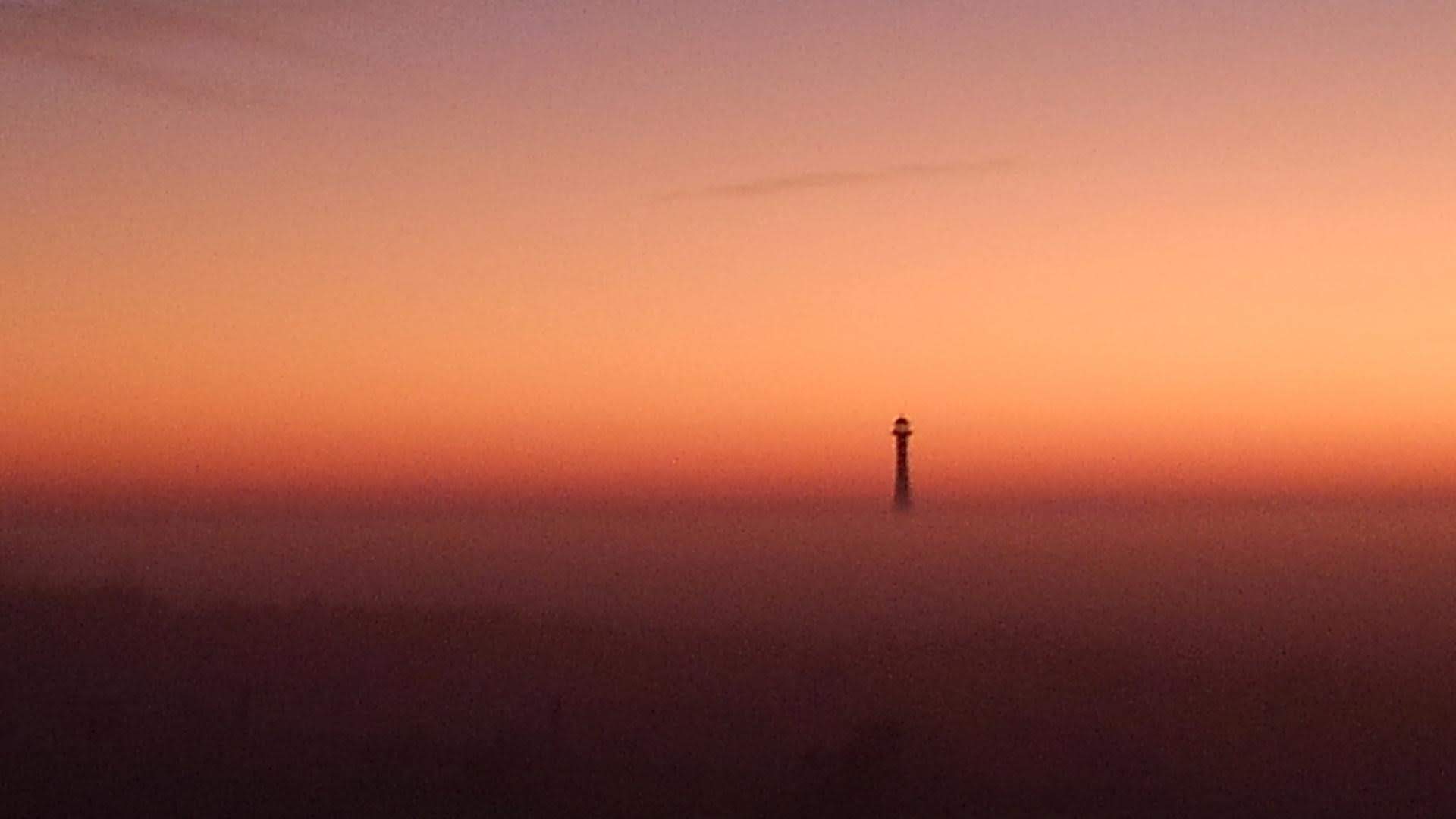
The next morning both of us climbed into our stands. It was foggy and a bit cool. Steve was happy to see that the wasps had not made a reappearance but deer movement was minimal. Steve had some deer walk by his stand before sun up but that was it except for a couple of bucks and a doe about a mile away. Watching the iconic Matagorda lighthouse as it loomed out of the foggy coastal prairie was a treat.
After lunch we headed back out to our stands only to be greeted by… you guessed it, wasps. They were back. Both of our stands were once again haloed in wasps. Learning my lesson from the day before I covered up as best I could and, with fluffy weeds in hand, waded into the fray. Within a short time I was in my stand. Steve also bundled up and went to town on his flying vermin. He didn’t get stung and soon got into his stand as well. Deer movement was slow with only a couple of bucks within range but only one was a legal shooter. I had already taken my buck so was after a doe. Unfortunately none showed. What did show however, was something totally unexpected. A badger. I was the coolest thing to watch this feller make his way through the brush just yards from my stand. My first ever encounter with a badger. I didn’t even know they were on the island yet there he was. The hunt coordinators were surprised as well when I showed them the video.
Steve didn’t see any deer within range until almost last light. Then two does walked toward his stand. He dropped the biggest then, when the other stayed around a bit too long, dropped her as well. The bag limit for this hunt was two deer. You could shoot two does or a doe and a buck (Either with one un-branched antler or antlers wider than the ear tips). After checking in his does and cleaning them I decided I was happy with my one buck and we would leave the next morning.
I met some really nice people, heard some cool stories and the hunt personnel were fabulous as always. Tori especially did a great job conducting the hunt and trying her best to accommodate everyone. We will likely be back, weather permitting, some day.
For more stories of our Texas Public Hunt Adventures go HERE.
“Going standby” is always a nerve racking occasion for me. First we have to get prepared as if we would get to hunt, guns and or bows checked and packed, backpacks filled and ready, hunting clothes washed and packed, cameras charged, fresh batteries in everything, butchering tools sharpened, snacks, food and drinks loaded up. But then get as mentally prepared as possible for the devastating disappointment of going through all of that and NOT getting to hunt. Not to mention the fact that most hunting areas are a couple to many hours of driving away from home. So I do as much research ahead of time to pick the very best possible places to try.
Anyway, we drive over five hours, with a few stops in-between, to get to Mason Mountain. Once there we check in, fill out a stand by card and wait. When all of the drawn hunters are checked in and the deadline passes we learn that their are still compartments available. Awesome! We were in.
We draw for our compartment then go through orientation. For this hunt only compound, re-curve or long bows were allowed. No crossbows. Each hunter is allowed only one javelina but all the feral hogs they want. Because it is archery only, hunter orange is not required. With archery you have to sneak in close so there is no need to warn other hunters of your presence by wearing orange.
While still at the check station, getting our gear ready and talking with Mark, the area Manager, the hunter in the compartment next to ours comes back in. He forgot to mark himself out before heading into his compartment. We notice that he is wearing hunters orange. Mark reminds the fellow that orange isn’t required and the guy marks that he is out hunting and leaves.
We also check ourselves out, that is, mark on the board that we are out hunting in the compartment. Then we gear up and drive into our compartment in hopes of finding some javelina.
Before this hunt we had been watching videos on javelina hunting. We got lucky last time and wanted to learn a bit more about the habits of these new world pigs. One thing we came across that we thought would be a blast was calling them in. Javelina are intensely social and highly protective critters. If one is in distress it is not uncommon for the whole herd to come charging in defense of their fellows. High pitched calls like cotton tail will sometimes bring them running, quite literally. So we brought one along in hopes of spotting a herd and bring them in.
The first day was spent intensely scouting, calling and climbing rocks. I even went back to the place I shot my javelina last year in hopes of finding them there. But no. We didn’t see, or smell, any javelina. We began to worry that they had moved out of our compartment. In addition to our hunting gear we were also carrying quite a bit of video equipment. Steve had a large tripod and camera. We had cameras on our bows and wore a couple of cameras as well. If we got the javelina to come to the call we wanted to get as much as possible on camera. But that meant lugging all that gear up and over rocks. The first day ended with no sign of javelina and two very tired hunters.
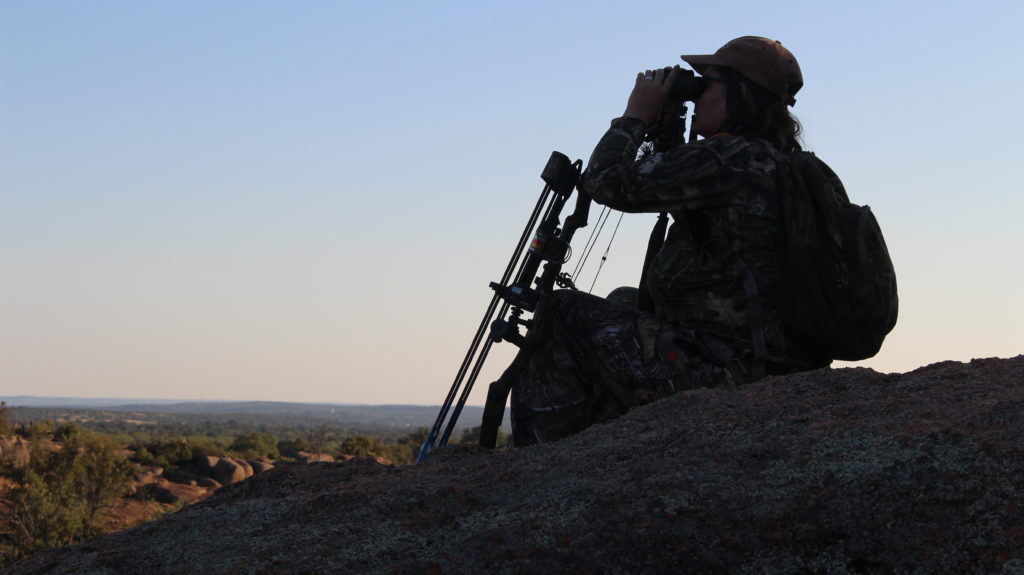
The second day wasn’t much better. But we did get to see some awesome country and beautiful views. The third day looked much like the first. We drove around, climbed vantage points, glassed and walked valleys and scaled stone walls loaded down with hunting and camera gear. We had covered almost all of the compartment without so much as a glimpse of our quarry.
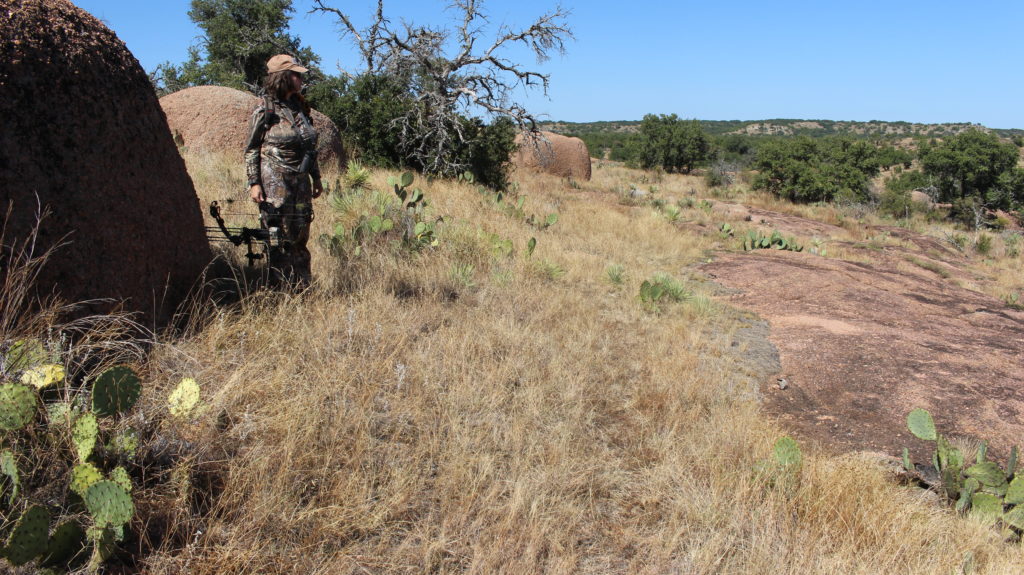
Nearing lunch time on the third day we decided to head back in for some much needed people fuel. Lugging all that gear around was wearing us out. But before we left the compartment we stopped in one last place just before the check station. It had some decent rocks that we might concentrate on after we ate. We parked on the side of the road and were standing at the back of the truck going over our plan when I saw a group of javelina cross the road.
“Honey! There is a bunch of javelina behind you!” I yelled excitedly.
“Yeah right.” Steve says, thinking I was messing with him.
“No really!”
We grabbed our bows and started after the herd. Remember, we had put everything up. We didn’t have time to grab any cameras and Steve had just taken the camera off my bow to take video while we were driving around. Then, in the rush and excitement Steve double taps his bow camera resulting in just a second of video before his camera turns back off.
There were maybe 20 javelina in this group and they had split into two smaller groups as they made their way to the rocks and canyon ahead of them. They didn’t know we were there but were moving rather quickly. I broke away from Steve to try and head the largest group off as he closed in from the side. I looked back just in time to see him draw his bow and aim. He had picked out a nice javelina and made a great shot. She ran about 20 yards before piling up in a small ditch. The rest of the herd scattered toward the rocks and were gone.
What a shot!
Of-course none of it was on video.
With his animal down Steve unloaded his gear and set his bow down getting ready to take some pictures. I decided to try calling the herd back in. It couldn’t hurt after all. I called and called towards the herd that had run into the rocks ahead of us. I thought I could hear some grumbling but didn’t see anything. Then we both heard the distinctive sound of jaws popping uncomfortably close. BEHIND US!
I turned to behold a couple of javelinas not 15 yards behind us. They were bushed up, hackles raised, popping their jaws in defiance and looking for a fight. Crap! I drew my bow and waited for the closest javelina to turn broadside. He kept working his way towards us but wasn’t in that great of a position for a shot. I waited, at full draw, for a opportunity. Then another, much bigger, javelina came into view about five yards further out and stood broadside. I didn’t hesitate to line up and let an arrow fly. The hit looked good. It was through the shoulders, if a bit forward, but the penetration looked good. The javelina laid its ears back and charged right for the rocks. The only thing was, we happened to be between the mortally wounded javelina and those same rocks. The closer javelina, the one I was first going to shoot, zipped by beside us. My javelina split the difference and ran between Steve and I, jumping over both his bow and his javelina in the process. We watched as my javelina disappeared into the boulder field and was gone. I wasn’t worried though. I could clearly see blood as mine went by and was certain it wouldn’t go far.
Wrong!
I followed a nice blood trial through the rocks, under the rocks, around the rocks. Yeah, there were A LOT of rocks. But the blood trail was pretty good so I kept tracking. Finally, after about two hundred yards and about that many embedded cactus spines, I came across my javelina. My very alive and extremely irritated javelina. She had crawled through a small crack between two massive boulders and wedged herself into a tiny cave at the back. She was making her stand and dared anything to come in after her. Our only glimpse of her was her snout as she loudly popped her jaws in warning that she was not to be messed with! Seriously!
Now I had a wounded javelina on my hands and no way to put her down short of crawling into that stinking, flea and chigger infested hole with her and her attitude. This is something I REALLY didn’t want to do. But I also didn’t want her to suffer.
Our first plan was to get her to poke her head out just a bit further so I could get a shot at her neck. First we tried tossing in some rocks. Nope. Then we got a long branch and waved it around the opening hoping she would try for it. Nothing. So I took off my hat and put it on the end of the branch, certain that she would move a bit further out to attack it. This time it worked. Sort of. In the blink of an eye she lunged out, grabbed my hat, and drug it in with her. CRAP! That was my favorite hunting cap!
After trying a bit more to get her to come out further it became apparent that a change in plans was in order. She was wedging herself further back and showed no signs of wanting to budge. The only way to get to her would be to completely lose my mind and crawl through that narrow crack. After some discussion it was decided that I would stay put and keep an eye on her to make sure she didn’t move. Steve would take his javelina back to the check station and ask if it was OK to dispatch mine with a pistol. We thought it would be OK but wanted verbal conformation that using a firearm to put a wounded animal down on an archery only hunt would be allowed.
Steve returned to headquarters, put his javelina in the cooler and went in search of someone to explain the situation to. After not finding anyone and no one answering the phone one of the guys finally pulled up. Steve told them what was going on and got the go ahead to shoot her.
When Steve returned I took his pistol, gathered up my courage and prepared to meet my javelina. One thing about where she had gone was that there was a small ledge in front of her. I crawled into the cave, planning to use that little ledge to protect my face if she happened to attack which was a very big possibility. Thankfully she stayed put at the back of the crevice. Unfortunately, it was dark back there and I had trouble making out how she was positioned so I could make the best shot possible. I wanted to drop her if possible. Otherwise she might decide to leave her shelter and I was blocking her only exit. Not a good situation.
My eyes began to adjust and I could make out that distinctive salt and pepper collar for which this species of javelina is named. It was all I needed. I aimed and pulled the trigger. Then, with my ears ringing, I hunkered down hoping the shot was good and she wasn’t about to try one last lunge. Thankfully, she dropped. Talk about adrenaline!
I recovered my bloody, dirty hat and drug her out. She was a big one!
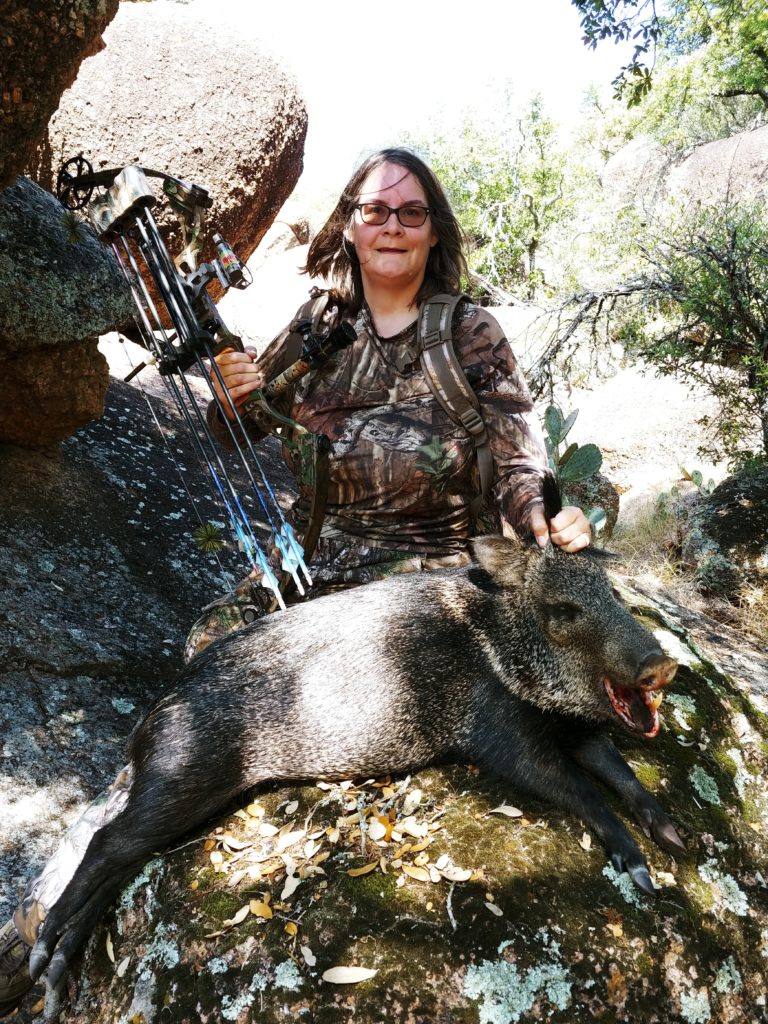
We drug/carried her back to the truck and headed back to the check station to get both of our prizes logged in and weighed before skinning them out.
You would think that would be the end of this story and normally you would be correct. But not this time. We put my javelina in the cooler and went to change out of our hunting clothes. When we got back to the skinning station another hunter had been successful and was checking in his kill. It was the hunter who had the compartment next to ours. He had taken a small (baby) javelina. We were impressed that he could make a shot on one so small or as he said “crock pot sized”. He had gone ahead and quartered it up in the field so brought back an ear for them to put the tag in.
After that was done he was getting ready to leave but, as hunters the world over are inclined to do, we started talking. I wanted to know how many he had seen. He told us that he came across a group but only had a shot at the little one so he took it. Then we got to talking about our javelina and I was recapping our hunt. When I mentioned finding my arrow he was confused.
“You shot yours with a bow?” He asked.
Steve and I looked at each other slightly confused.
“Um, yeah this hunt is archery only.” I said
“Oh, well I shot mine with a gun.” He replied blandly.
“Oh.” Was all I could reply with.
He told us that his buddy had put in for the hunt and didn’t tell him it was archery only so he didn’t know.
I said that the permit should state the means of take as archery only.
“Well, don’t tell them.” He said. Referring to the hunt personnel.
Inside it was thinking really loud… Oh I am going to let them know.
He began to head toward his truck and I went inside to let Jeff (the hunt Co-Coordinator) know that that last javelina was taken with a gun.
In the mean time the guy gets in his truck and hauls out of there. Jeff left soon afterward, hot on his trail.
Before you think that in the end it really was no big deal, consider this. The means of take (archery only) was covered on the very first day during orientation. That day he was later reminded that orange was not required. This fellow was hunting in the compartment right next to ours. We were not wearing hunter orange because it was not, and should not, be required for archery. He could have easily taken a shot towards us not knowing we were close by, putting our lives in danger. What if we had been stalking the same group of javelina between our compartments and he decided to take a shot at them? And don’t forget, he had a high powered rifle so he didn’t have to get as close to the herd as we did. Still he decided to kill a baby instead of waiting for a shot at a mature animal.
I’m glad we had a successful hunt and nothing bad happened. Mark, Jeff and the other TPWD staff run a tight ship and put on yet another wonderful hunt. I hope we can return again some day.
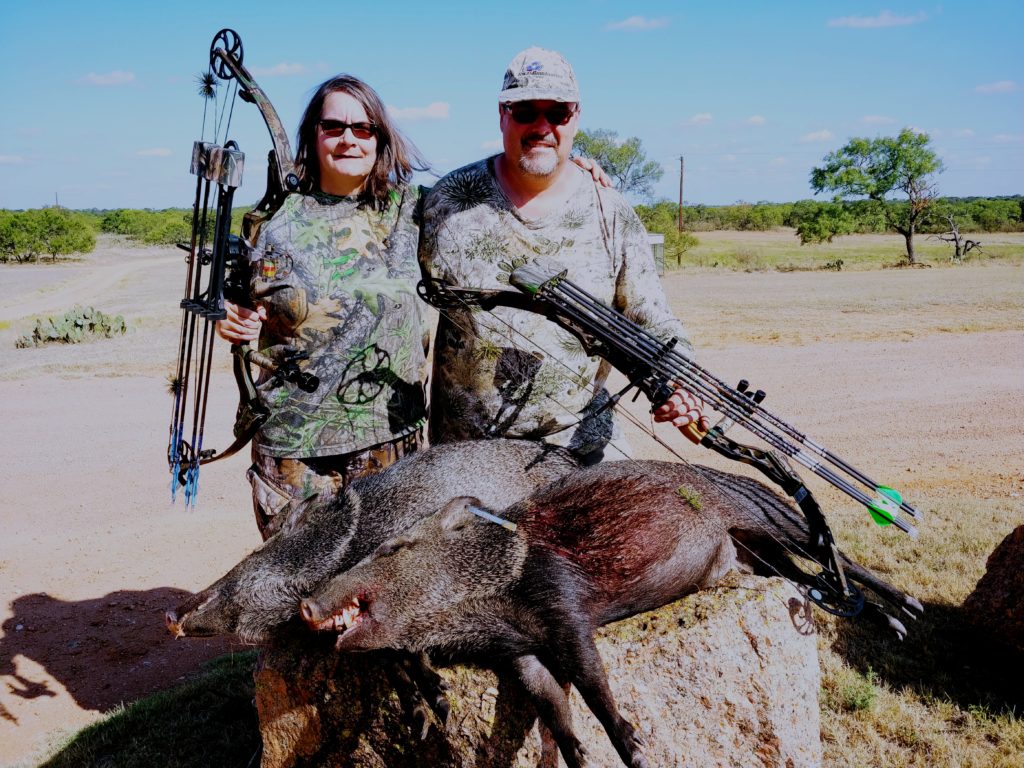
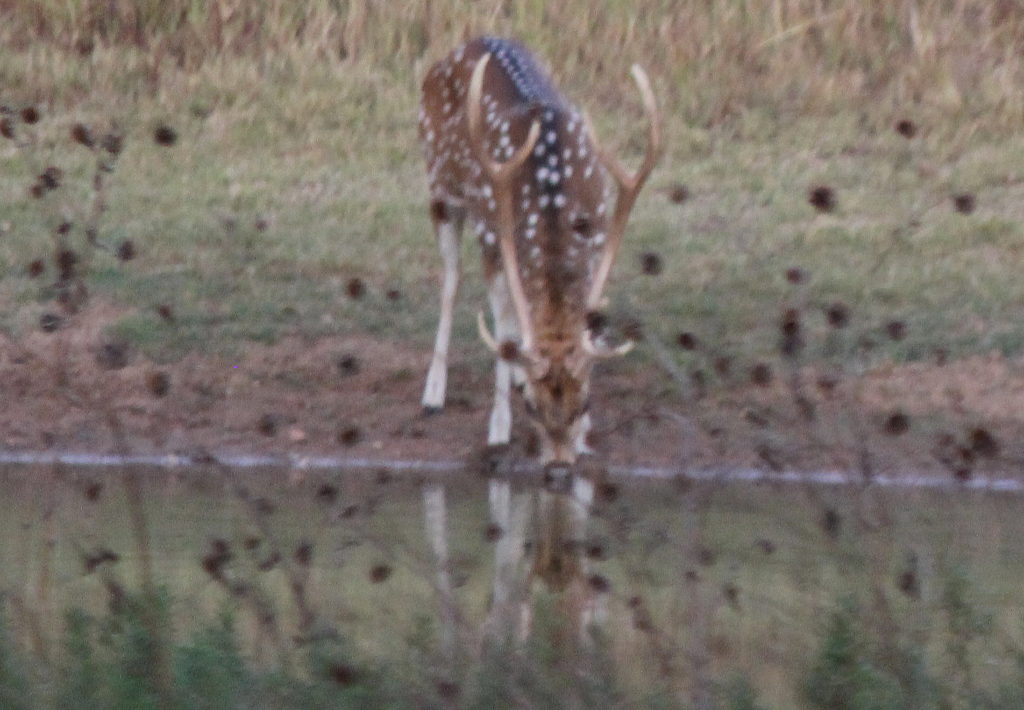
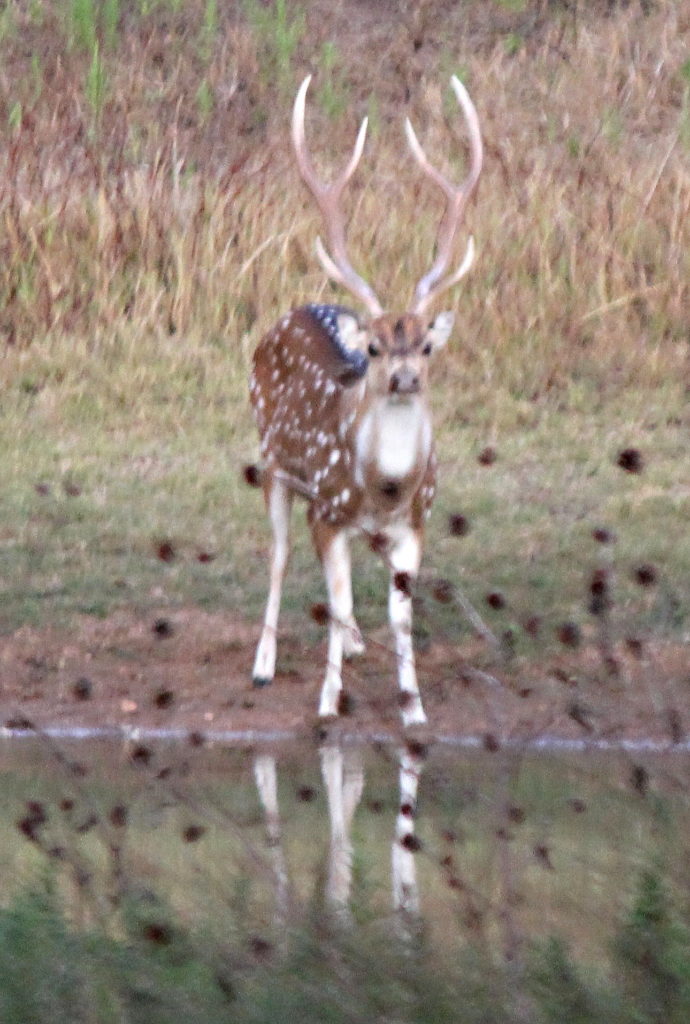
One of the many exotics that roam the property.
For more stories of our Texas Public Hunt Adventures go HERE.
BEST DEER HUNT EVER!
Since we had such a wonderful time at Matagorda Island last time, NOT! We decided to see if we could take a standby position on this week’s deer hunt. You know, because the 35 MPH winds, freezing temps, sleet and snow, yes SNOW, were such a delight last time.
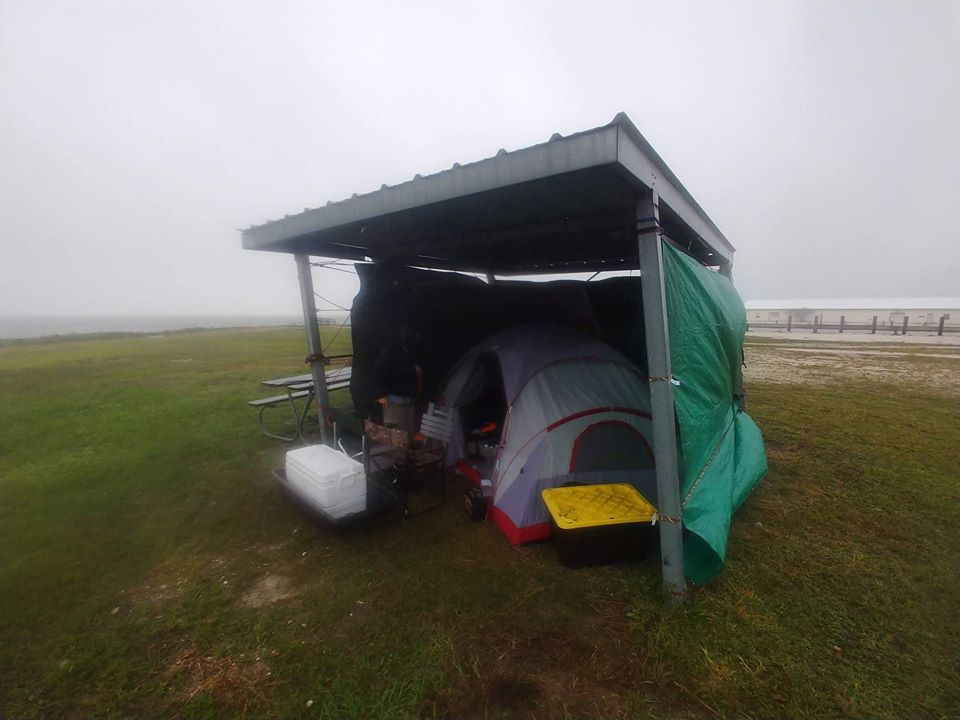
We arrived the day before the hunt and began setting up camp. Learning our lessons from last time, we brought stronger tarps to wrap the lean-to with, more ratchet straps to reinforce the tarps, and had sprayed the tent with water repellent.
The weather that first day was outstanding and the boat ride was smooth, if a little foggy. Still, we prepared for the worst. While we were bomb proofing our shelter a few more hunters arrived and set up their camps. They laughed at our tarp covered shelter with our tent snuggled underneath and staked down like we were expecting biblical retribution. They smiled at our ratchet straps crisscrossing the tarps and bungees keeping tension on the un-staked areas. Shaking their heads with bemusement they set out their tents in the open, unpacked their boats and settled in for a beautiful day. Which it was.
But we had painful memories from our previous encounter and heeded the hunt coordinators warnings that “The Island” could be unpredictable and harsh.
After getting everything lashed down and under cover we headed out to enjoy the rest of the beautiful day for ourselves. First we took the boat out to several spots to see if we could entice any late season fish to join us. Alas, we had no bites.
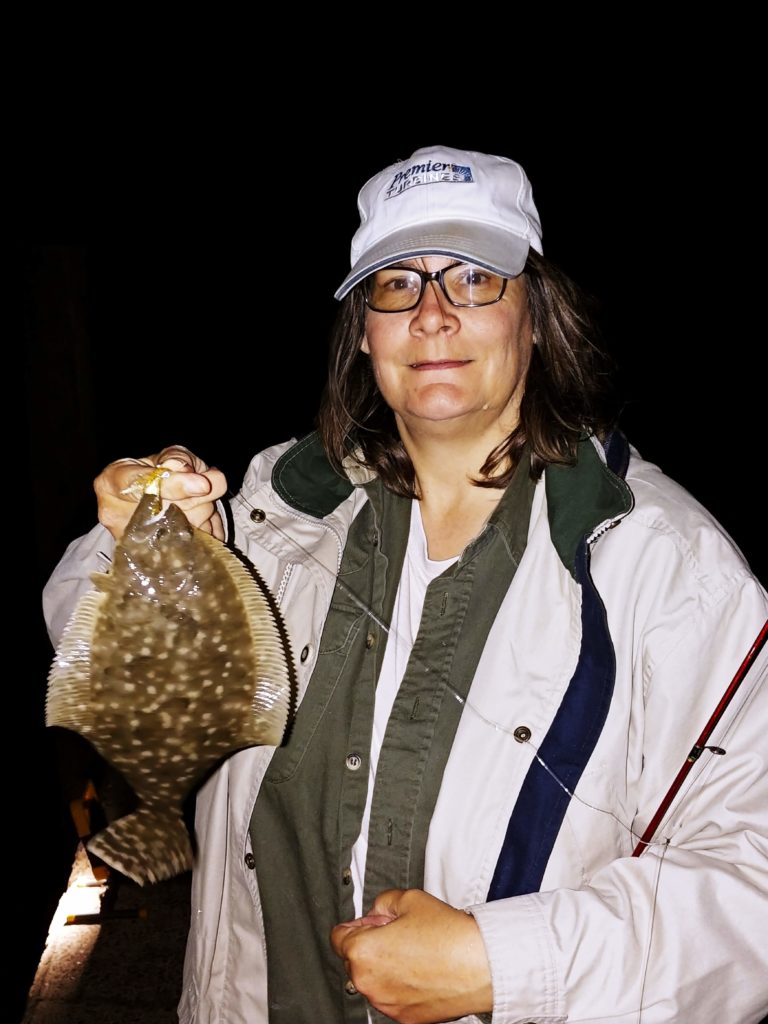
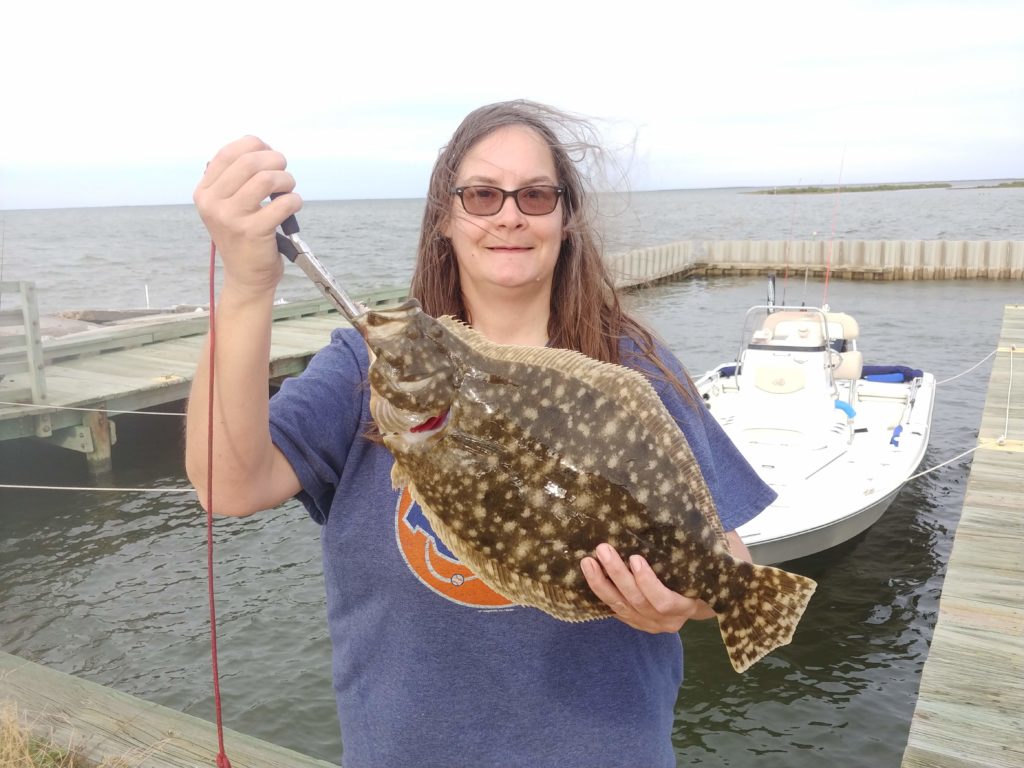
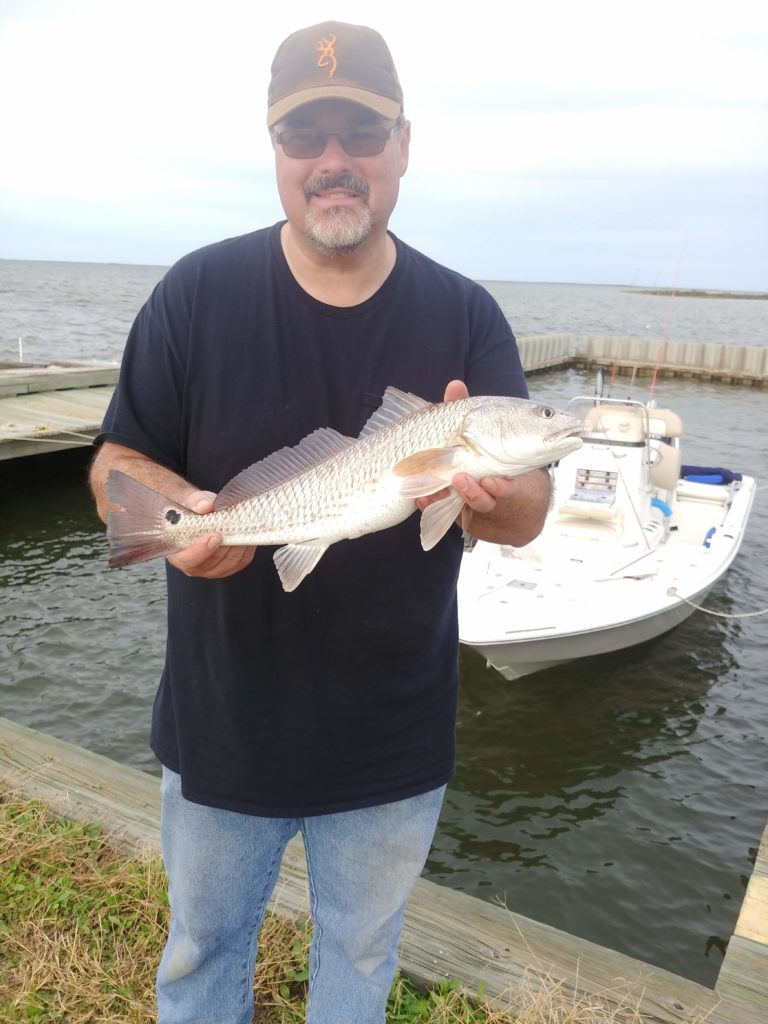
So we returned to the dock and cross tied the boat so it could ride out any rough weather up to and including a small tsunami. We still had some shrimp and a bit of daylight so I dropped a line next to the boat and got bit immediately. Soon we were pulling in small redfish left and right. All were released and a couple came back for more getting caught a second time! Finally, I hooked a nice flounder. After landing it we started catching more small flounder then bigger redfish and finally several small black drum.
Then the wind began picking up and the waves started building. It was time to hunker down and see what “The Island” had in store for us.
We spent the rest of the day and night tucked into our tent while the wind howled around us. Around 1 am the wind peaked at 25 miles an hour but we were well protected from its effects. Others were not so lucky. During the peak of the tempest we were woken by shouts and flashlights strobing across our tent in the dark. Peeking out could see frantic scurrying about as several campers tried to rescue their tent. The high winds had broken a pole and it was collapsing down on them. Another tent had caved in entirely. With some judicious use of rope, tape and colorful language they worked their shelter back into shape, sort of.
The next morning dawned clear and windy. Several more hunters arrived and began setting up camps of their own. Then the Hunt personnel arrived and it was time to get serious. After a small wait and checking in the drawn hunters we received the happy news, there was room for everyone so we got to hunt! WooHoo! I even drew the very same stand I had hunted out of last hunt. I was hoping to get one at least close to where I had been but was overjoyed to get the same one.
After a short hunter orientation we headed back to camp for some lunch and to gather our gear. At about 1:30 the trucks were loaded up to begin the hunt. I soon arrived at my stand and began settling in. Steve and I had radios, another lesson learned from our last hunt, so we were able to keep in touch with each other.
Since I had hunted this stand before I knew where the majority of the deer I had seen last time came from and set up my chair, gun and shooting stick facing that direction. Just as I was finishing setting out the last of my gear I saw movement just outside the blind. I looked over my shoulder and saw a deer browsing about 40 yards away. One quick look made it plain it was a buck! A BIG buck! On this hunt we could take one buck if its antler main beams were outside the ears. That is, if the deer is looking at you, which this one wasn’t, the distance between the tips of the ears should be equal to or smaller than the widest distance between the inside of the main beams. Yeah, it’s complicated but TPWD puts out lots of information on how to best judge this distance and with some practice it’s not so hard.
Now my problems started. The deer was outside of the blind just over my left shoulder. He was close enough that any movement from me would have him headed to the other end of the island at top speed before I could blink. So, without moving my chair or myself, I eased the gun out of the other window and slowly maneuvered it into the window facing the buck. Leaning over the gun I finally got him in my scope. Speaking of scopes, as I watched the buck I realized that mine was now perfectly positioned to smack the crap out of my nose because I was not settled behind the gun as I should be but was instead leaning over the gun. There was nothing to absorb the recoil. Except for my nose. Noses are great for many things but a backstop is not one of them. All of this ran through my mind quickly as I examined the buck. He was walking away from me, oblivious to my presence. He looked to be big enough but to be sure I would need to see him looking at me. So, readying for the shot, I maahed, at him. A maah, is the sound you make to get a deer to look in your direction without startling the deer too badly. Hopefully. It is an un-threatening sound that can make a deer curious and look to see what is up.
The deer kept walking. Crap! One more time. MAAH! This time the deer stops and looks in my direction. Bingo! He was wide enough. With that one glance at his rack I settled on his shoulder and squeezed the trigger.
It was at this point two conflicting emotions took over. First, was the shot good? Where is the deer? Is he going down? One the other hand…holy mother of God! I think I broke my nose. Blinding pain erupted on the bridge of my nose. My eyes were watering and I think my nose is cut in at least five places as blood starts streaming down my face. But where is the deer? The deer was just leaving the clearing and heading into the brush. Through my tear filled vision I could see that he was hit hard and I whooped for joy, and pain as he went down after a few more steps.
Awesome! I had just taken my first fork antlered buck in over a decade and what a buck! He wasn’t huge but was slick and symmetrical. After a few seconds to digest all that had happened I probed my battered nose tenderly and discovered it wasn’t the bloody ruin I had imagined. Nope, aside from a small cut and slight internal bleeding it had fared well.
I radioed Steve that I had just shot a buck. He was a couple of miles away from me in another stand but had heard a shot from my direction. I told him about my nose and we laughed.
Now to go find my buck. While the island seems flat and grassy it is far from it. You can easily lose a deer in the thick salt grass and brush. I paid careful attention to where landmarks where I had seen the buck go down. Even so, it took about five minutes to actually find him. He was gorgeous! His coat was slick and grey, his face had subtle white and black markings and his antlers, all eight points of them, were long and symmetrical. I couldn’t be happier.
After field dressing him I drug him back to the road and returned to my blind to try and seal the deal on a doe. Alas none showed. Steve however had better luck and downed two fat ladies just before last light. So within the first five hours of our hunt we had three deer. Our freezer would once again be full. I hunted the next two days without ever having a good shot at a doe. I was OK with that, many other hunters went without.
The weather wasn’t great but we still had fun and brought home plenty of meat. My sore and battered nose was totally worth it.
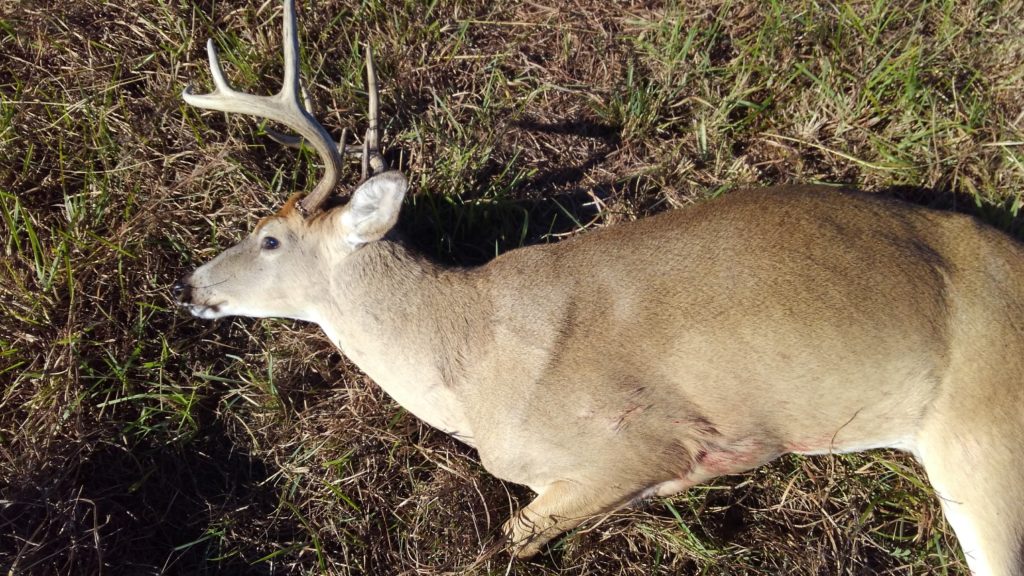
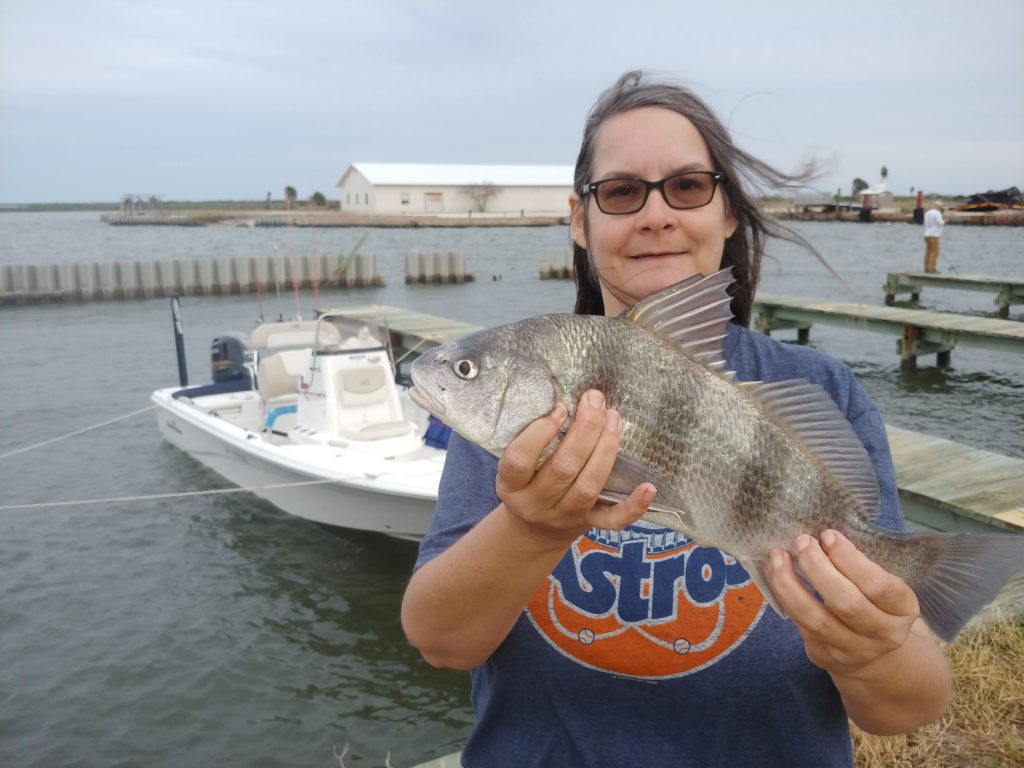
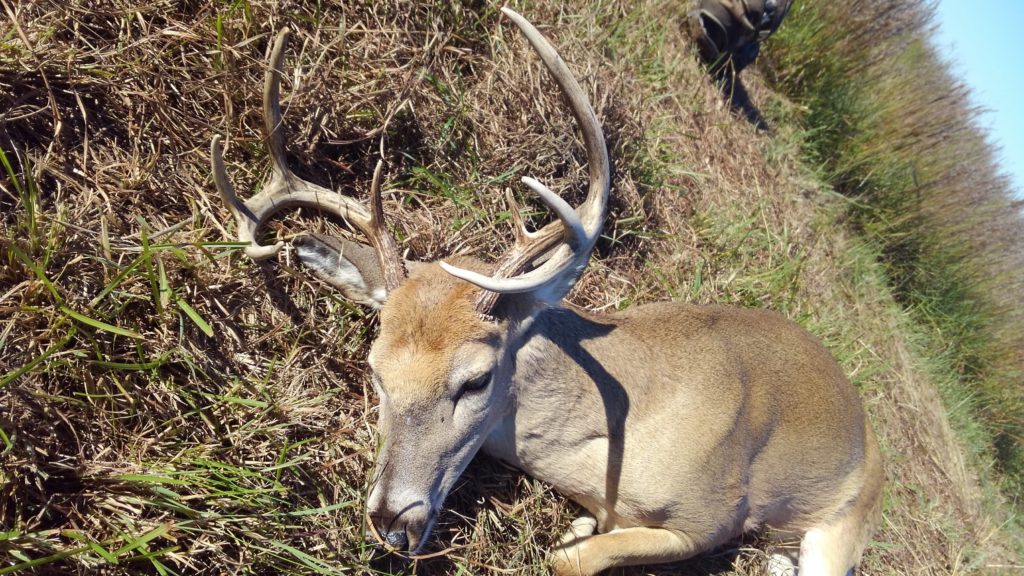
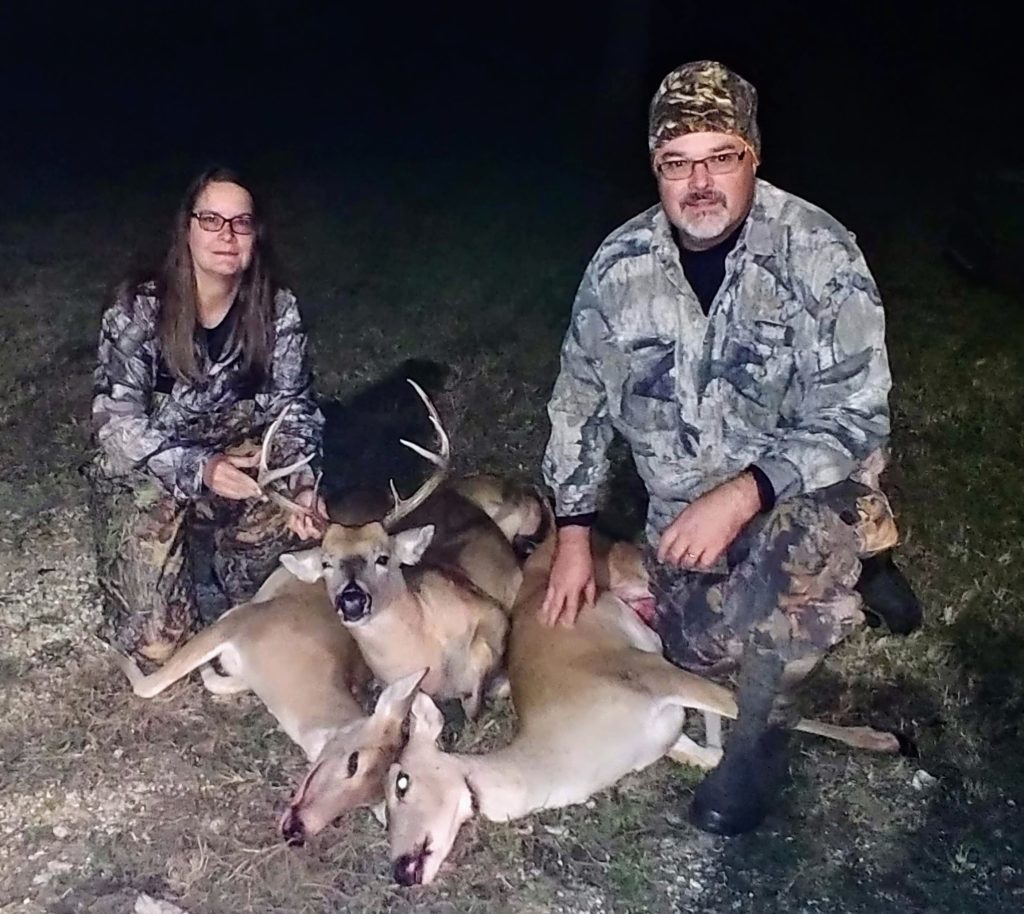
First of all, there is no infrastructure on the island. It was rough, cold, windy and miserable. Still, we eeked out getting three does and a pig. Better than many of the hunters managed.
Winds peaked at about 35 miles and hour. The temperature plummeted down into the 30’s and we saw sleet and some snow.
Hurricane Harvey had taken out a lot of the infrastructure on the island leaving very few places to shelter from the elements. There were a couple of young guys who sat in the lee of a building wrapped up in a tarp for the night. It was brutal.
The hunter check station had a roof but only two walls.
When they say be prepared for primitive conditions they were not joking! We were fortunate to get one of the few remaining roofed picnic spots to set up camp around. Still the roof leaked badly and rain poured down onto our tent all night. Everything got soaked that was not in a tote or bagged up.
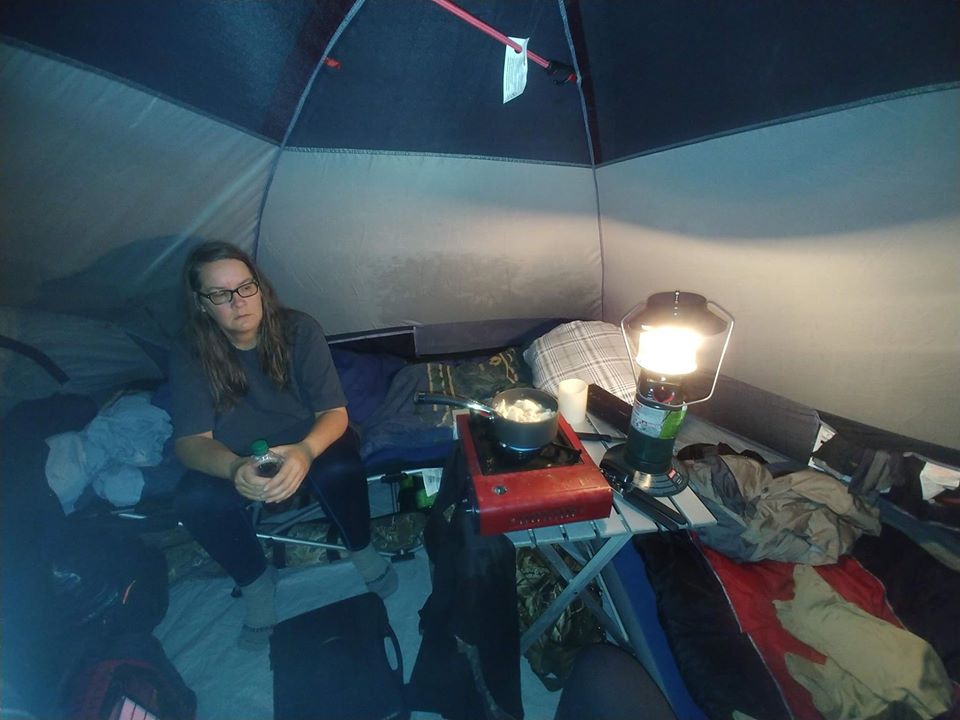
I would like to send out my heartfelt thanks to the makers of the Mister Heater Portable Buddy and Coleman for making a propane burning lantern.
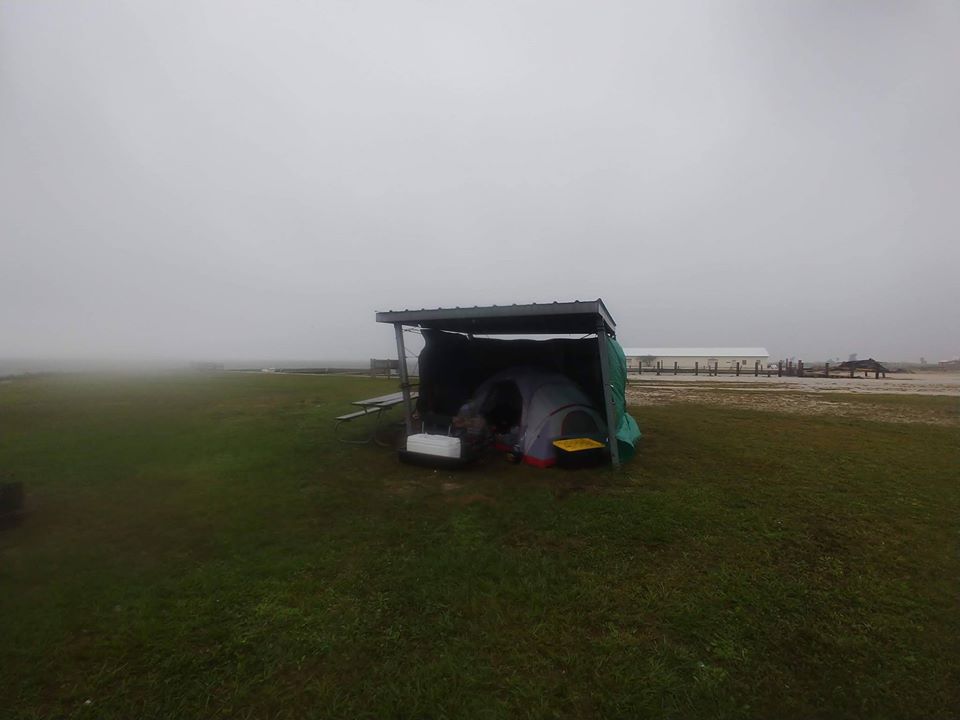
There were 19 hunters with 16 deer being taken. Of the eight boats that stayed at the dock for the hunt, five were able to leave under their own power. Two broke down or would not start and one completely sunk!
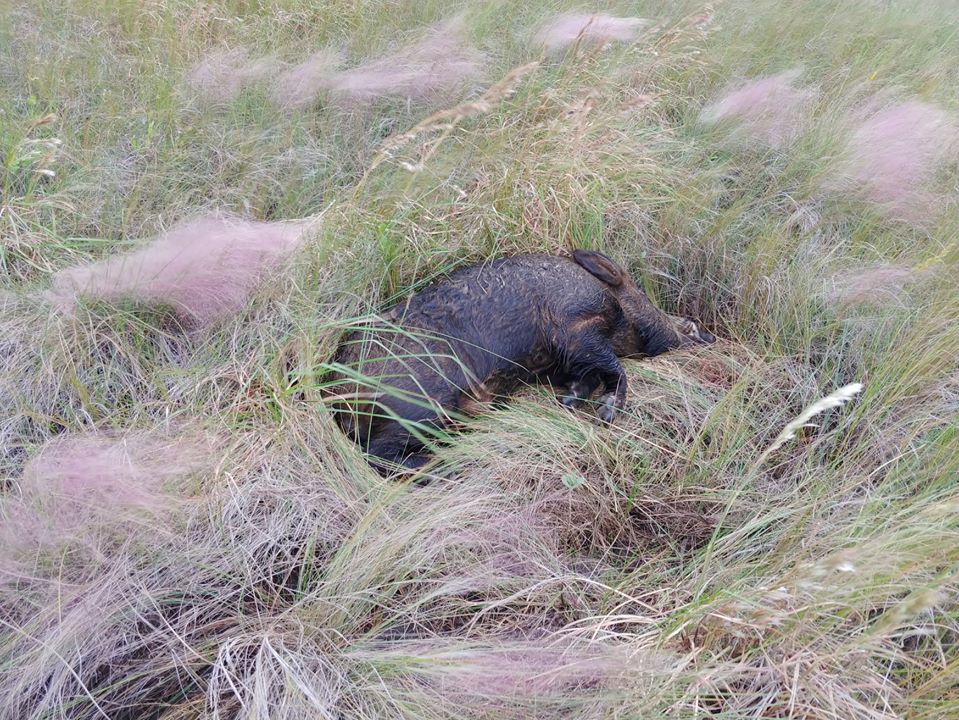
Here is a picture of the massive hog Steve shot.
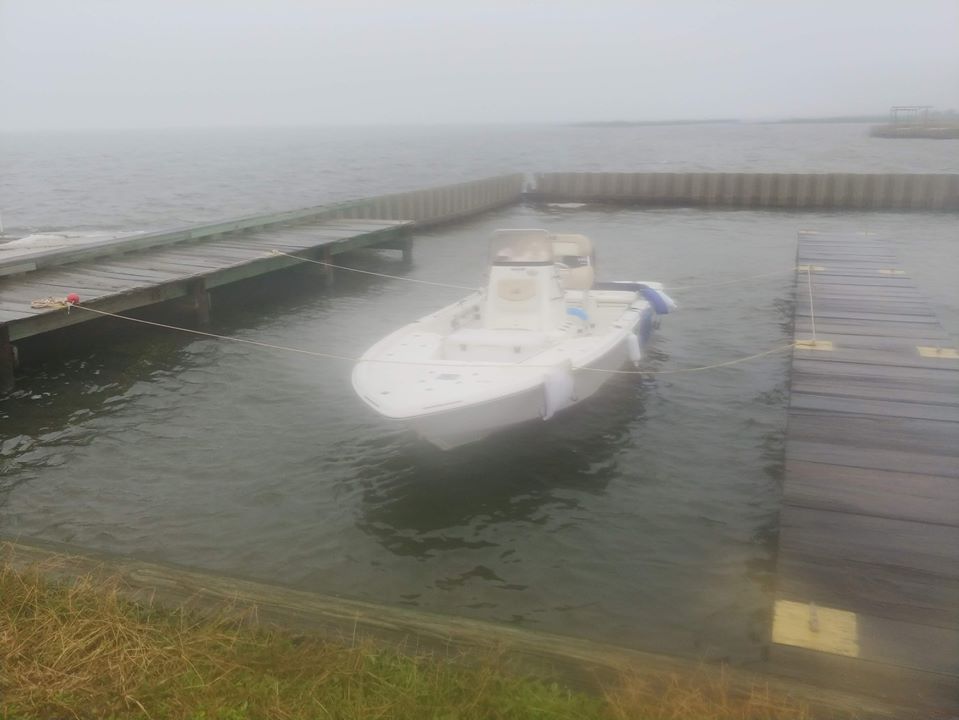
It may look strange but cross tying like this allowed the boat to ride out the worst of the storm without bashing itself apart on the dock. It got so bad that waves were crashing OVER the bulkheads.
The hunt coordinators did an excellent job and were friendly and helpful.
For more stories of our Texas Public Hunt Adventures go HERE.
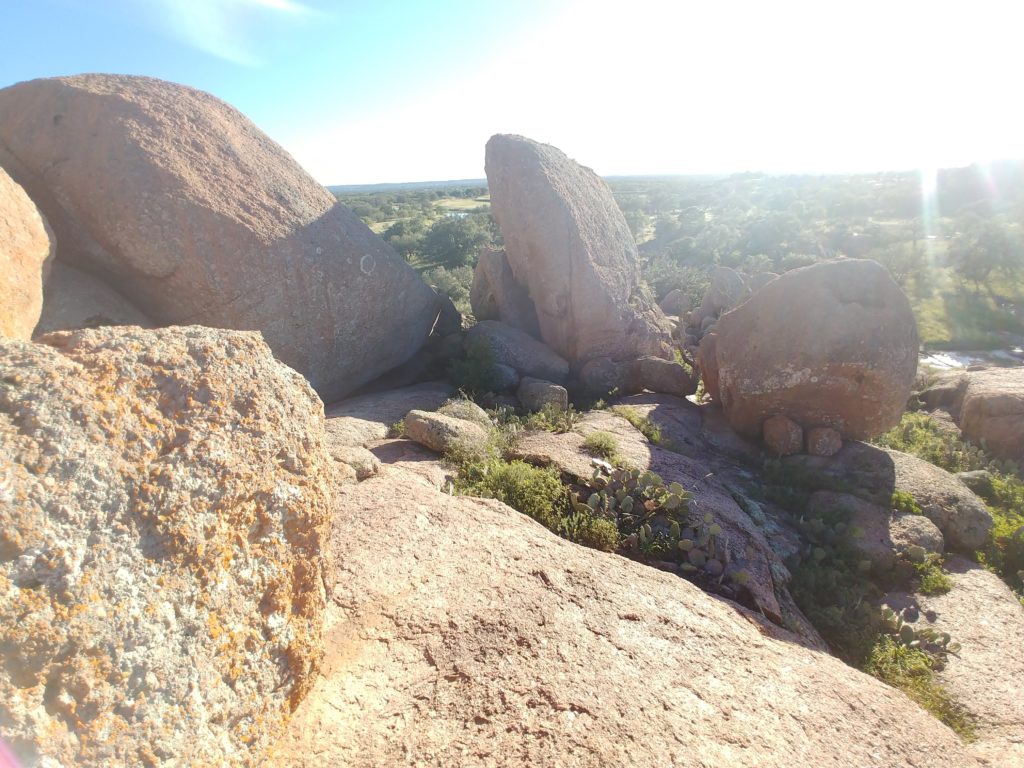
After orientation and drawing our compartments, we headed out. We had never specifically hunted javelina before and were unsure how to start. Watching all the videos in the world can only give you a starting point. It was time to figure things out for ourselves.
Javelina are not exactly “pigs” despite having that distinctive piggy nose and tusks. They are considered new world pigs and originate in the Americas. Whereas our common, and very tasty, swine are old world pigs. Contrary to popular belief, javelina are not related to rats or rodents at all. Javelina belong to the suborder Suina with pigs and hippopotamuses being their closest relatives.
We were fortunate to see a group of javelina almost from the start of our hunt. Unfortunately, we had just climbed to the top of a very large outcrop of rocks and they were on the other side and several other outcrops away. After climbing down, driving around to close to where we saw them, then climbing up that outcrop, they had disappeared. We didn’t see any other javelinas that day but did come across a very prickly situation. 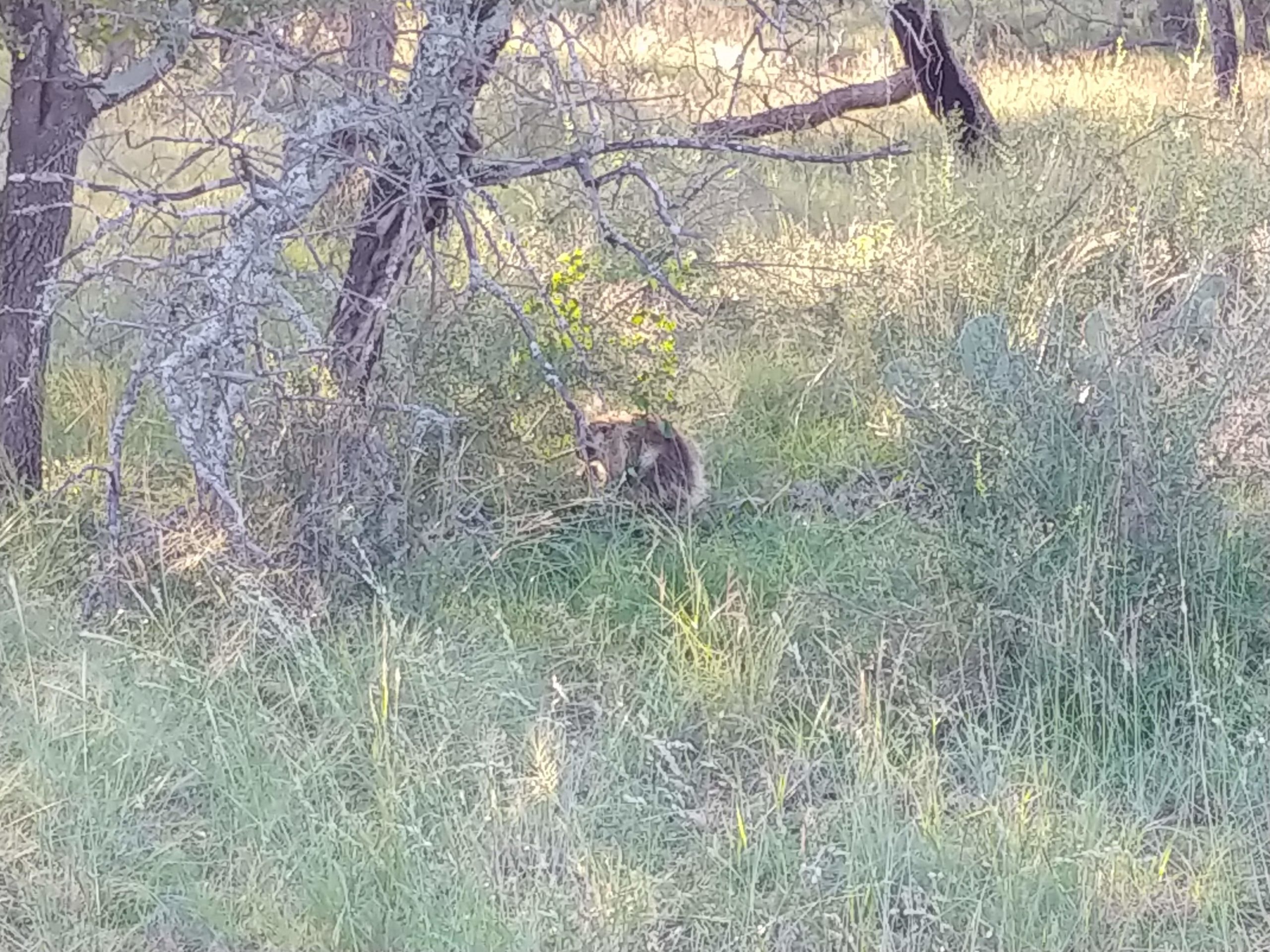
While scouting we came across this fellow with a paw tangled up in some vines. I thought at first he had been snared but it was just some tough vines that he somehow gotten wrapped tightly around a paw. It looked like he had been there for a while. He had the ground and bushes around him torn up. We called in some help and got him free. That was only the third porcupine I have ever come across in the wild. They are pretty cool little critters.
…Side note: Porcupines mumble. 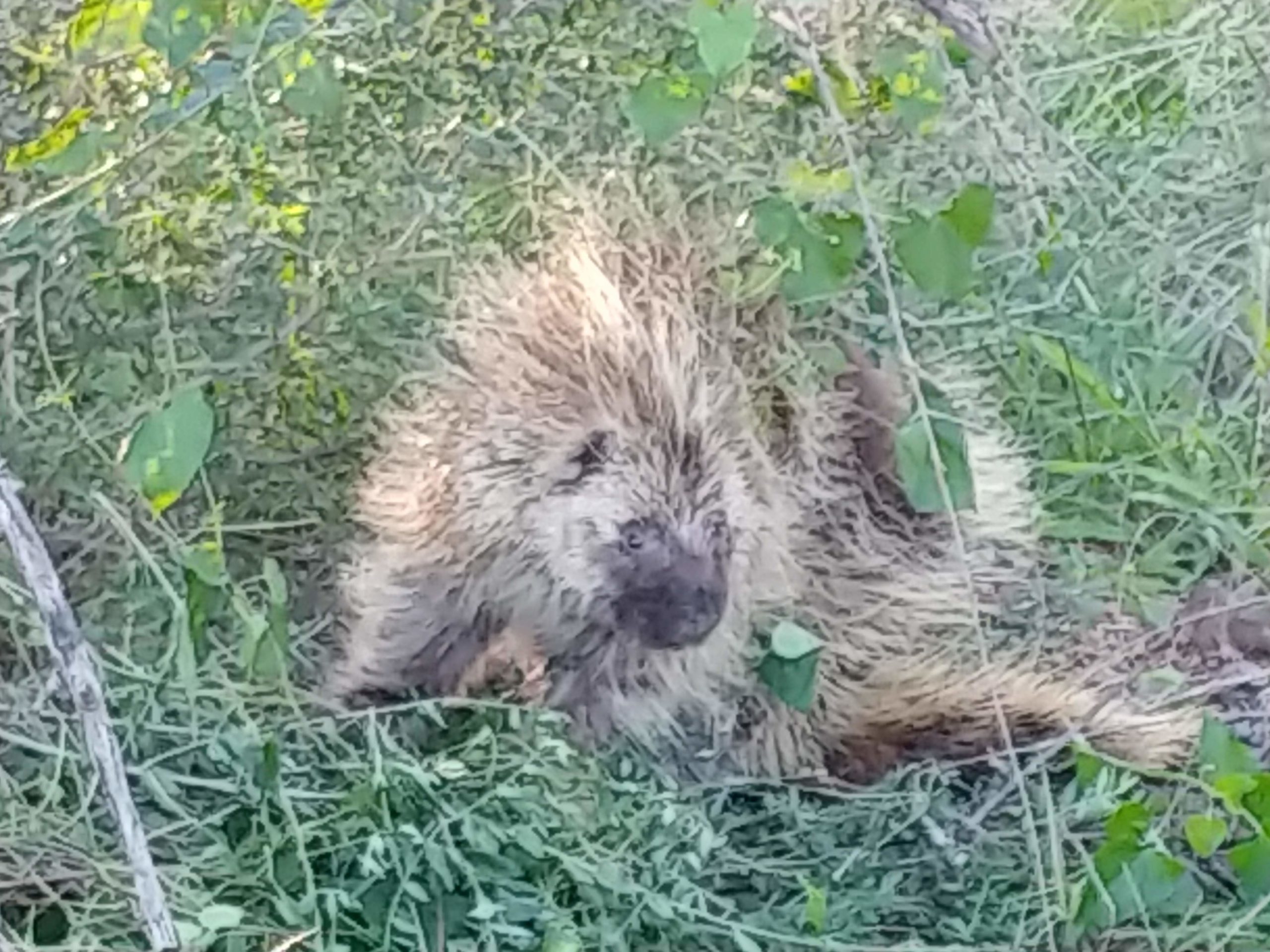
The next day we scouted several more areas. We even came across one of the numerous exotics that roam the property.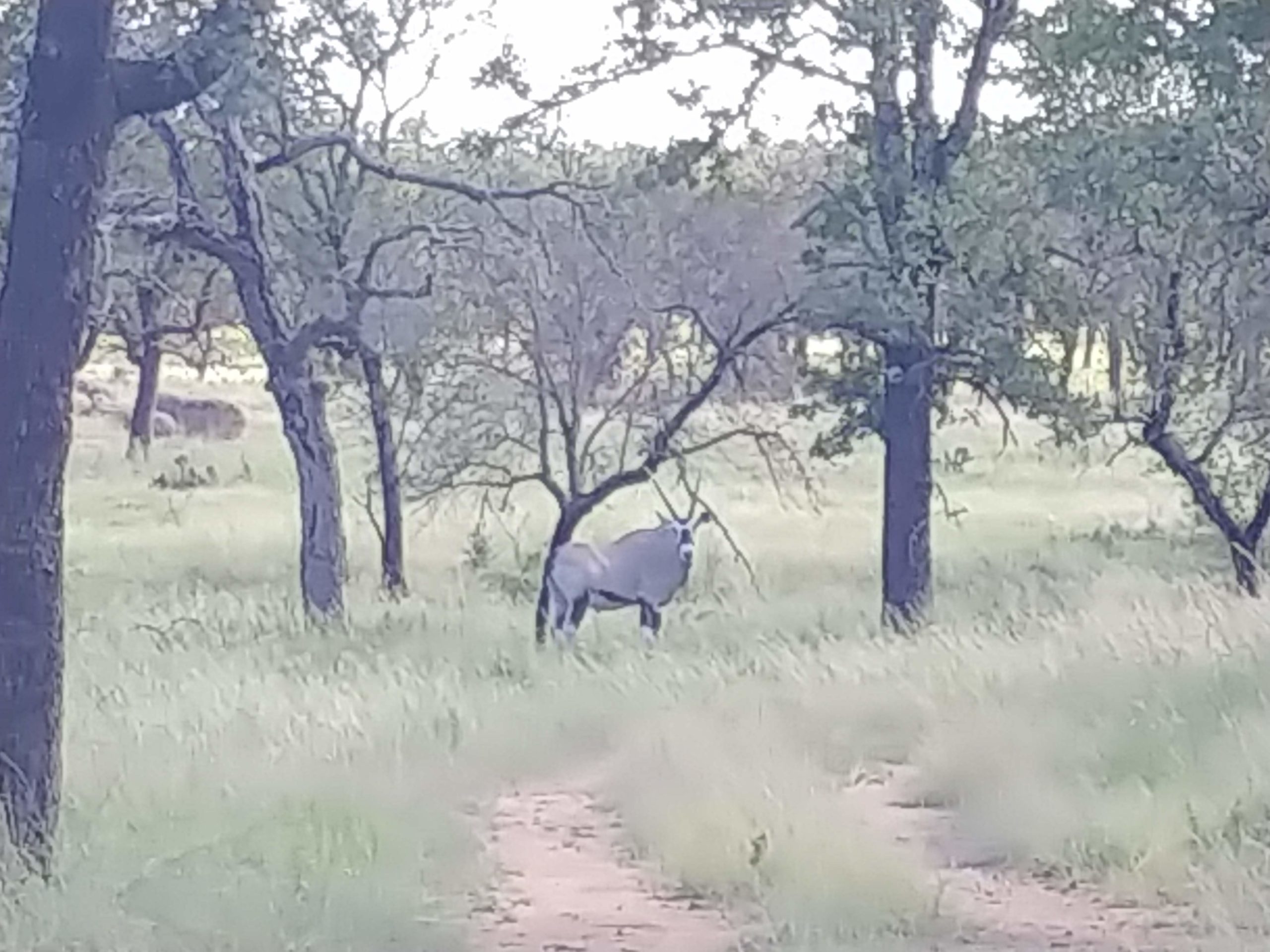
It wasn’t until we climbed up one of the larger rock outcrops that we finally saw javelina again. It turns out that the javelina here like to stay near the rocks. We had only been using the rocks to get a higher vantage point to scout. We should have been concentrating on the areas around the rocks themselves.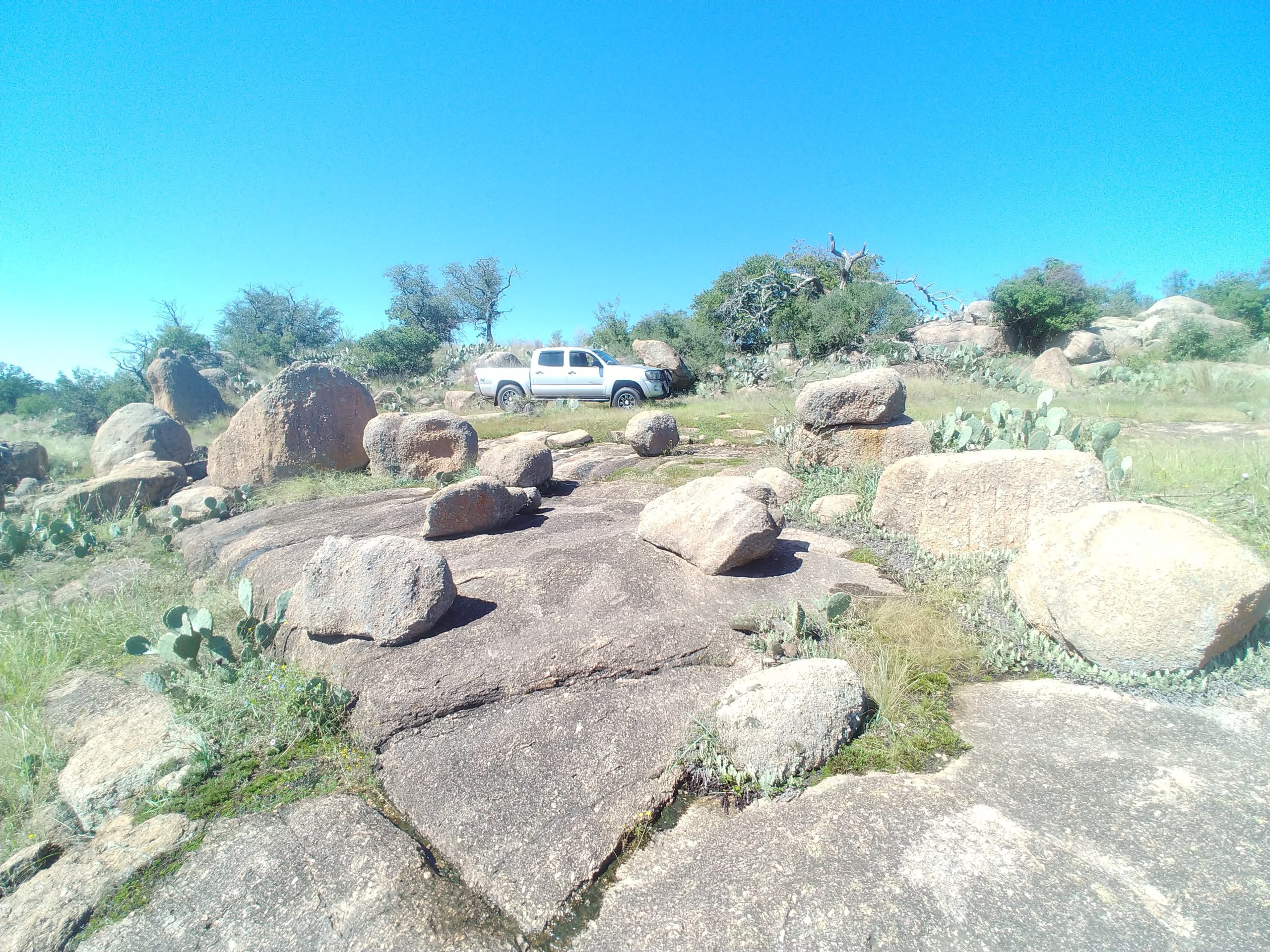
The javelina we saw were only about 100 yards away and they had no idea we were there. They were feeding around a large boulder giving us time to get the wind in our favor and slip in a bit closer.
Steve was the first to get a clear shot. When a large sow presented him with a broadside view he wasted no time sending an arrow. His shot looked good. It was a bit forward but through the shoulder. She let out a grunt and ran.
Then, chaos ensued.
Over thirty ticked off javelina billiard balled off the rocks, through the brush and around the trees. The hell? We had only seen maybe a dozen. Now three times that number were zipping around grunting and popping their jaws looking for whatever or who ever had dared to disturb their peace. Thankfully they don’t see very well and we were protected, mostly, by the rocks. Still, it made keeping track of the one in that number that had been hit. Within moments the javelina had scattered to the four corners and were gone. One second there were a few javelina placidly walking about, then thermonuclear war, and then there were no javelina to be seen. We were left trying to figure out just where in all that mess Steve’s javelina went. I found some blood and we followed it for a while until it stopped. We circled the area but didn’t find any more signs of his target after searching for over an hour.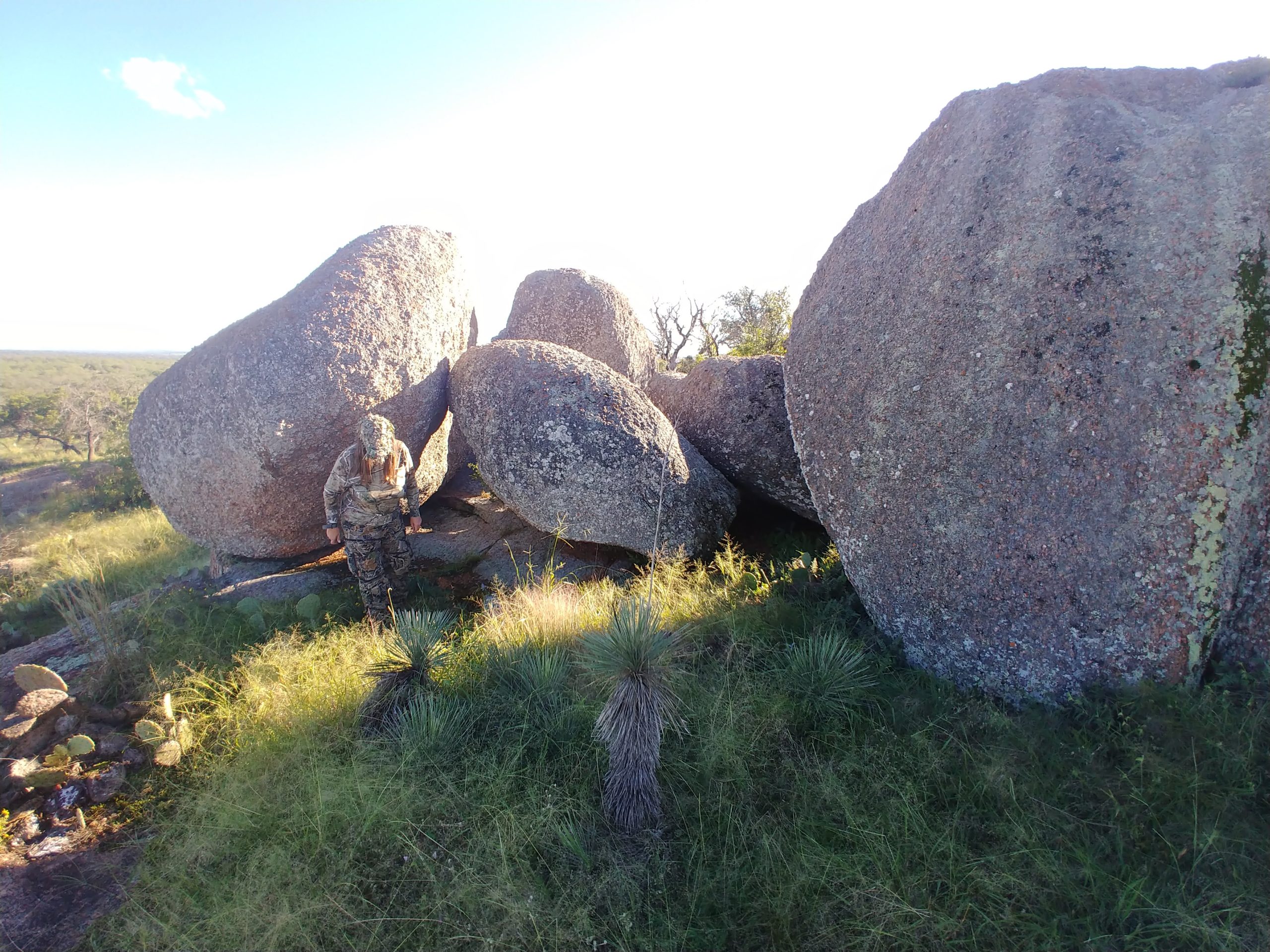
Despite not finding his javelina we didn’t give up. Well, I kinda gave up, but Steve kept looking. I headed out to see if I could find where the main group had gone and maybe get a shot at one myself. I saw a lone peccary feeding way up the mountain side but didn’t have a shot. After trying every which way I could to get closer to it I had to give up. They were just too well entrenched in those darned rocks and knew every crack and crevice. 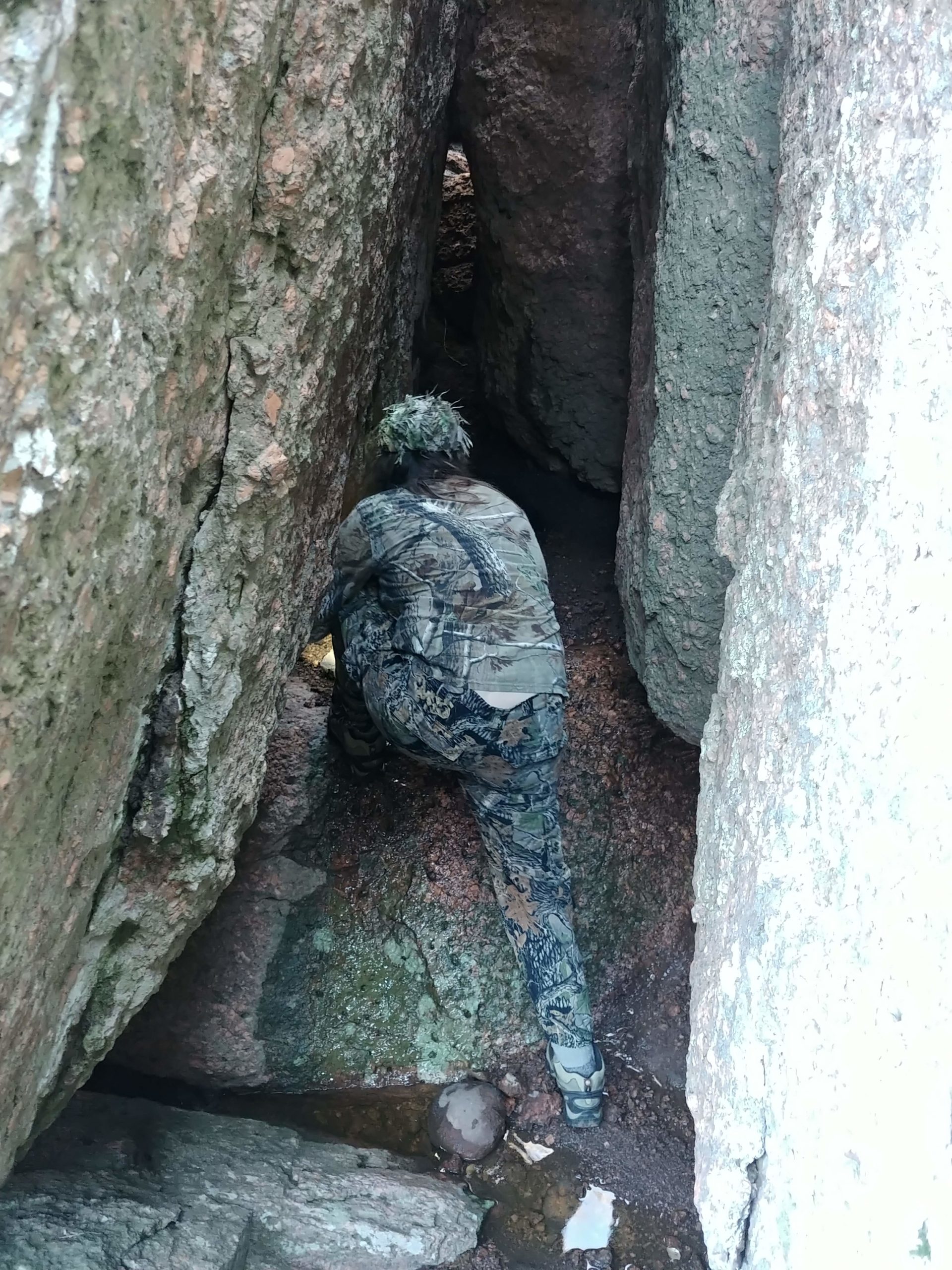
So I met back up with Steve to see how his search went. I had just gotten to him when he saw the blood. Sure enough, he had found where his javelina had gone. We worked our way around and finally came across her. She had only gone about 100 yards from where he shot her.
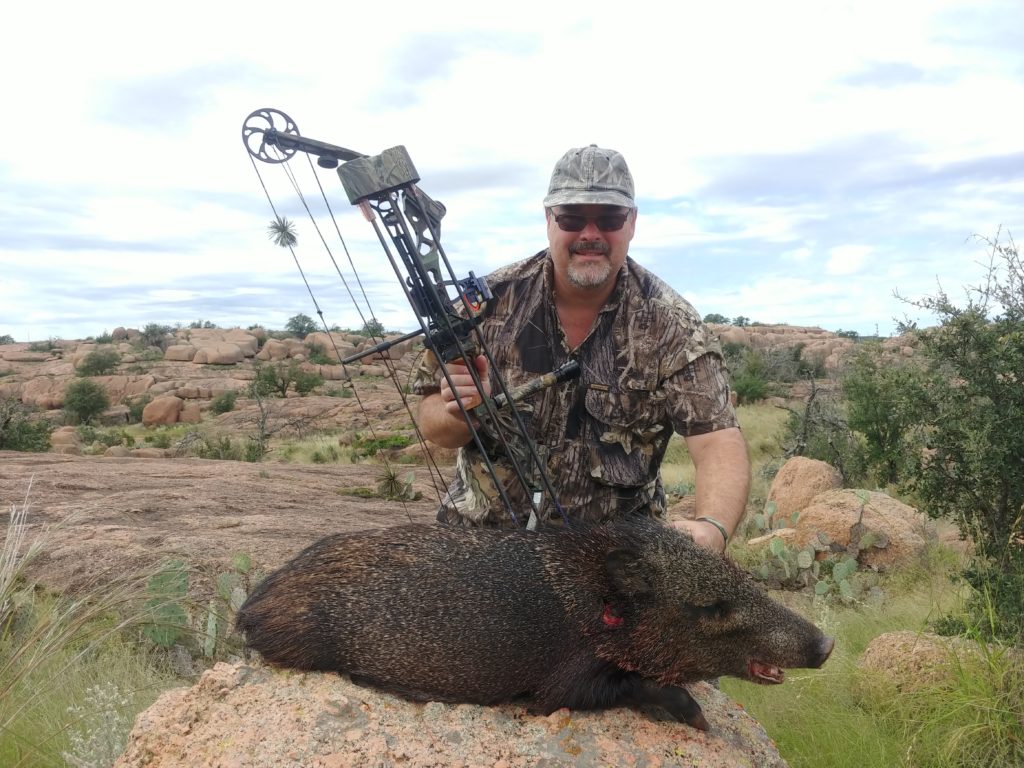
WAY TO GO!
After Steve got his we were happy to call it a successful hunt. We checked her in with the hunt co-ordinators where they weighed and aged her. She turned out to be a very old gal indeed.
A note about javelinas. They have a scent gland in the middle of their back just above the rump. It looks a lot like a nipple and gives them a distinctive smell, much like a skunk. Because of this javelinas are often called “stink pigs” or “skunk pigs”. When cleaning a javelina it is a good idea to remove this gland immediately. Believe me, you DO NOT want to get any of that smell anywhere near the meat. Once the gland and skin is off the meat smells very much like deer meat.
We skinned her and quartered her up before icing her down. For a small critter she had a good amount of meat. It was a good day.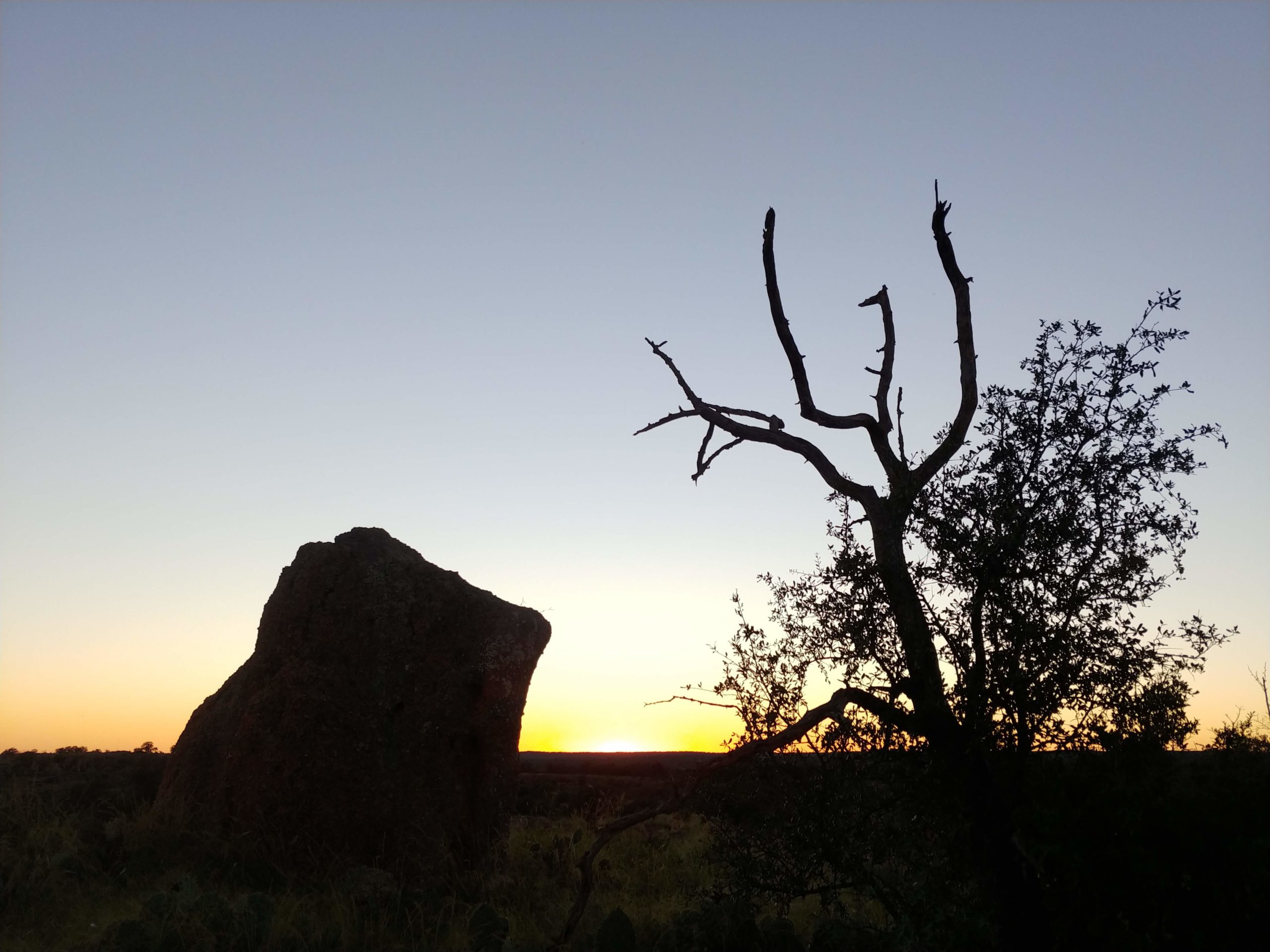
The next day was my turn. We knew about where the herd went so I headed out to see if I could find the main group. I looked all around the rocks but didn’t find them. It wasn’t until I got down wind that I smelled them. The sun was getting high and it was hot so maybe that helped bring their scent to me. Either way I finally knew where they were. Unfortunately, in order to get the wind in my favor, I had to climb up and over the largest outcrop on the property. As I topped the ridge I found them bedded down in a 10 foot crevice. They were piled in and on top of each other taking a mid-day nap. The crevice had some thick brush and trees growing in it. All I could really make out was javelina fur between the limbs and leaves. I couldn’t tell what patch of hide belonged to which animal. Finally one of them got up and walked a bit away from the group. I had a clear shot in just a few spots but that guy made the mistake of stepping into one of them. One shot and I dropped him. The rest of the herd boiled out of the crack except for two which stood around popping their tusks looking for the source of the trouble. I thankfully, was well out of reach.
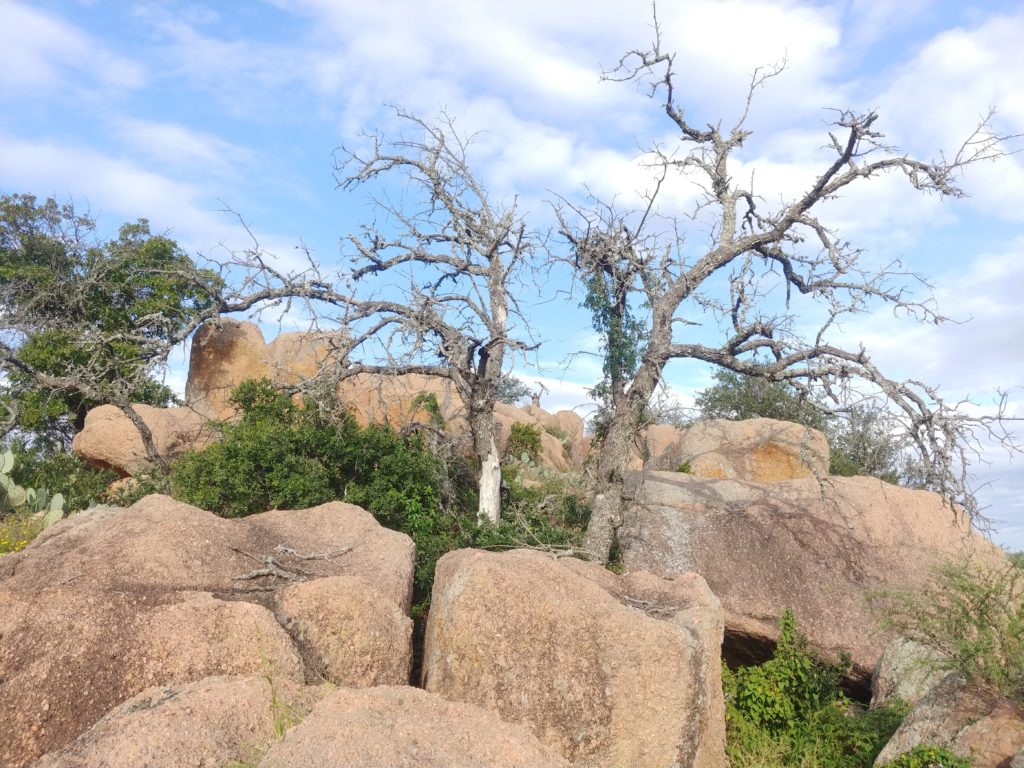
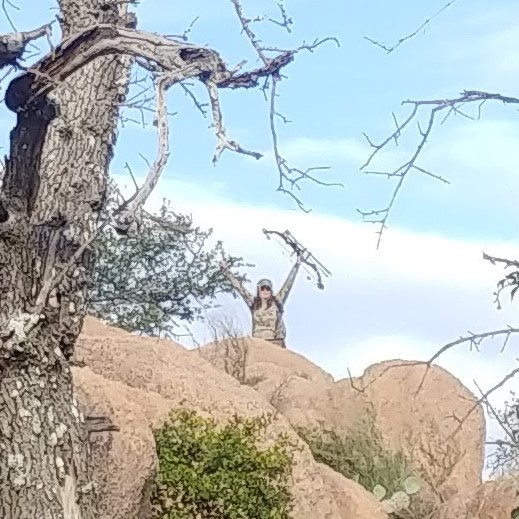
Steve took this picture right after I made my shot. That is me on top of the rocks between those two dead looking trees.
It was no fun dragging him out of that stinky, chigger and flea infested crevice.
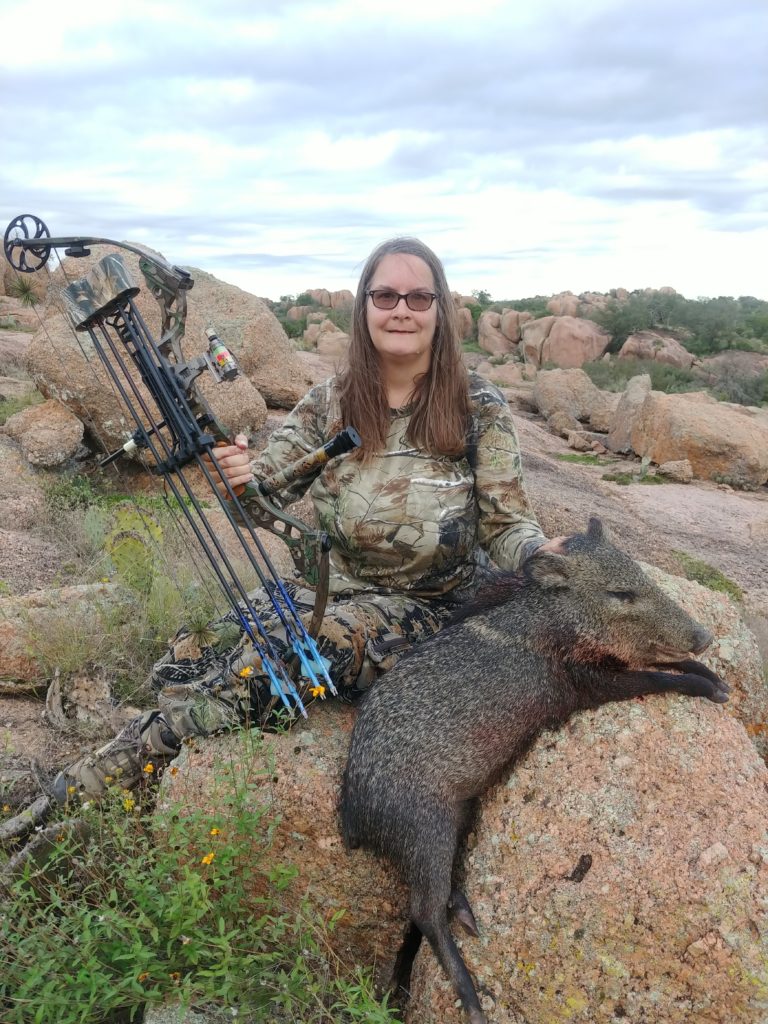
Totally worth it!
We headed back in to check in my kill then skin and quartered him up. He was on ice within an hour of my shot.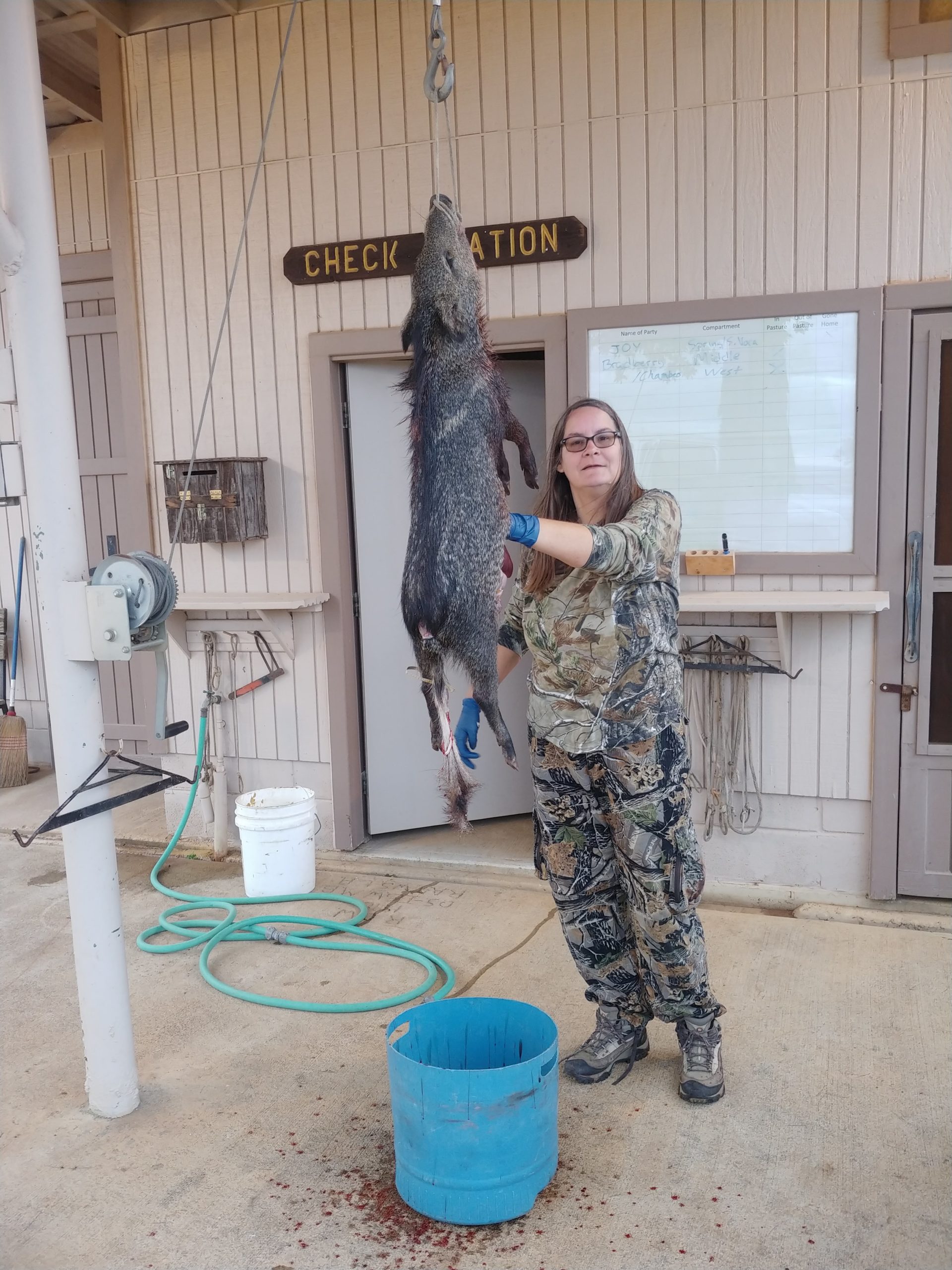
Mason Mountain once again provided us with an exciting adventure. The bonus was bringing home some meat which was turned into delicious smoked sausage links. Everyone who has tried it loved it. The trick is taking off that gland and skinning the javelina out quickly. Javelina gets a bad rap because of their smell but the meat is very good.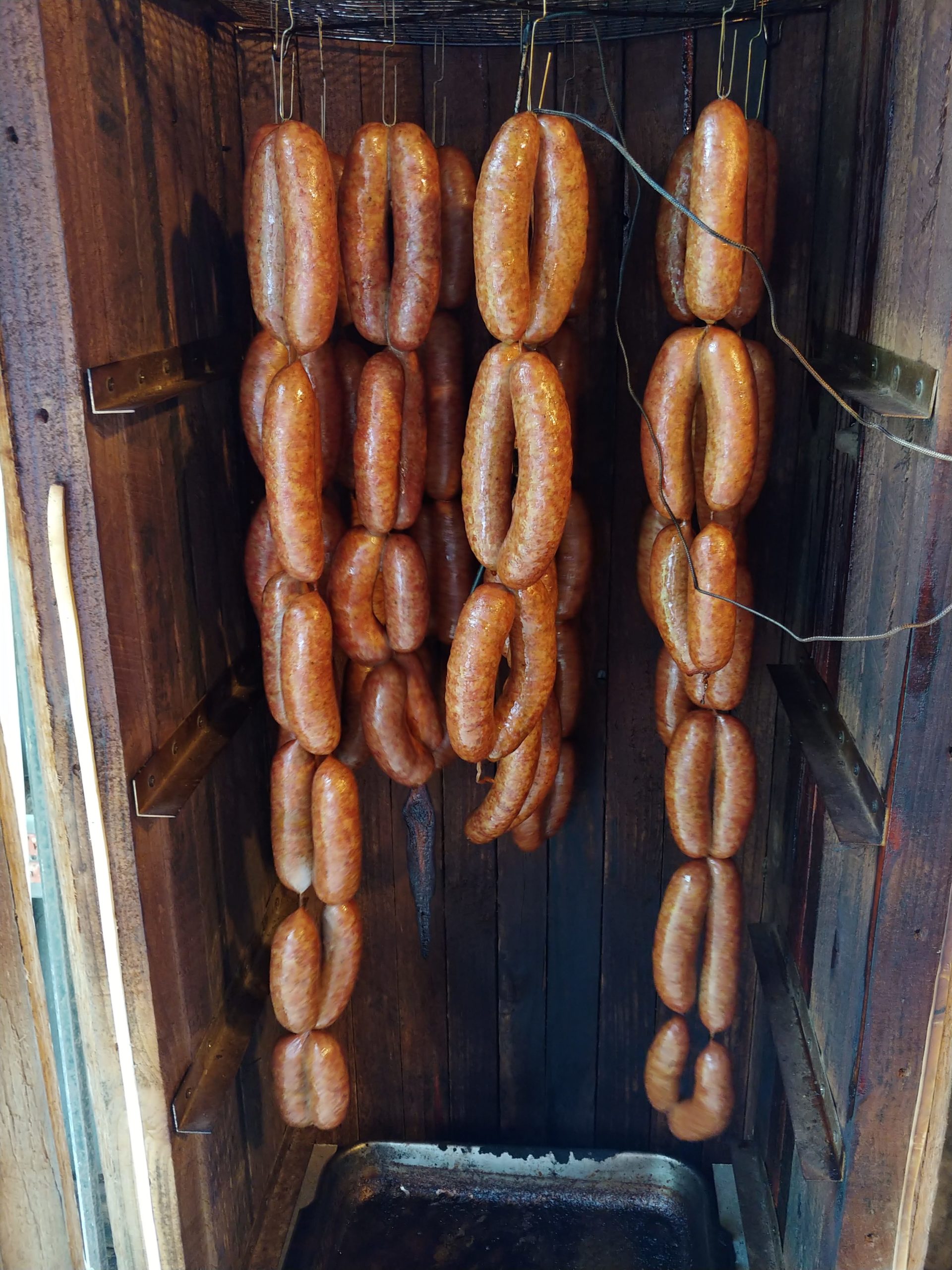
For more stories of our Texas Public Hunt Adventures go HERE.
Lodging
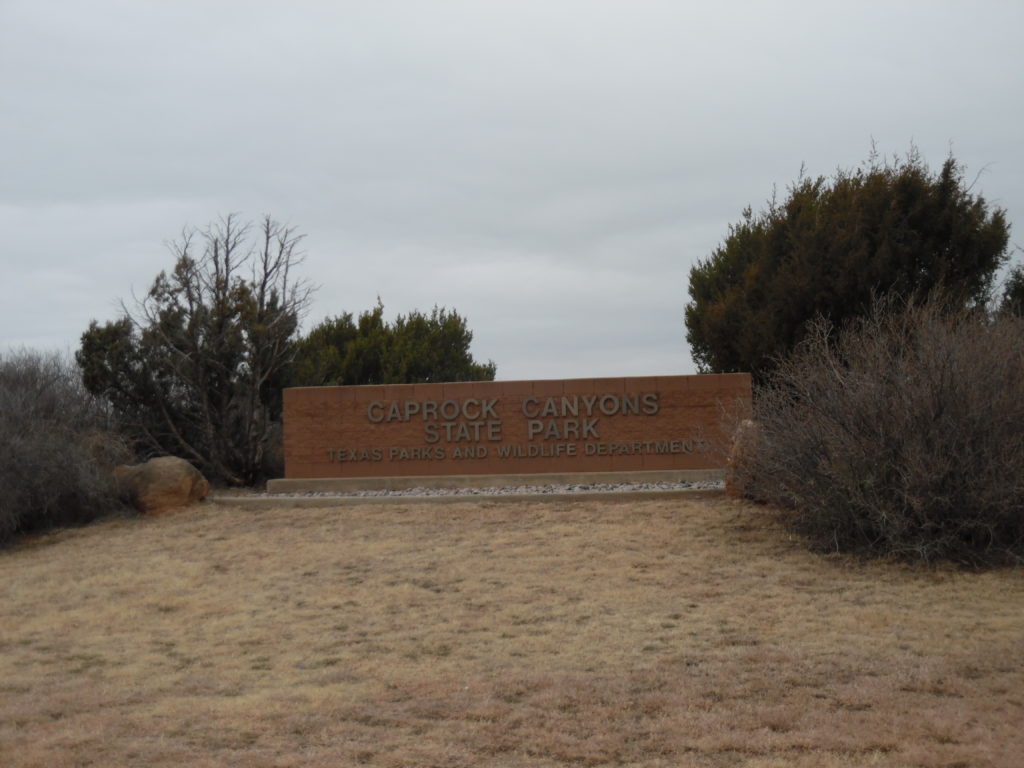
This was a bit tricky. You can camp at the park but the weather was supposed to be cold so we looked elsewhere. The closest commercial lodging I found was in Turkey, Texas. There is an old historical hotel there and, at 13 miles away, it was well within daily driving distance.
A note about Hotel Turkey. It is old. Really, really old. The history contained within those creaky, badly insulated walls is long and storied. The employees are friendly and willing to help in any way they can. In addition, breakfast, REAL breakfast, is included in your room price. I’m talking bacon, eggs, sausage and toast cooked to order. None of that coffee, stale donuts and cold muffins many hotels proudly call breakfast. Nope, this was honest food.
The rooms feature squeaky floors, and paper thin walls that allow you to hear everything the other guests say, even several rooms away. Bring a fan to drown out this noise. Also, you may be woken up several times a night by the gentle swaying of your bed as the other guests move about. The floor doesn’t just groan, creak and whine with every step taken it also seems to move the entire building.
Thankfully the bed was very comfortable.
FOOD
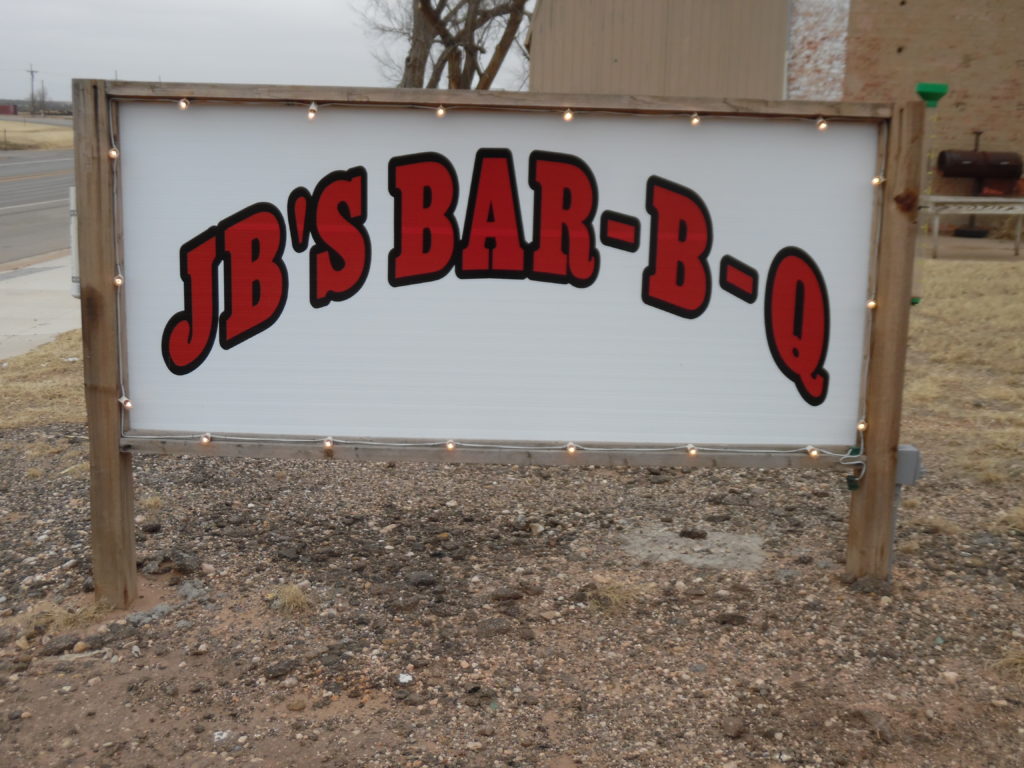
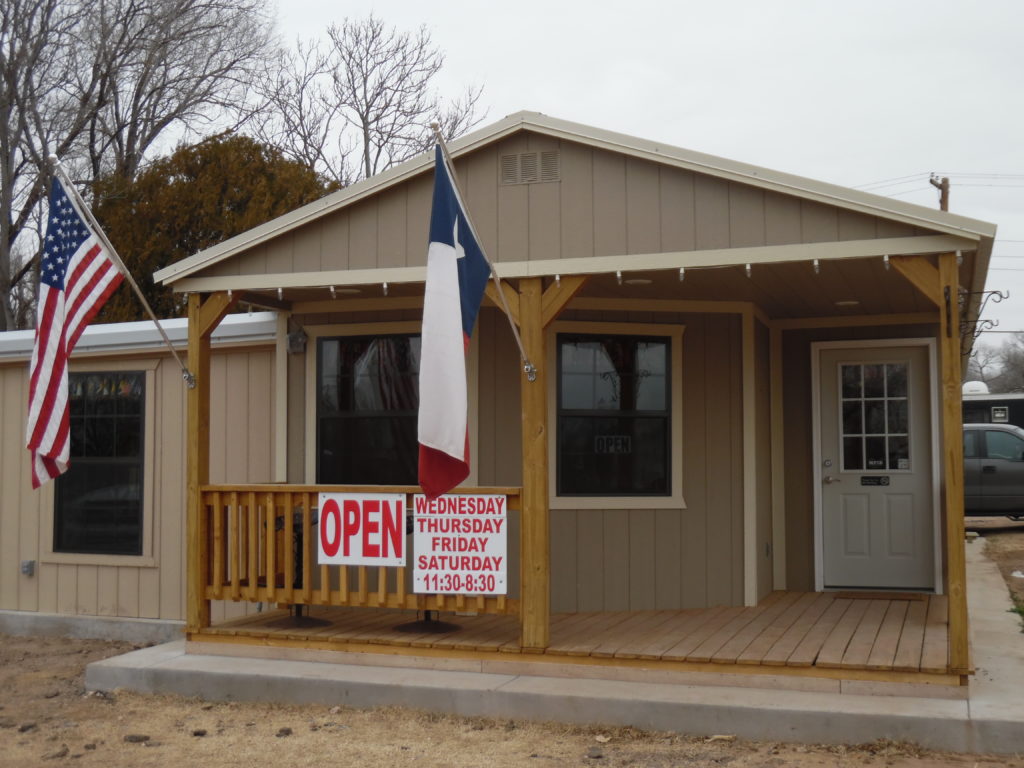
While there are several places to eat in both Turkey and Quitaque (Kitty Quay). Our favorite came to be a small BBQ shack in Turkey called JB’s Bar-B-Q. Not only is the BBQ wonderful but the homemade sides are fantastic. If you are really lucky there might even be some cobbler available if the locals haven’t eaten it all. I highly recommend you stop by and give this place a try.
HUNT
After all the hunters had checked in and the paperwork was done we drew for spots. From what I gathered, Yellow, Pink and Green compartments are (usually) the most productive. Not to mention the most rugged. We lucked out and drew Green. Several hunters there had hunted Green in the past and gave us some tips on where to go. The Park staff also helped out with some sage advice. Basically, climb up high and sit and glass. A LOT!
Our compartment was indeed rugged. There were many deep canyons and high plateaus, “fingers”. The aoudad could be anywhere. They might be on the lower meadows grazing or suction cupped to the side of a sheer cliff. Look everywhere, twice. Then come back and look everywhere again.
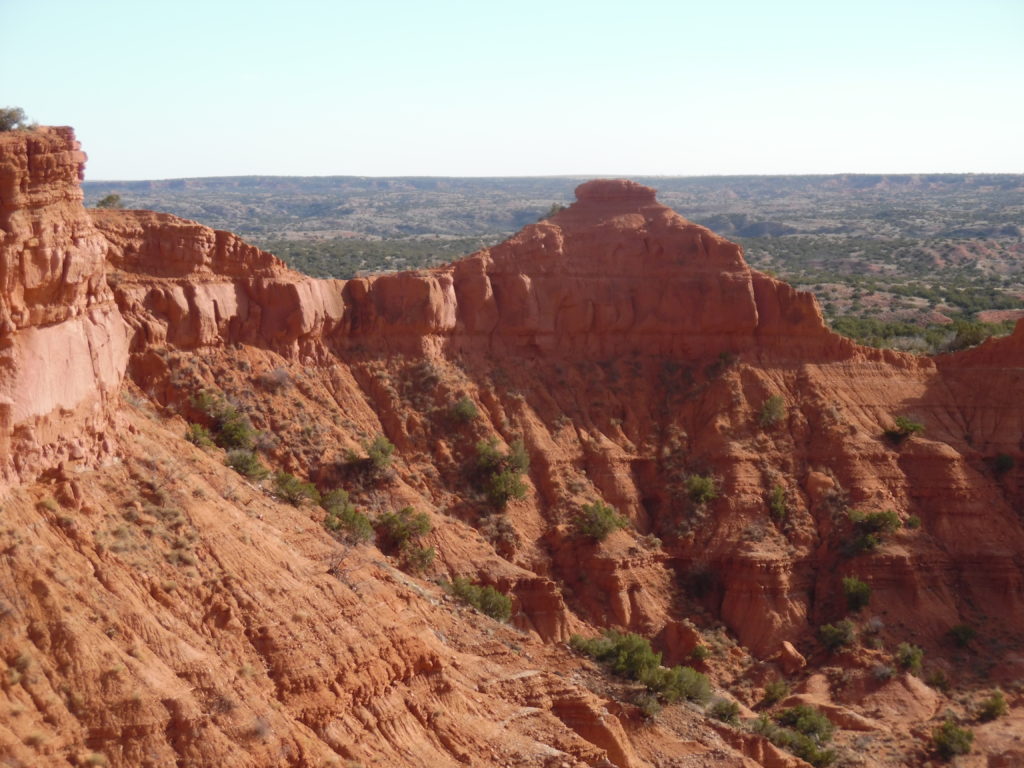
We stayed out all day, even eating lunch at a senic overlook.
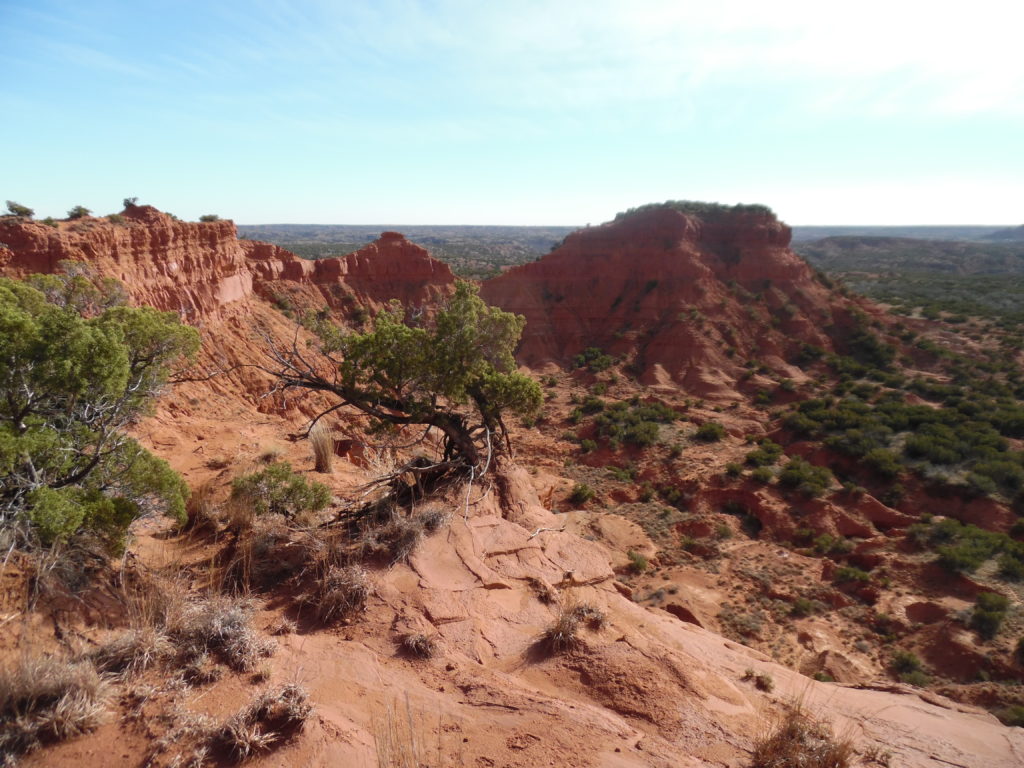
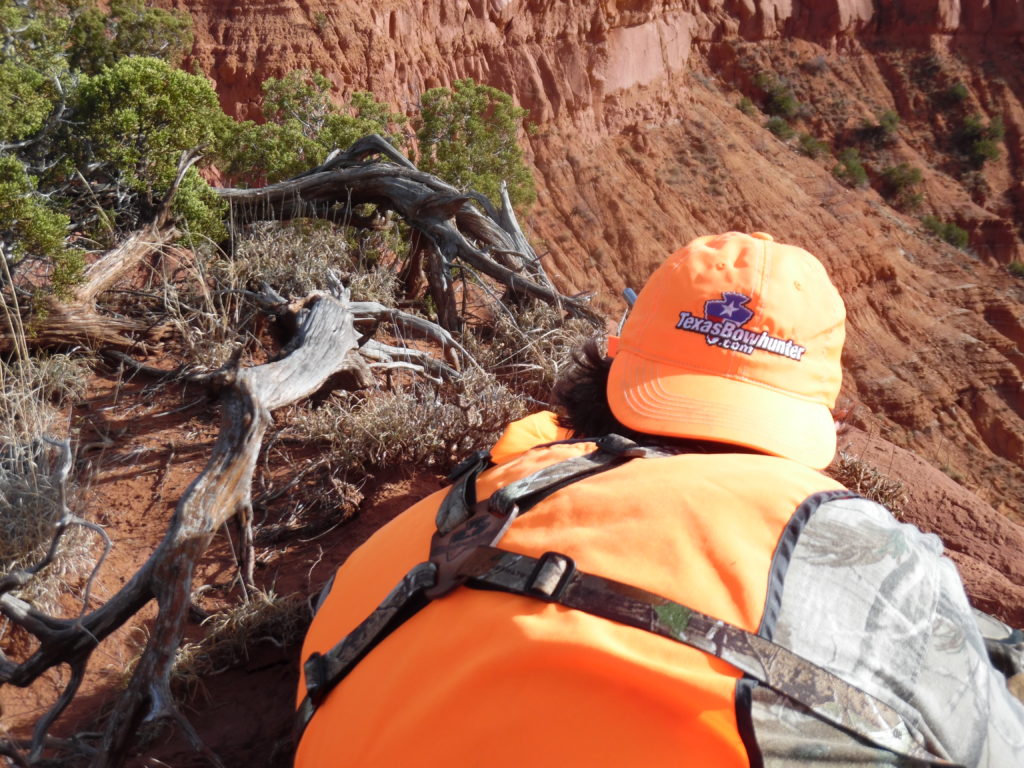
If you are reading this because you were also drawn for this hunt and Google directed you to this page ,then you have likely read other reports about Caprock Canyon. If, like me, you have read any at all you will notice the reoccurring theme is that this hunt is strenuous and not for the out of shape.
Seriously.
We had prepared for this hunt by biking miles each day leading up to the hunt. I know that isn’t the same as climbing canyon walls but it helped more than sitting on the couch would have. The reality however, is that to increase your odds at an aoudad you need to cover miles and miles of country, much of it vertical, while carrying a heavy pack with lots of water. This land will suck the moisture right out of you.
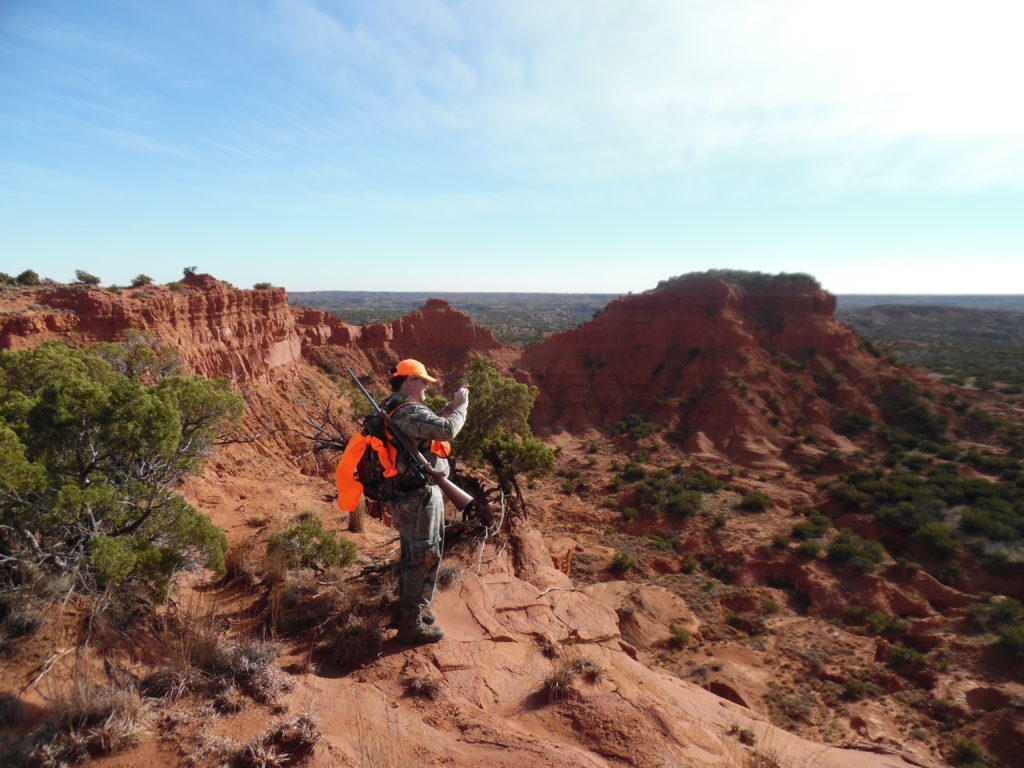
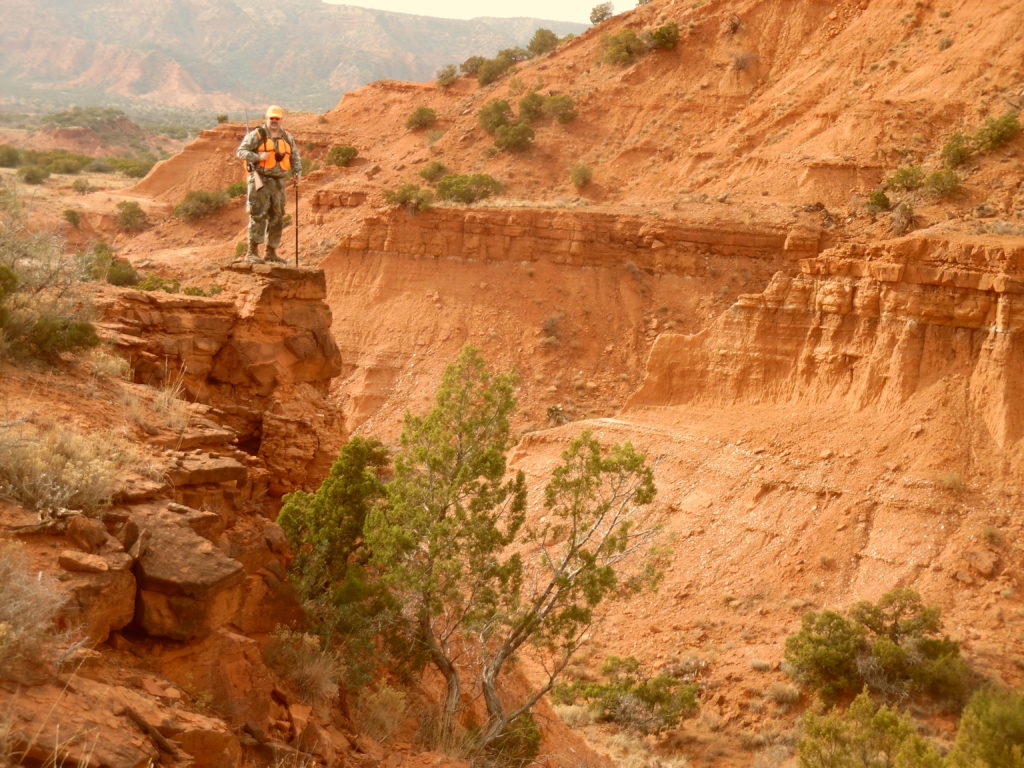
And speaking of the land. It is absolutely breathtaking. The iron rich sandstone and gypsum cliffs are a wonder to behold.
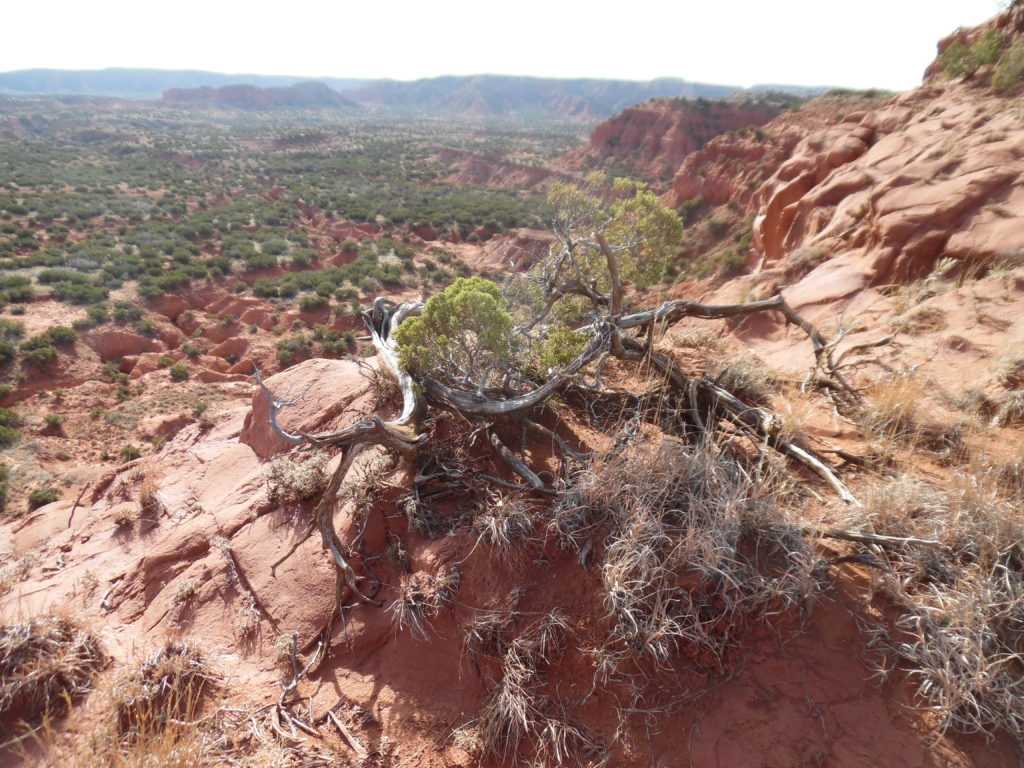
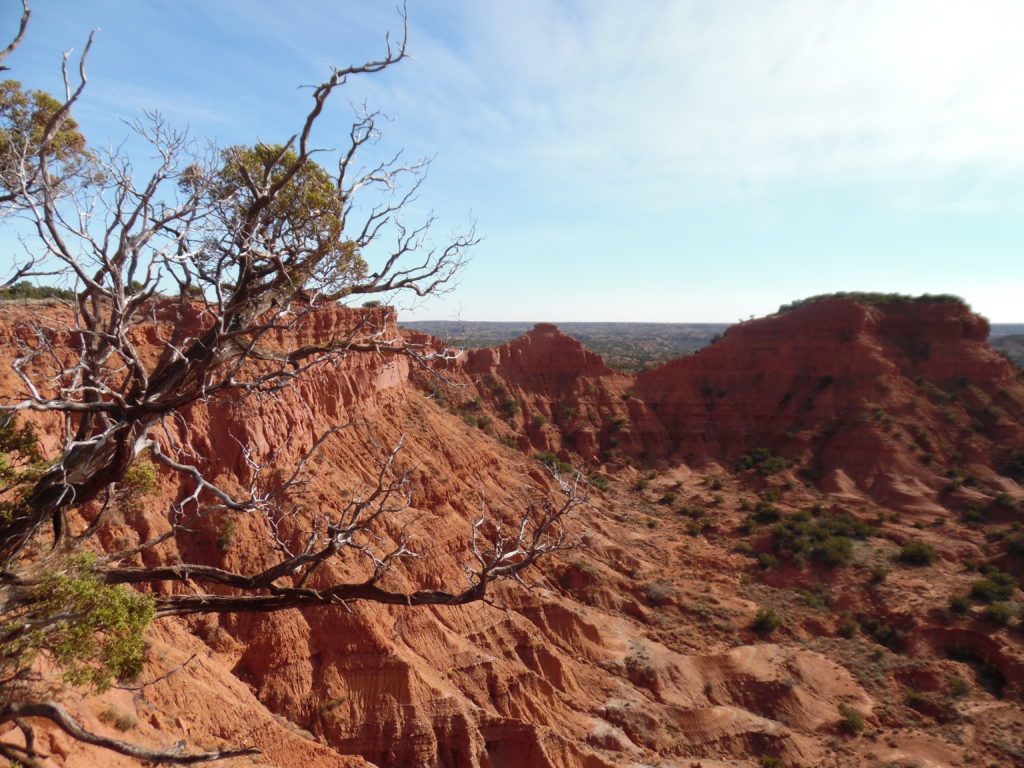
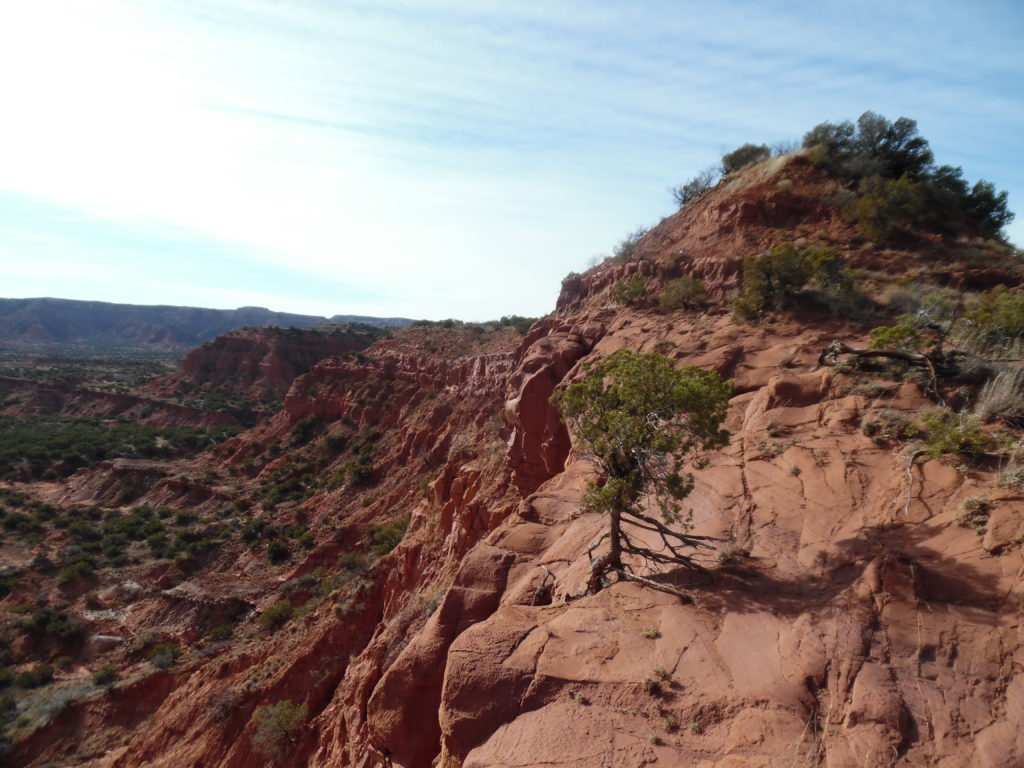
As the first day of our hunt came to a close we still hadn’t seen any aoudad. We may have seen a mule deer doe and we did come across a small heard of bison. That was a surprise. We knew they were there but were not prepared at how quietly they can move. We thought we were sneaking up on a heard of aoudad only to turn the corner and find bison instead.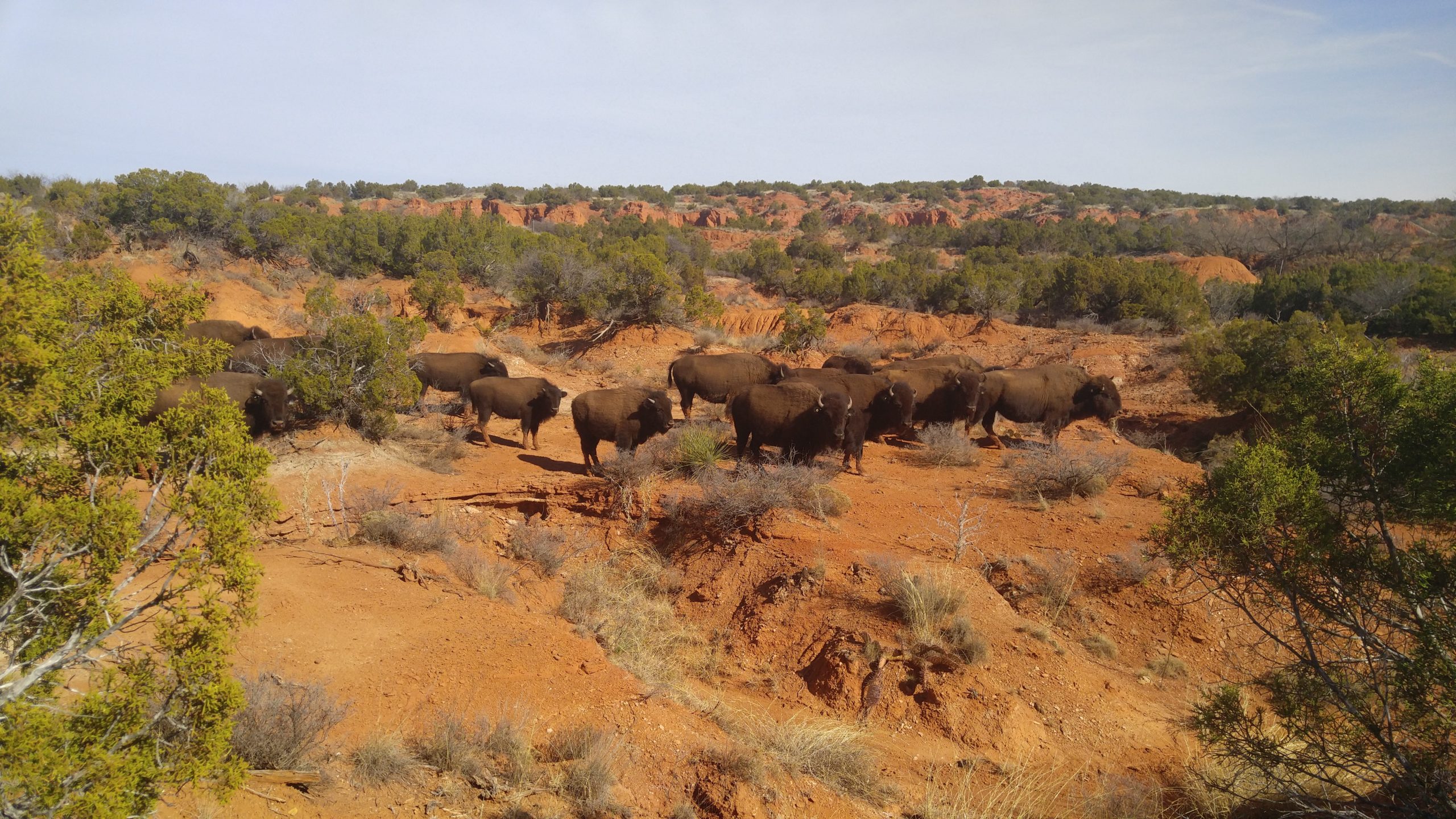
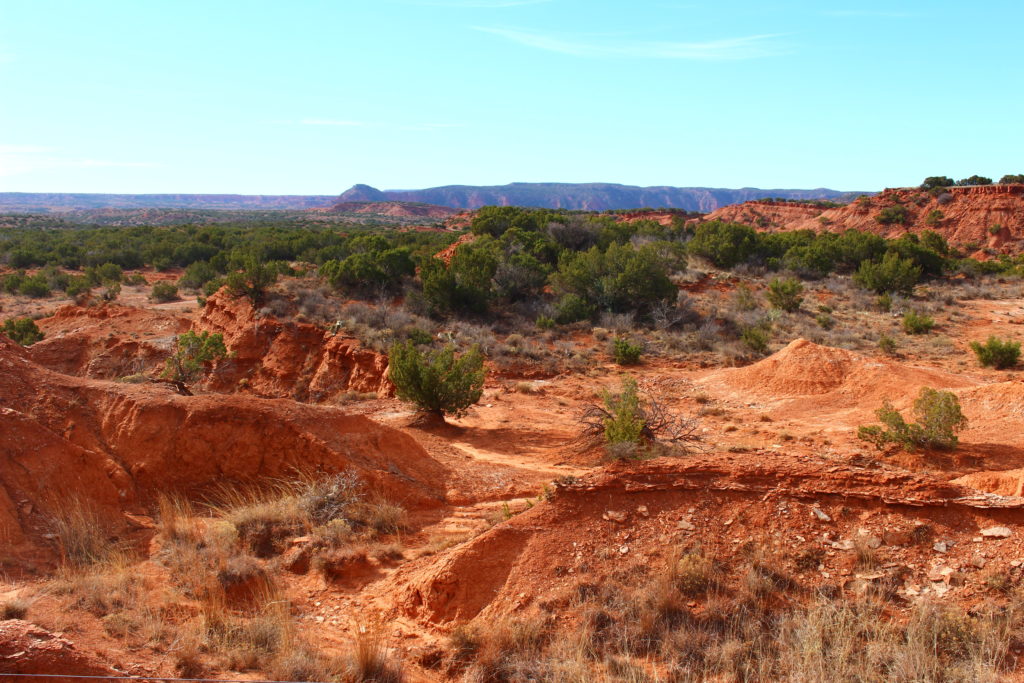
We only heard one shot from the other compartments so we didn’t think anyone else was seeing much either. Later we would learn that shot was at a decent ram.
The sunset was amazing.
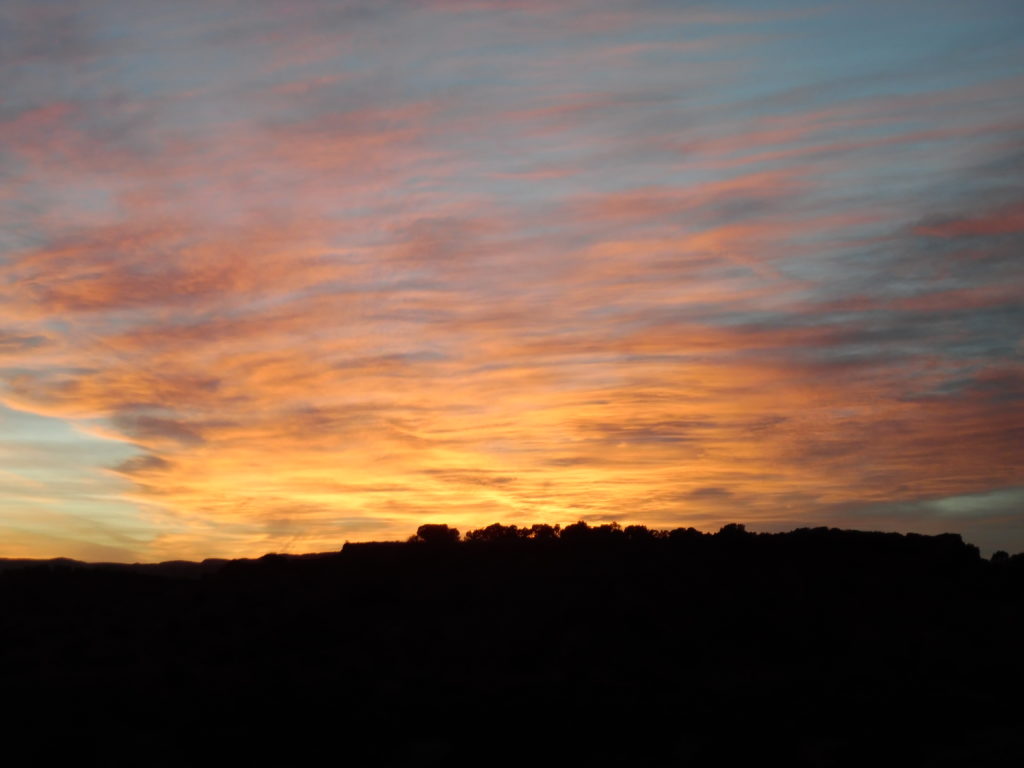
The next day held more hiking, more climbing and more disappointment. We hunted hard, stayed out the entire day and glassed over miles of country. Still we hadn’t seen any aoudad. By the end of the second day we were tired, sore and very discouraged. Only one group of hunters had even seen an aoudad. In case you are wondering it was the Yellow compartment. In fact we heard the shots and watched their group from over a mile away. We only saw them shooting and never saw what they were shooting at but later heard they took four aoudad.
Two other groups of hunters approached us and asked if they could hunt the parts of our compartment we didn’t cover. They hadn’t seen anything in theirs and wanted to move. We let them cover a few canyons we hadn’t. Heck, maybe they would push something toward us.
They didn’t.
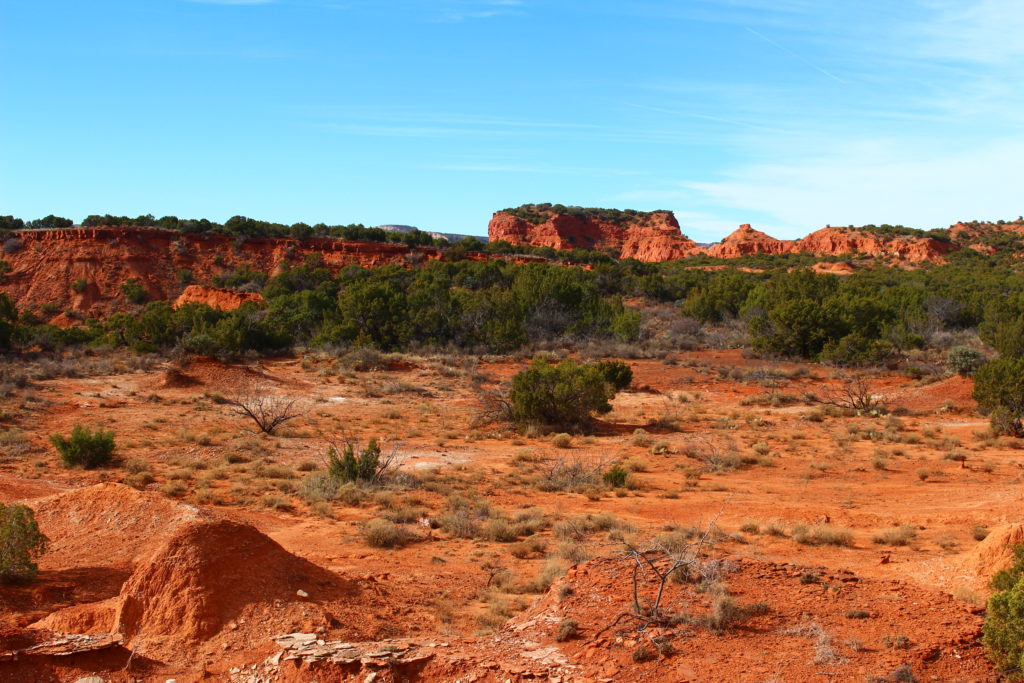
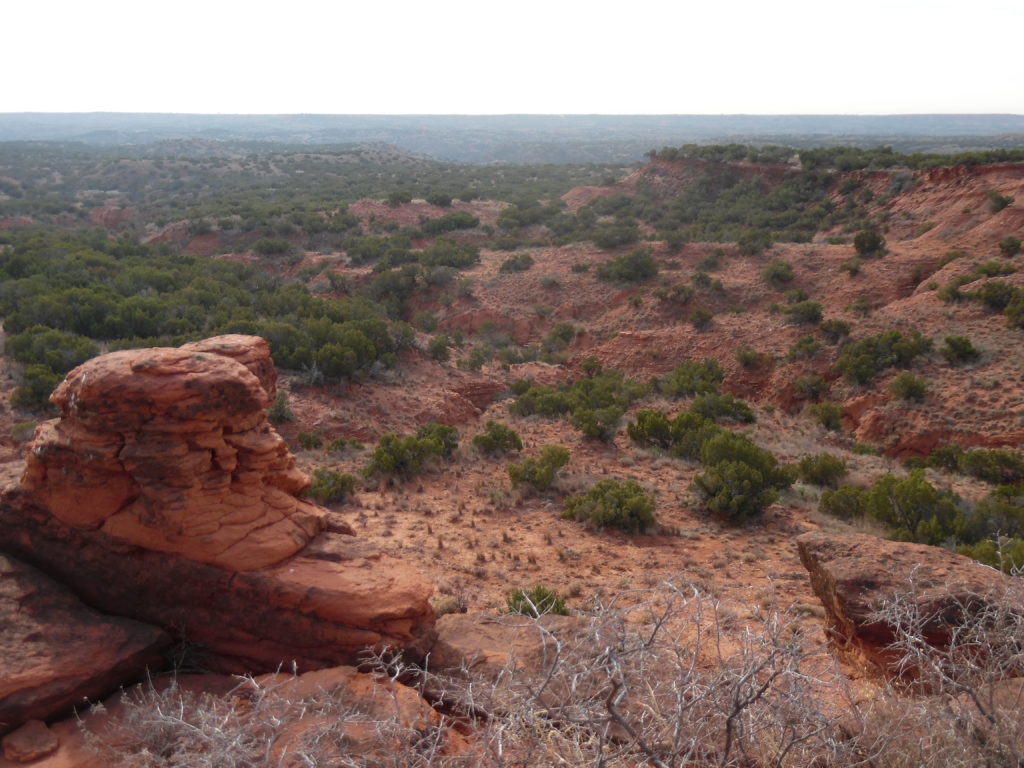
The hunt ended with only the yellow compartment seeing any aoudad and they took five. Some pigs were taken from the red compartment but that was all we heard about.
While I am disappointed that we din’t even see an aoudad I did enjoy my hunt. Both my husband and I are avid rock-hounds and thoroughly enjoyed the geology this hunt offered. Note: you are not allowed to take anything from the park. So all rocks were seen and enjoyed but left in place.
For more stories of our Texas Public Hunt Adventures go HERE.
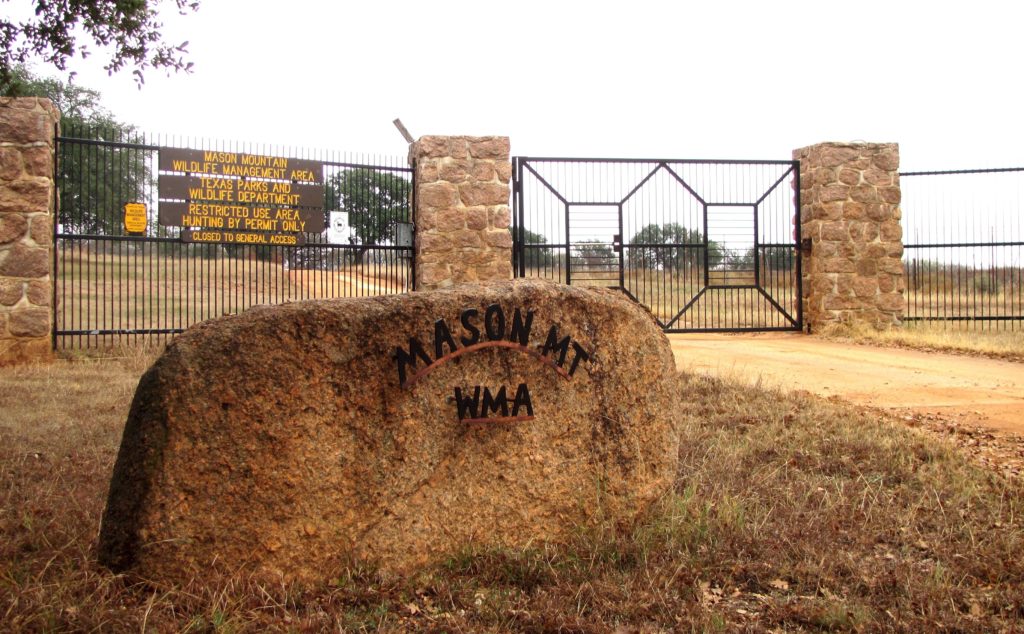
Steve and I were fortunate enough to be drawn for the 2014 Mason Mountain, Gun Deer Management hunt. For this hunt we would each be allowed to take two whitetail deer from the management area. Either one doe and a buck, or two bucks. All bucks harvested had to have six or less antler points. We have not yet had the opportunity to do one of these hunts and were eager to see yet another new public Texas hunt area. Mason Mountain is located roughly North West of Austin and North of San Antonio in the beautiful rolling Hill Country. One of our favorite areas to visit. The last time we hunted the Hill Country was many years ago at Enchanted Rock State Park. That hunt was a blast and we had high hopes for a repeat of the experience.
Weeks before the start of our upcoming hunt Steve received a call from Producer Abe Moore of Texas Parks and Wildlife TV. This is a half hour weekly television program which airs on PBS all across the Great State of Texas. Abe was doing a segment on the Mason Mountain WMA and wanted to know if we were up to having cameras follow us around a bit while we hunted. Steve said that as long as I was OK with it, it would be fine. Later that day Steve told me about the call and I didn’t see a problem. After all, Abe had said that he was calling several of the hunters who had also been drawn. It’s not like they were going to be in our faces that entire hunt, if at all. Right?
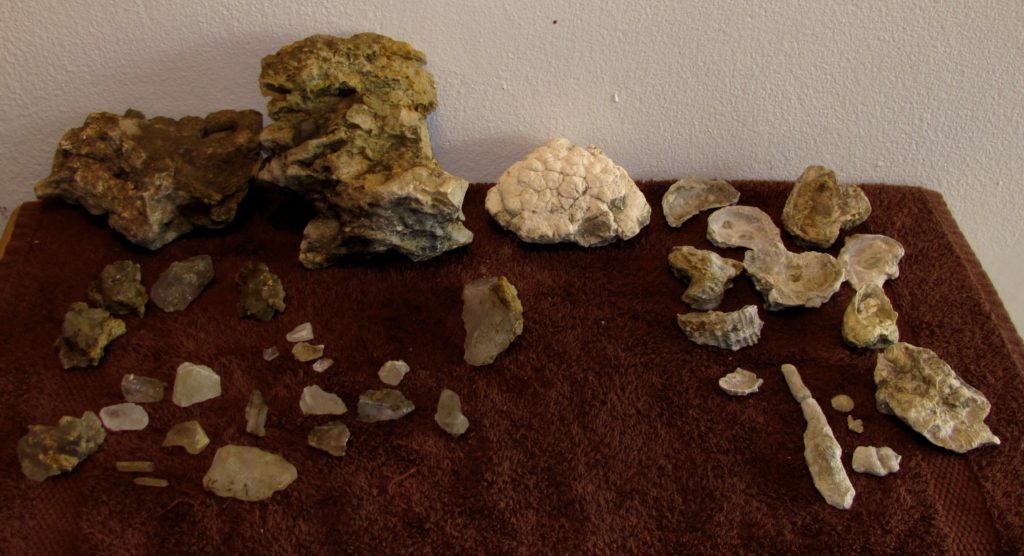
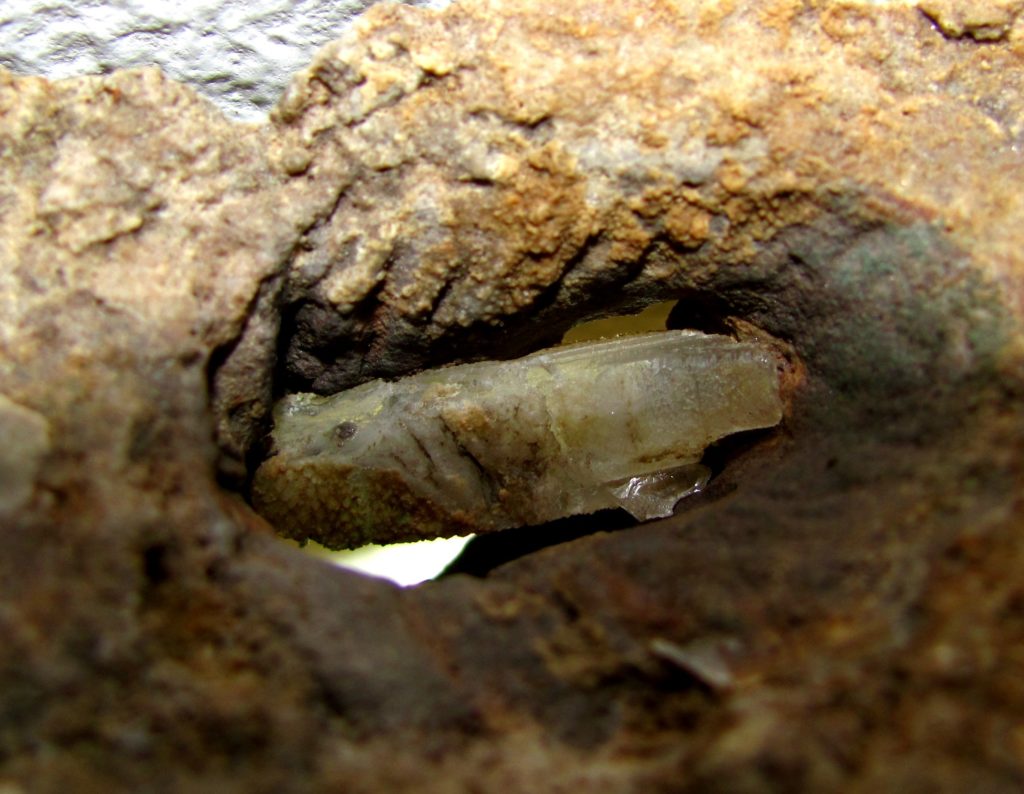
So the day came and with eager expectations and a very tightly packed truck, we headed out on yet another Texas hunting adventure. The drive to Mason Mountain was nice and, of course, we made a couple of stops along the way to do some rock hounding. A few small fossils and some interesting crystals which we tentatively identified as fluorite, or maybe calcite, were found. Things were already off to a great start
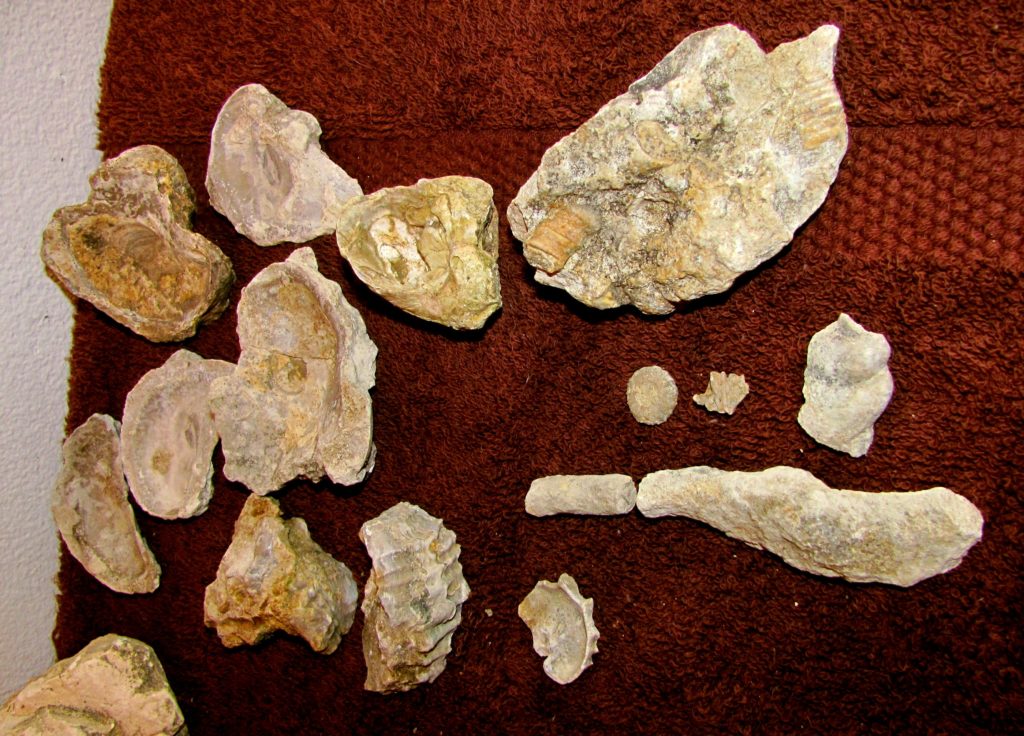
.
We arrived at Mason Mountain WMA after the usual amount of wrong turns and were overwhelmed with the scenery. Mason Mountain is a beautiful piece of Texas with rolling hills cloaked in a variety of oaks and interesting rock formations. Hunting and rocks? Two of my favorite things! Now if only there were some dragons…
The terrain around Mason Mountain sports steep canyons, massive granite outcrops and limestone formations as well as grassy plains and rolling hills. A person could get used to a view like that.
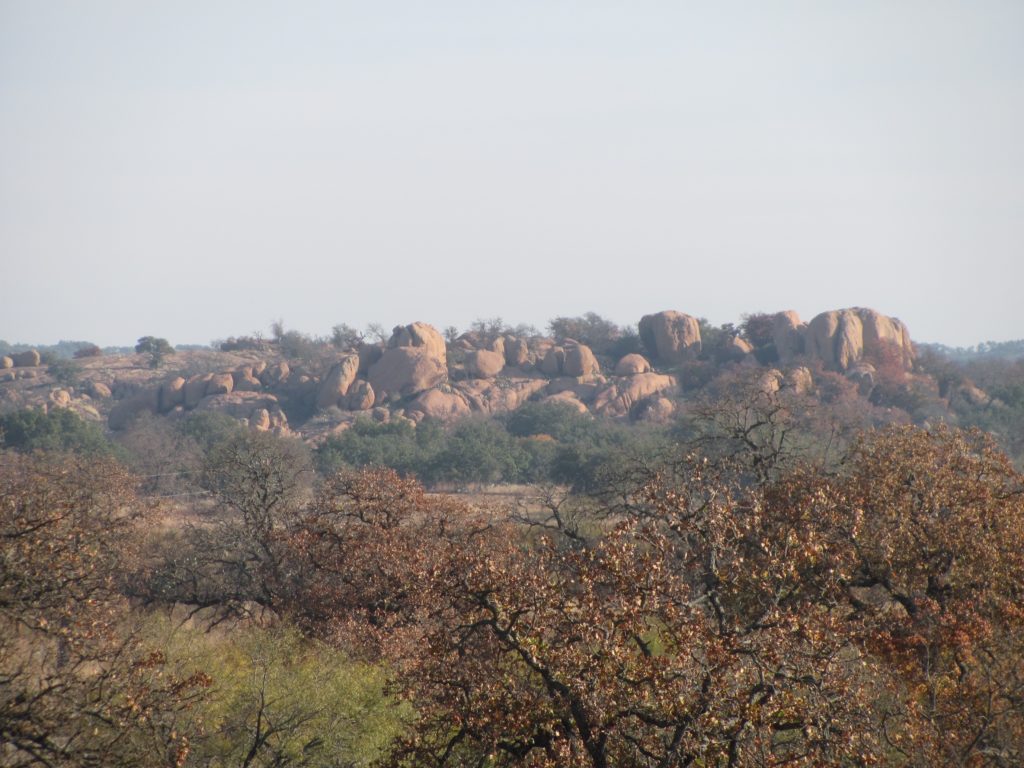
Mason Mountain WMA Entrance
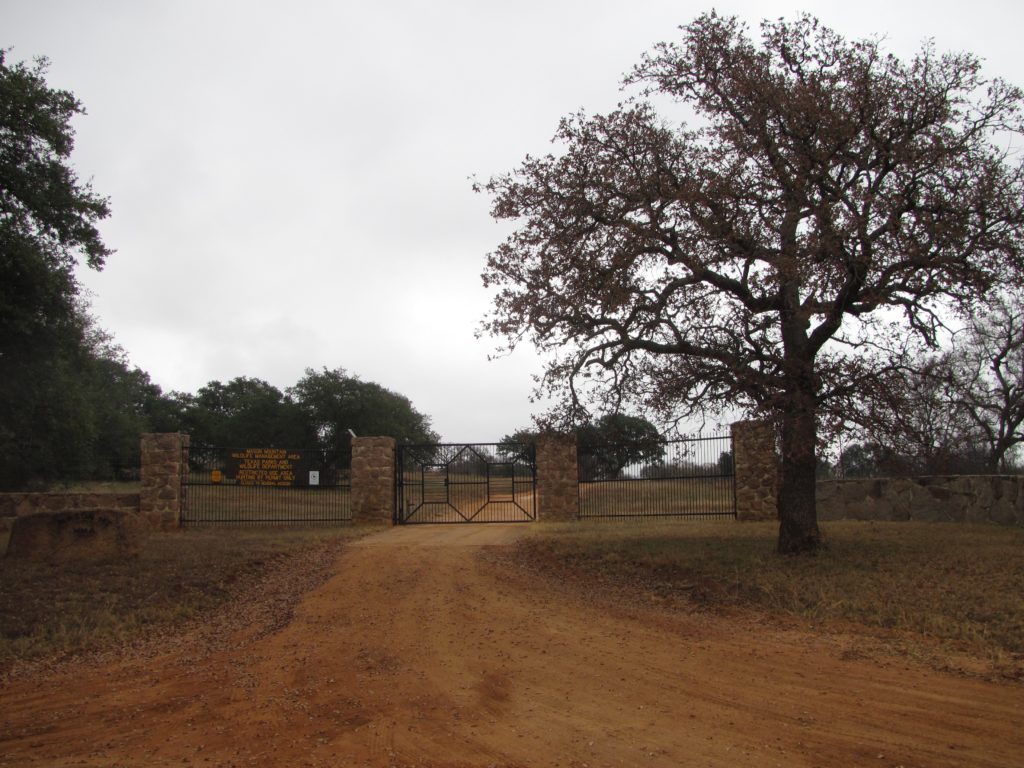
The weather was overcast on our arrival and would pretty much stay that way for our entire hunt. Please excuse the lesser quality of the photos.
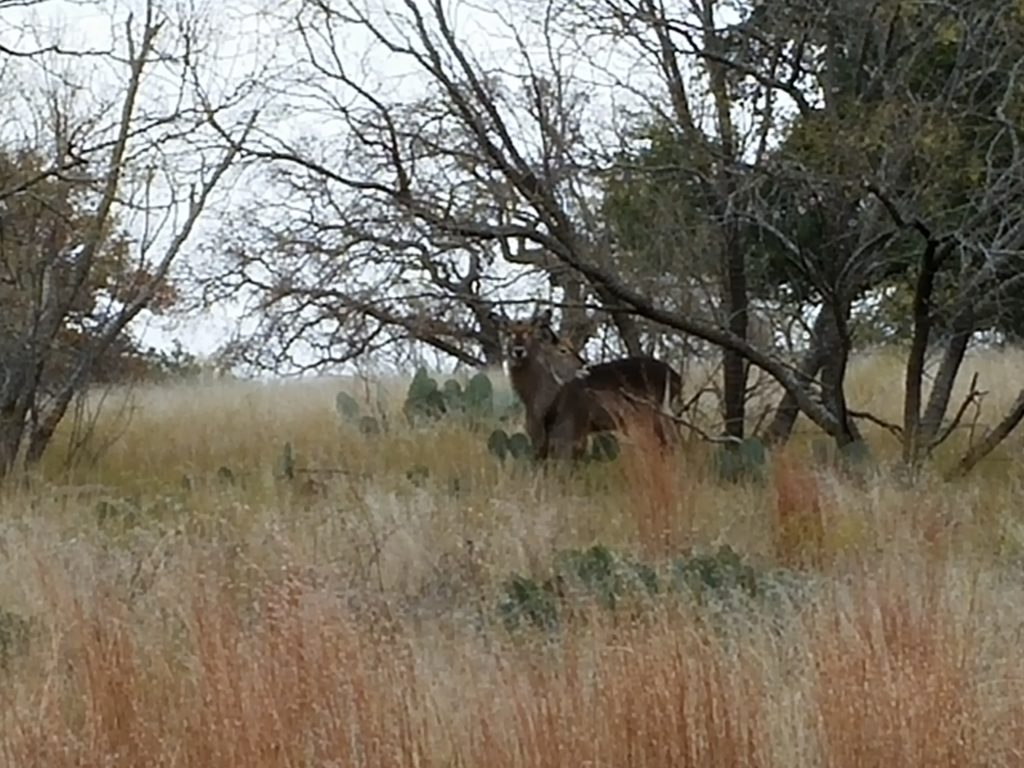
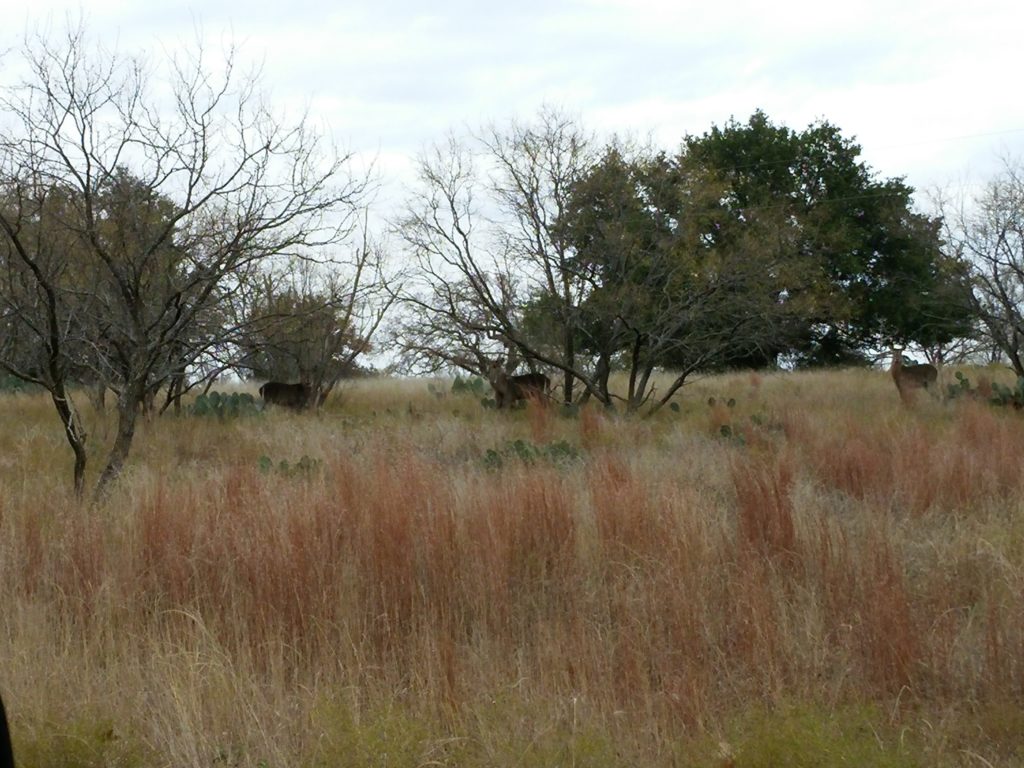
Some waterbucks greeted us at the entrance. If these are around while you are hunting whitetails you need to be careful not to shoot them. At a distance they can look very similar.
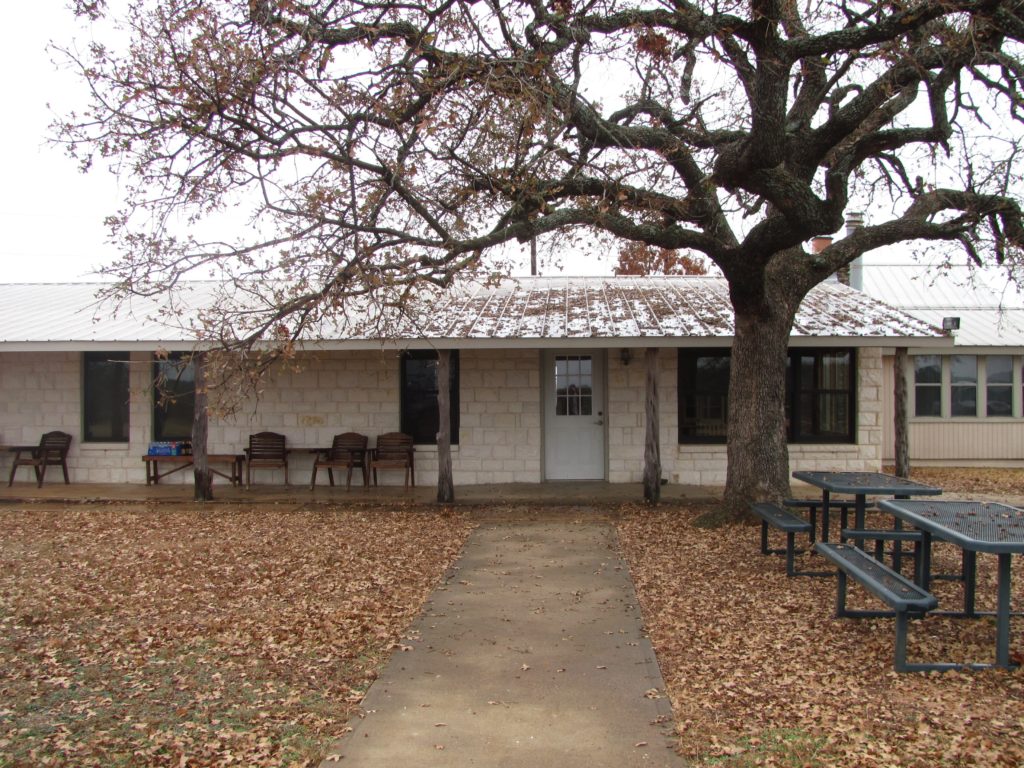
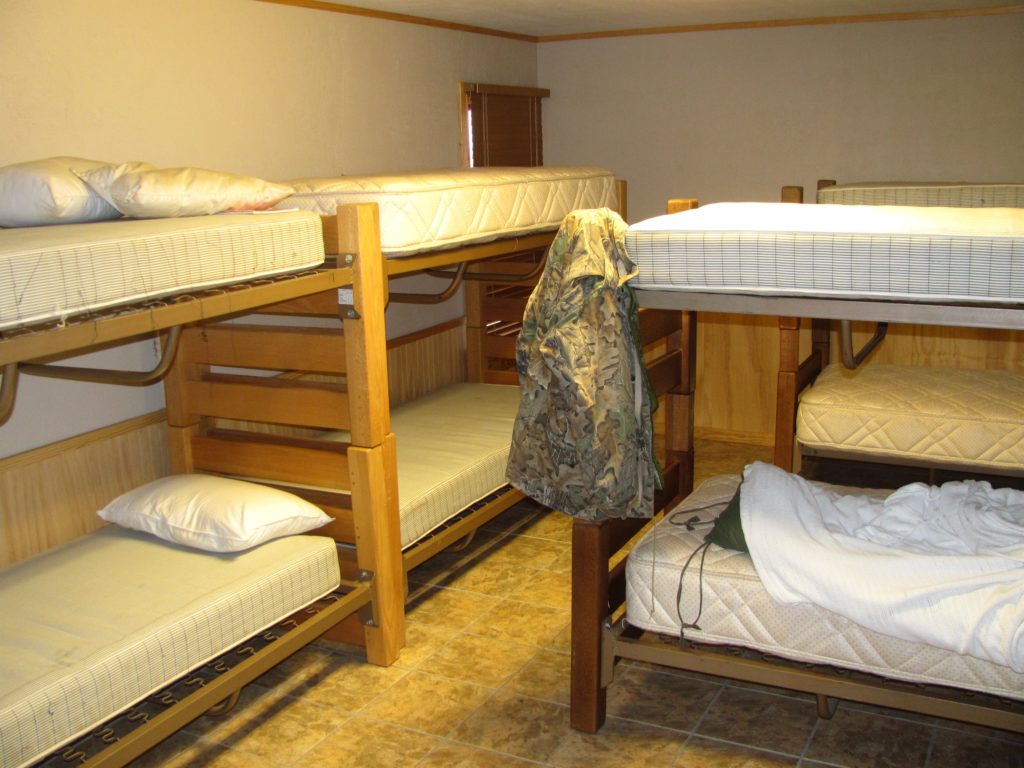
Mason Mountain is one of the few Public Hunt areas which not only allows camping on the area, but also has a bunk house available for the hunters use. You have to make reservations for a bunk ahead of time as it can fill up quickly.
The Bunkhouse
If you do get a bunk, note that you must provide your own bedding. The Hunt Coordinators will bend over backwards to help you out and make your hunt as successful as possible but they will not do laundry!
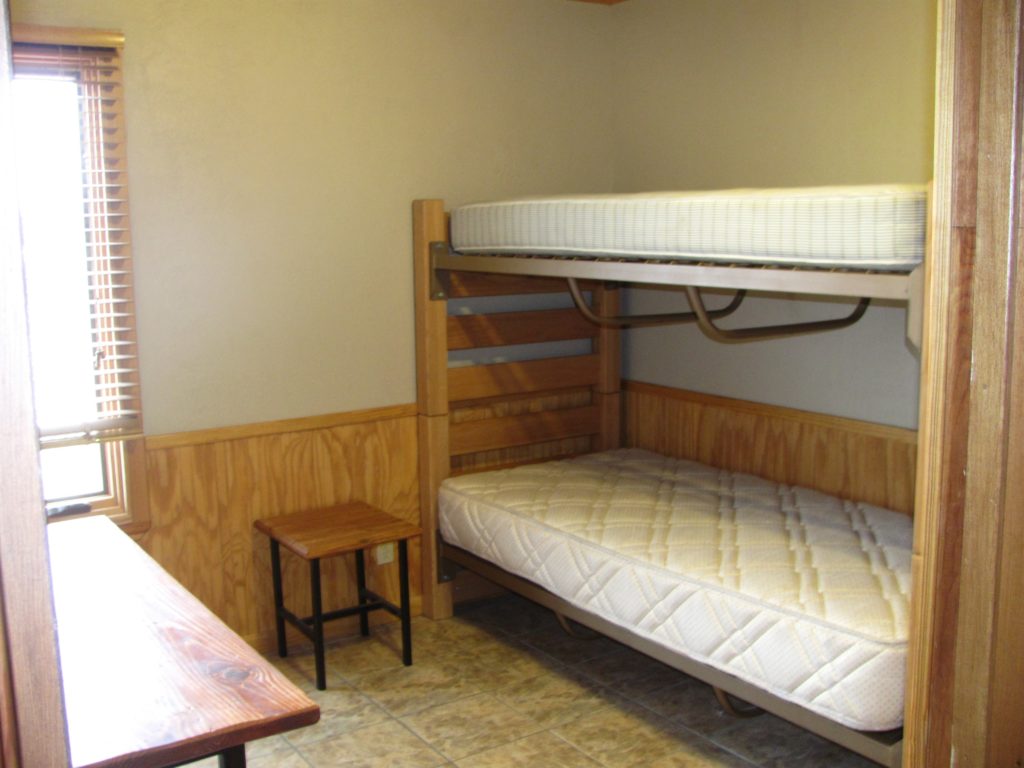
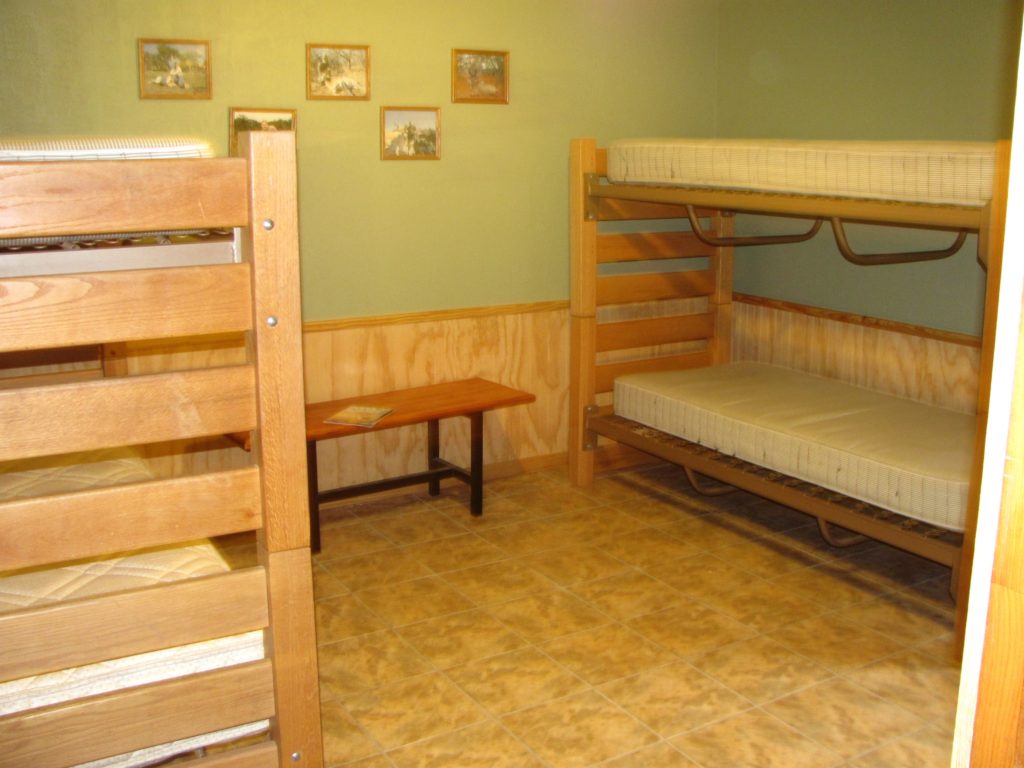
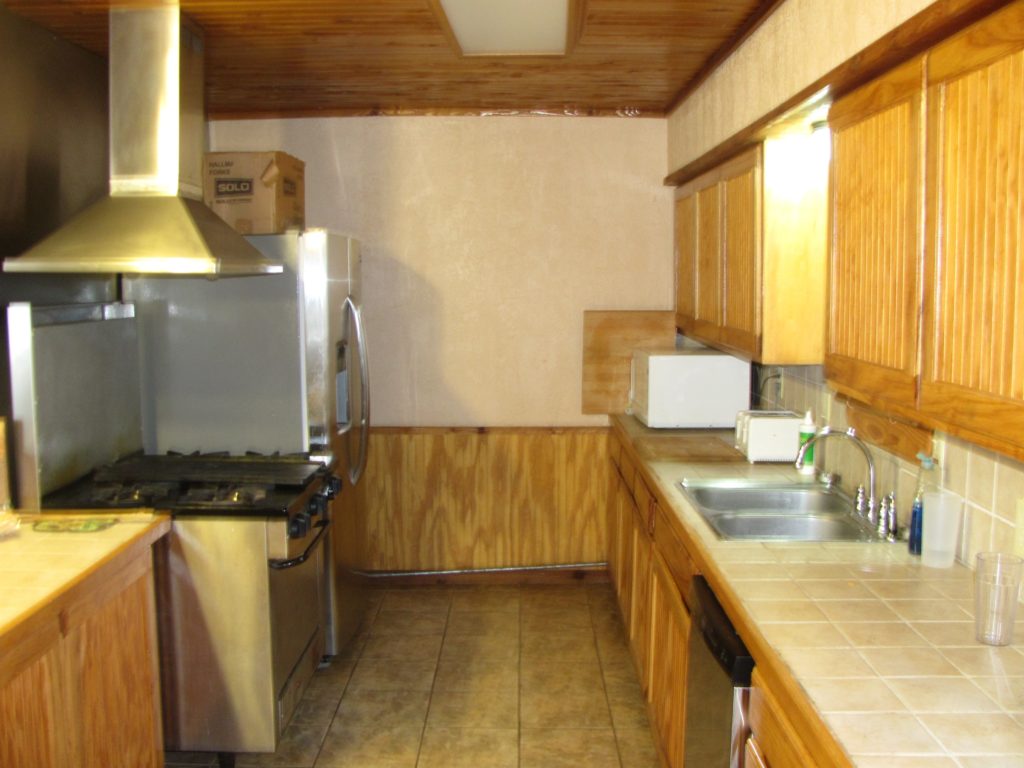
If you elect to camp out in a tent or camper on the WMA instead of taking a bunk you are still welcome to use the bunkhouse amenities. Of which there are several. First off is a fully functional kitchen complete with a blast furnace for a stove, microwave, refrigerator and tons of pots and pans. Please, unless your mother was also drawn for the hunt, make sure you clean up after yourself! Everyone was very diligent about this on our hunt.
Kitchen
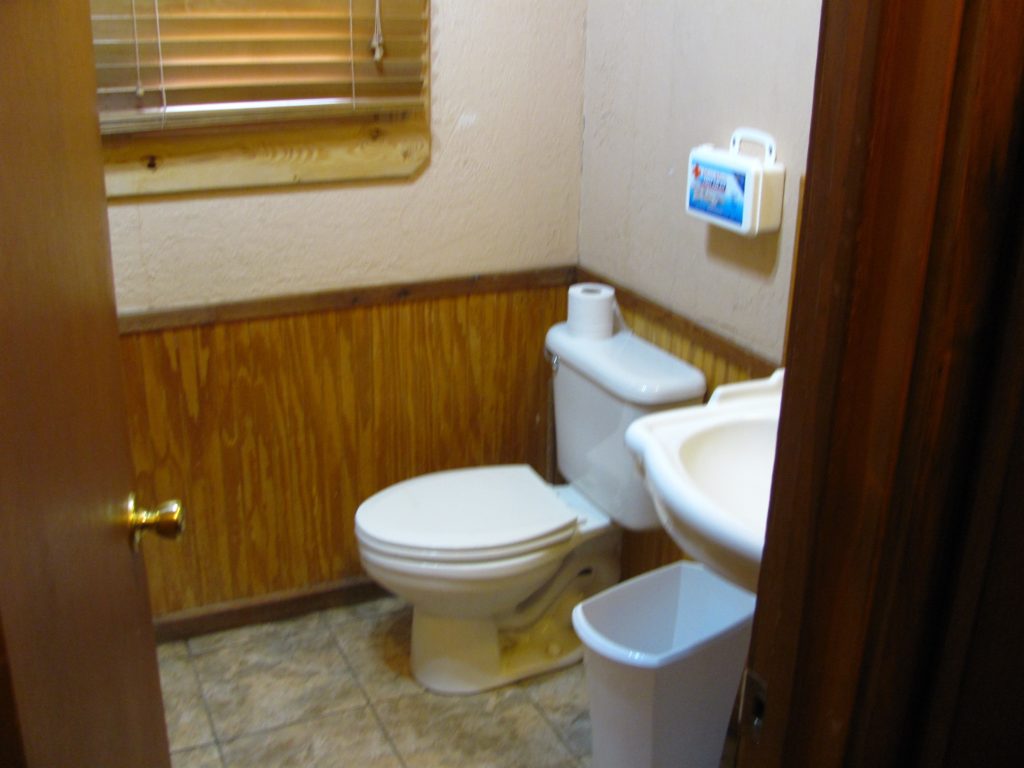
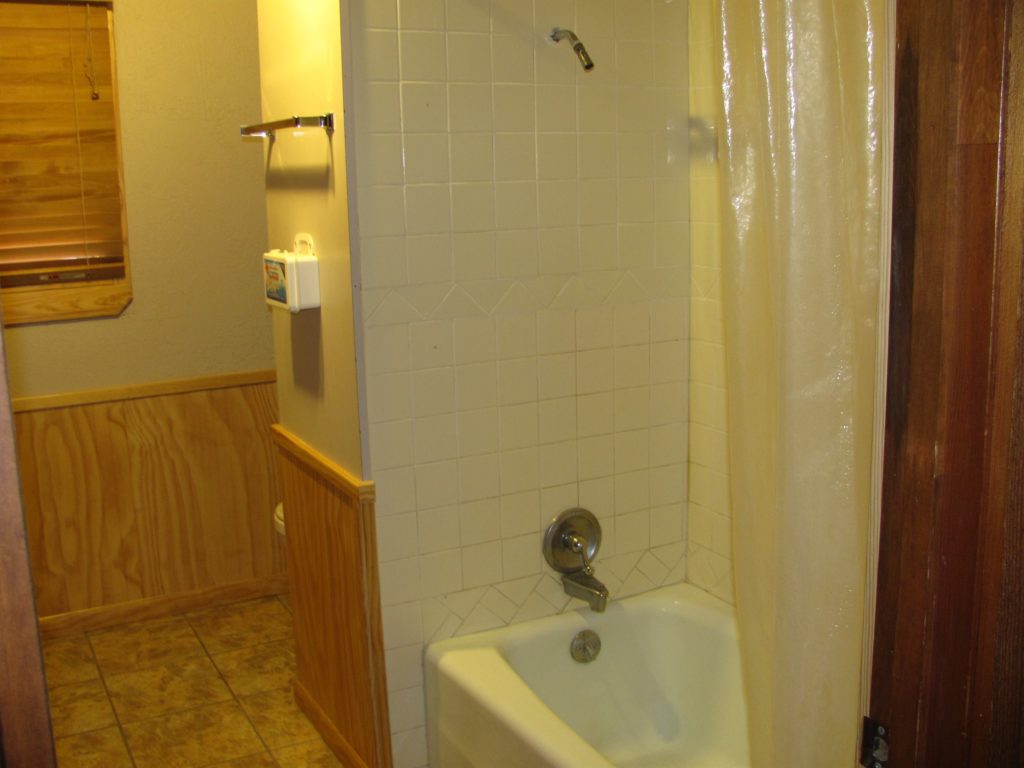
There are two full bathrooms in the bunkhouse as well. Each has its own water heater so running out of hot water during your shower is less likely even when several hunters use it in a row. Or together. I’m not judging.
The Small Bathroom
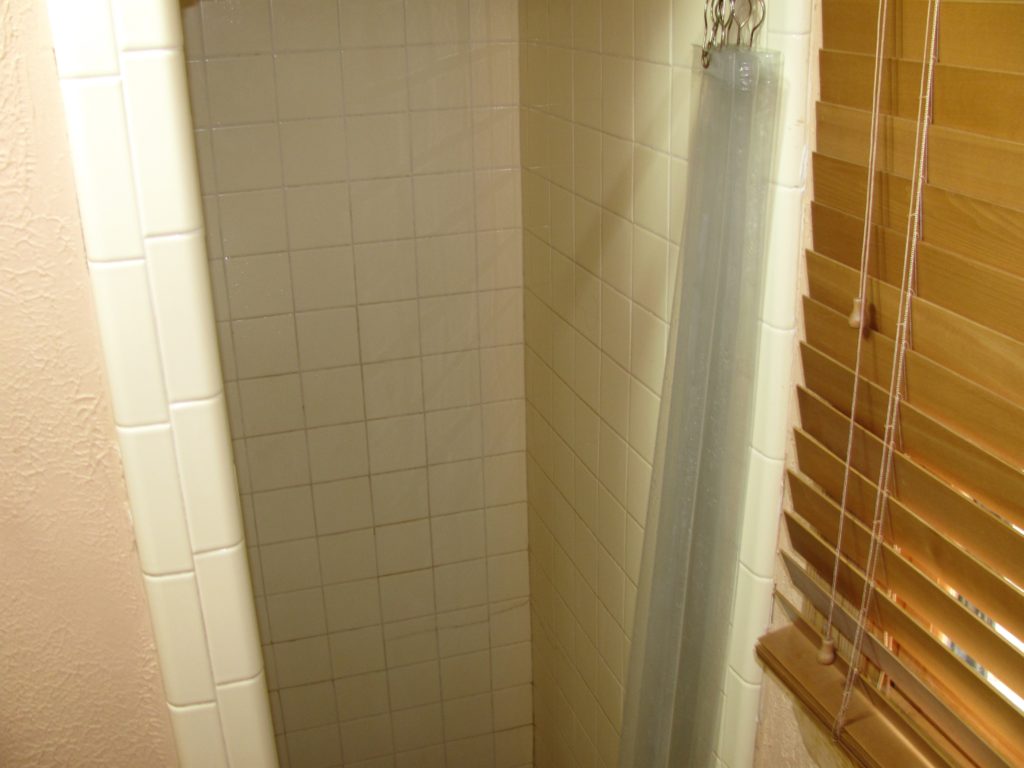
The Big Bathroom
But the luxuries don’t stop there. Not by a long shot. The bunkhouse has a large common area for eating as well as a fireplace, large screen TV and couches for lounging. Remember, before TPWD acquired this property it was a privately owned, high fence, exotic game ranch.
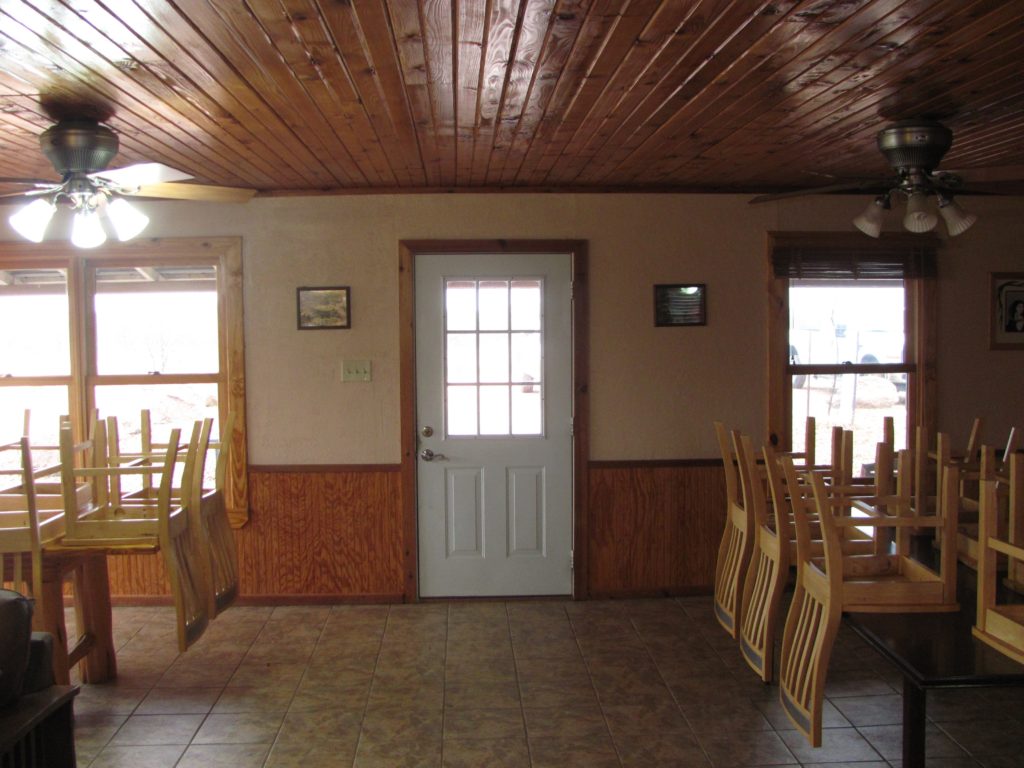
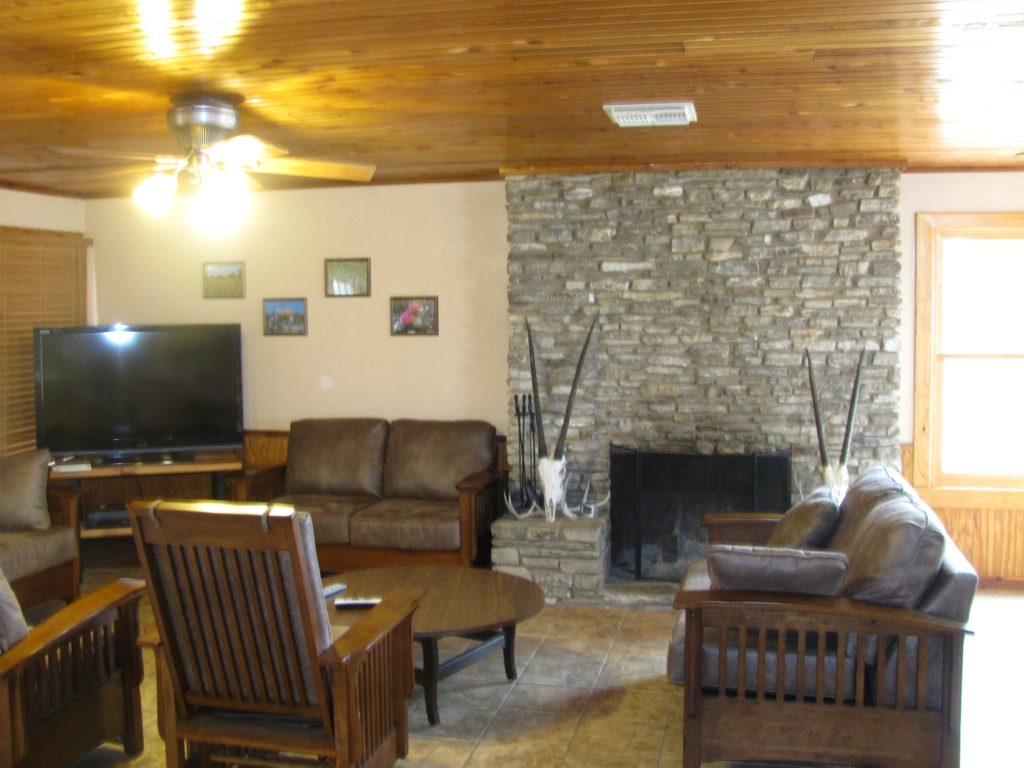
But wait. There’s more. Outside you will find benches, a fire pit, a brazier for smaller outdoor cooking projects and even a huge grill/pit for the grilling of massive amounts of meat and other edible items. If you accidentally forgot to cut up that half of steer you brought never fear. Just throw it on whole and close the lid.
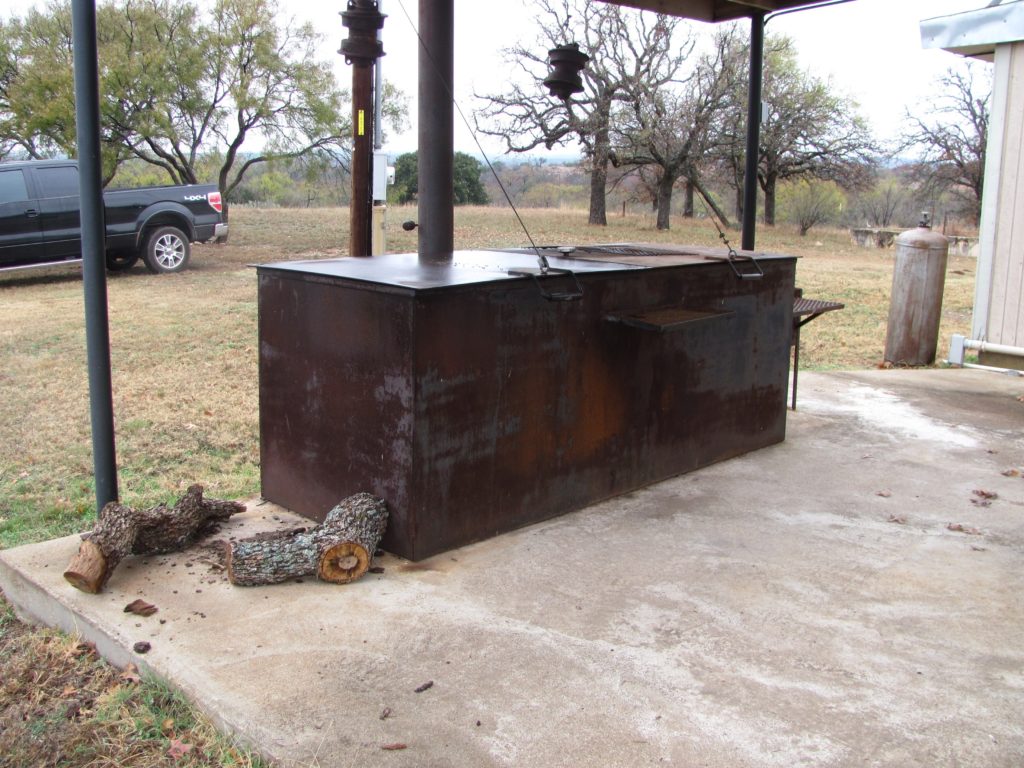
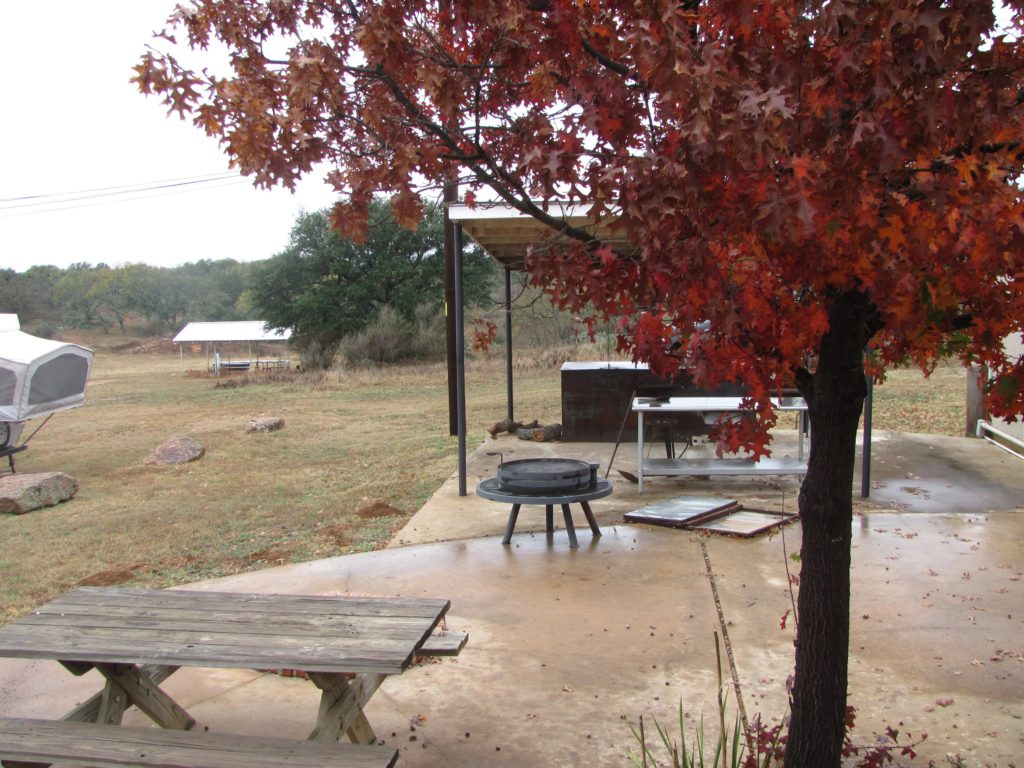
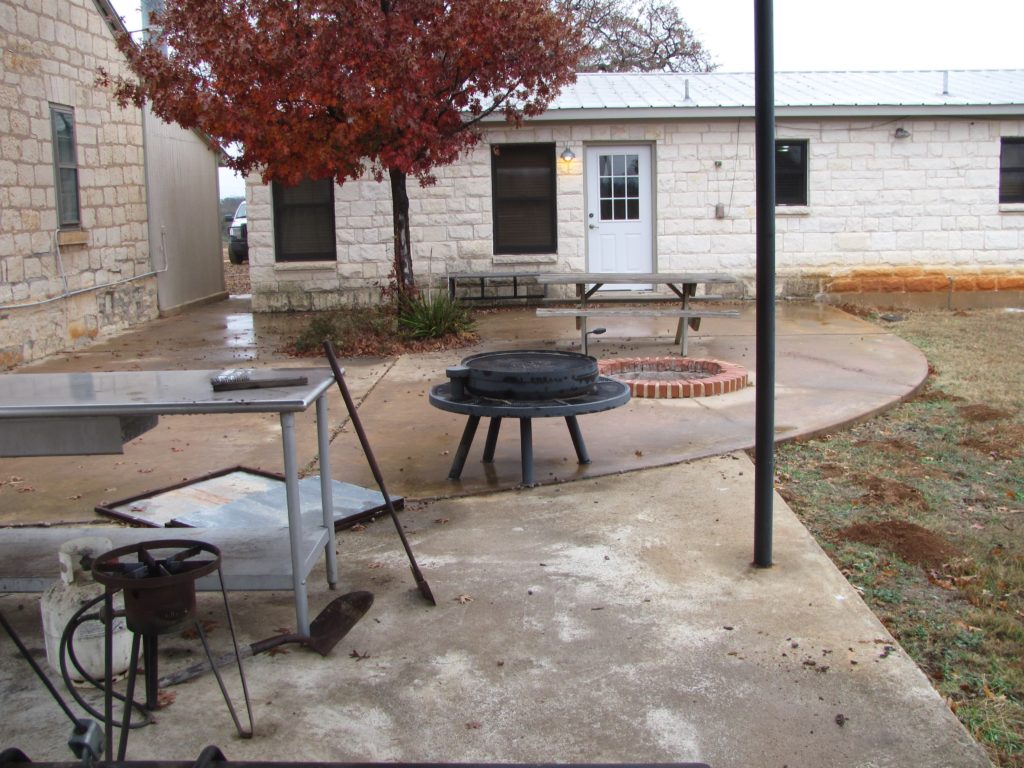
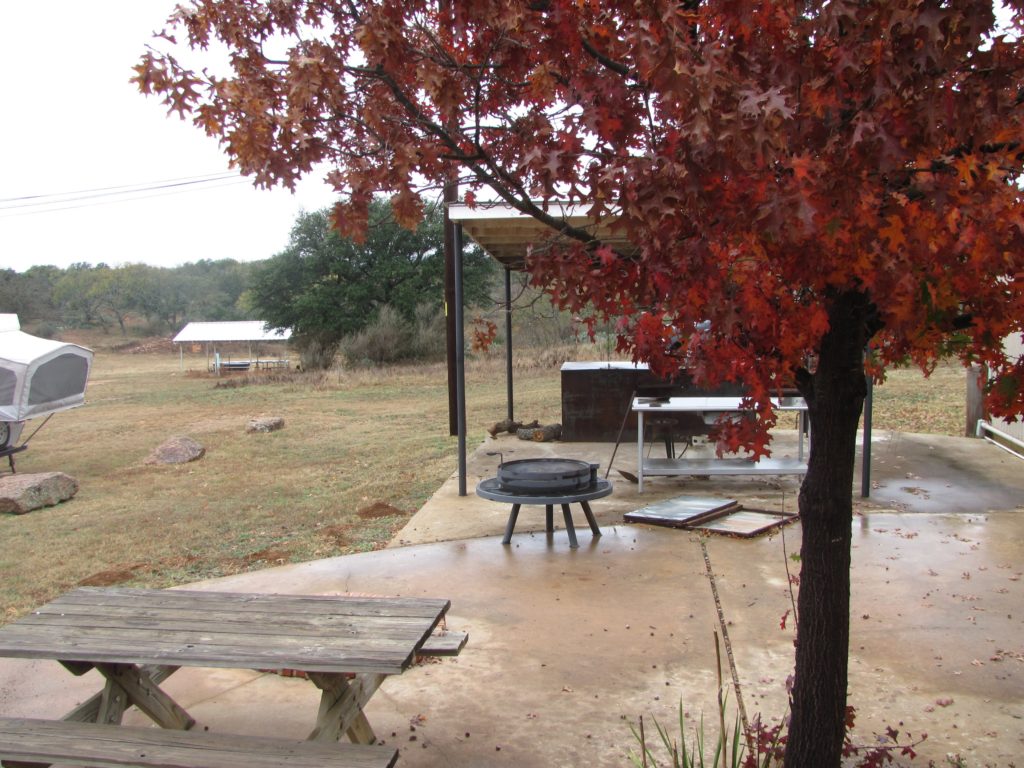
Pretty cool, right?
Since we had arrived well before most of the other hunters we began the daunting task of unloading and unpacking a very heavily packed truck. Then we grabbed a snack and settled in to await the rest of the hunter’s arrival.
A few quick notes about sharing a bunkhouse with several other hunters. Most of which were male. The courtesy flush is a must. If you do not have this skill, LEARN IT. If you are female, get used to checking the position of the toilet seat before assuming the position. If you are easily wakened by loud or rhythmic noises I would suggest bringing a fan to cover over the inevitable snores and stirrings of restless hunters. If you fall asleep quickly and sleep heavily, I hate you.
As we waited on the other hunters to show we finally met with Abe and the other camera man Kyle of Texas Parks and Wildlife TV. They would both be videoing for the show so they could cover more area. They had just gotten back from looking over the hunt compartments to scout out scenic locations and get some background video for the show. They themselves were not hunters as we would shortly learn. After a quick meet and greet they began mingling amongst the arriving hunters to see which other ones would be OK with them tagging along. Many were reluctant to have their hunts possibly spoiled by the unknown quantity of a camera and unfamiliar cameraman. It was just a three day hunt after all. A hunter might only get one chance at a deer. It is understandable that they did not want to deal with the cameras and cameramen on top of an already difficult hunt.
The way we looked at it, we usually had opportunities available to hunt deer thanks to the Texas Public Hunt system. The chance to have someone video us hunting was not that common so we agreed. If anything, it would be an interesting adventure. Anyone who knows me knows how camera shy I am and may be quite surprised with this decision. There are not many photos of me out there for very good reason. I have a well honed talent for spotting cameras and getting the heck out of the way. The photos that do exist of me almost always have some sort of creature in them, deceased or otherwise. Now I had completely lost my mind and was willing to allow a camera within feet of me, ON PURPOSE. I know. I’m as shocked as you are.
All of the hunters finally arrived followed by orientation and the assigning of compartments. Abe and Kyle decided they would follow along with us first. Abe elected to shadow me and Steve was paired with Kyle.
This was going to be interesting. Remember, this is a normal public draw hunt and like most draw hunts it consisted of an afternoon hunt, a full day to hunt and then a morning hunt which ended at noon on the third day. In reality it is a two day hunt stretched over three days. That means a hunter has very little time to scout an area, decide on the best place to find their quarry and set up. No pressure there. Thankfully, the hunt coordinators know their areas intimately and can steer you in the right direction if you just take the time to ask the right questions. Still there is no replacement for good old fashioned ground pounding.
There was also a late rising full moon giving the deer plenty of light to feed by at night. Add to this the addition of a camera and operator and the need for stealth and concealment as well as the needs of a camera to get clear and well lit shots. Our work was more than cut out for us right from the start. The chances of actually seeing a deer and then successfully taking one were pretty slim. Especially since this was the very last hunt on this management area. Prior to our arrival, there had already been five gun deer hunts and one archery hunt. Simply put, there just were not as many deer to take and the ones which were still there had pretty much seen it all.
Challenge accepted.
So we donned our camouflage and set out to our compartment with camera truck in tow and eager anticipation. It was time to get to business. I had warned the guys that if they were going to hunt with us they would have to put on cover scent just like us. Remember, they are not hunters. They did do their homework however and washed their clothes in scent free detergent and showered in scent free soap. They didn’t know about using a cover scent though. When I explained that cover scent was usually deer urine they weren’t thrilled but they were willing to do whatever we needed. If that’s what it took to get the shot then, by all means, we had their permission to cover them in pee.
What we didn’t tell them was that our cover scent is actually vanilla extract. Do you see where this is going? When we get to our area and prepared to start scouting I sprayed Steve down and then he sprayed me. Then it was Abe’s turn. He stood there and took it like a man, fully believing that I was blithely misting him head to toe in deer piddle. Kyle was still back at the truck readying cameras. Whether this was actually necessary or he was hoping to get overlooked and miss out on the whole urine application operation I can’t say. I then told Abe what he had actually been sprayed with. Abe laughed then told Kyle to come on over and get it over with. He stood back and watched as I sprayed Kyle liberally with the cover scent. While misting I explained to Kyle how you had to be sure and use the freshest pee and make sure it wasn’t stale. Then I sprayed a bit in my mouth and tasted it. “Yep, pretty fresh” I said. You should have seen the look on his face. He thought I had just tasted deer pee! I told him what it really was and we all had a good laugh. I do wish the cameras had been going for that one.
Steve and I always scout each others areas together. We each see things differently and help each other spot sign, places to bait, likely travel routes and overall animal activity. We have always done this and it has worked well for us. Except when we can only find one area that is any good and we have to figure out who gets to hunt it. This was not a problem at Mason Mountain. One quick look around our area and we agreed that there were several decent hunting spots.
The WMA has some box blinds and ground blinds available in the hunting compartments for the hunters use if they chose. Since this hunt was “by compartment” and not “by assigned blind” we didn’t have to use them if we didn’t want to. We have learned however, to trust the hunt coordinators judgment that the blinds were placed where they were for a very good reason. In the end we settled on two of the four blinds available to us. One was positioned at a major travel junction and had both a pop-up ground blind (think camouflaged tent) and an elevated box blind close by. Either could be used and both were within sight of each other. The other area we chose had a natural brushed in ground blind about 1/2 mile away from the first two blinds. That blind was snuggled up against a gently sloping embankment overlooking a water hole. One of the water holes was dry but the other still held a good amount of water. Steve settled on the pop-up blind with the elevated blind nearby and I took the natural brushed in blind further on. We may scout together but we seldom hunt together unless the weather is bad. Splitting up helps increase our chances of bringing home some meat.
Abe and Kyle followed us around and videoed the entire process of scouting and baiting with numerous interruptions to film this or that, sometimes repeatedly. This included the pouring of corn, lots of pouring of corn, over and over again. From many different angles and distances. Apparently, the cascading flow of golden kernels onto the barren Hill Country ground is an endlessly fascinating subject. We were very amused by this evident obsession of theirs to capture each and every kernel we placed. I’m sure archeologists in the distant future would be able to accurately re-create each and every pile we poured just by watching the videos. I will be sorely disappointed if the finished TV program does not include at least one of these shots.
In hunting we use corn as a tool. It is not to trick the animals into coming to dinner only to be shot. Indeed, with only three days to hunt there is no way that the deer could possibly become habituated to coming to the corn. No, in our case, corn is placed in likely travel routes to hopefully grab the deer’s attention long enough to judge the animal, decide if it is one that can be taken and then, hopefully, get a clear shot. By placing the corn in areas we determine to be ideal we just might stop the deer long enough to increase the chances of a quick ethical kill on the proper target animal. Remember this is a management hunt. Not every deer that walks out is a legal target.
After much walking and scouting of both areas, including more corn pouring, and videoing of such corn pouring, Abe and I were left at my blind while Kyle and Steve headed back toward theirs. Here is my blind tucked deep under this ancient oak tree.
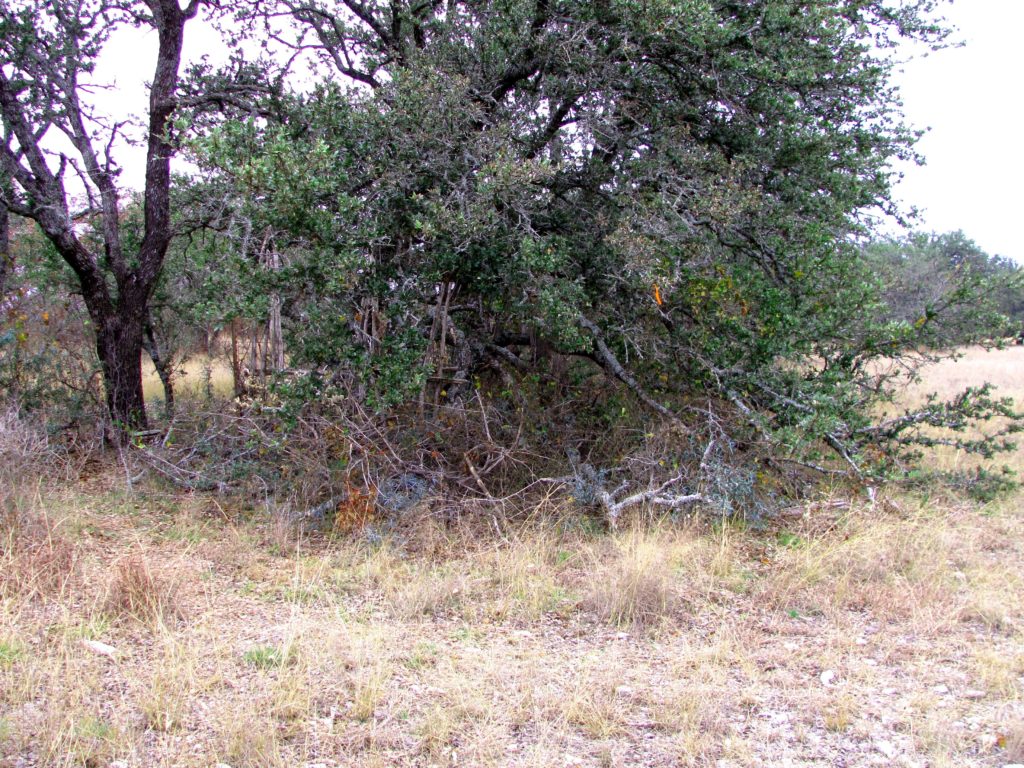
Can’t see it? Good.
This is the view from my blind. As you can see I have a large area to cover.
Front view.
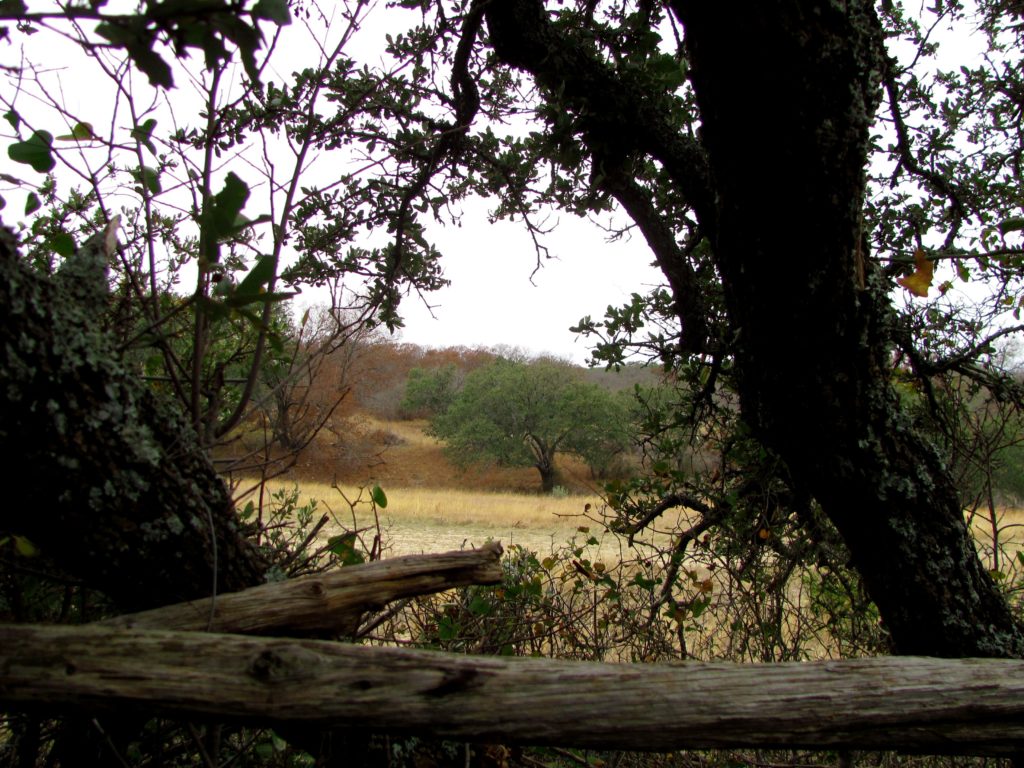
Left side view.
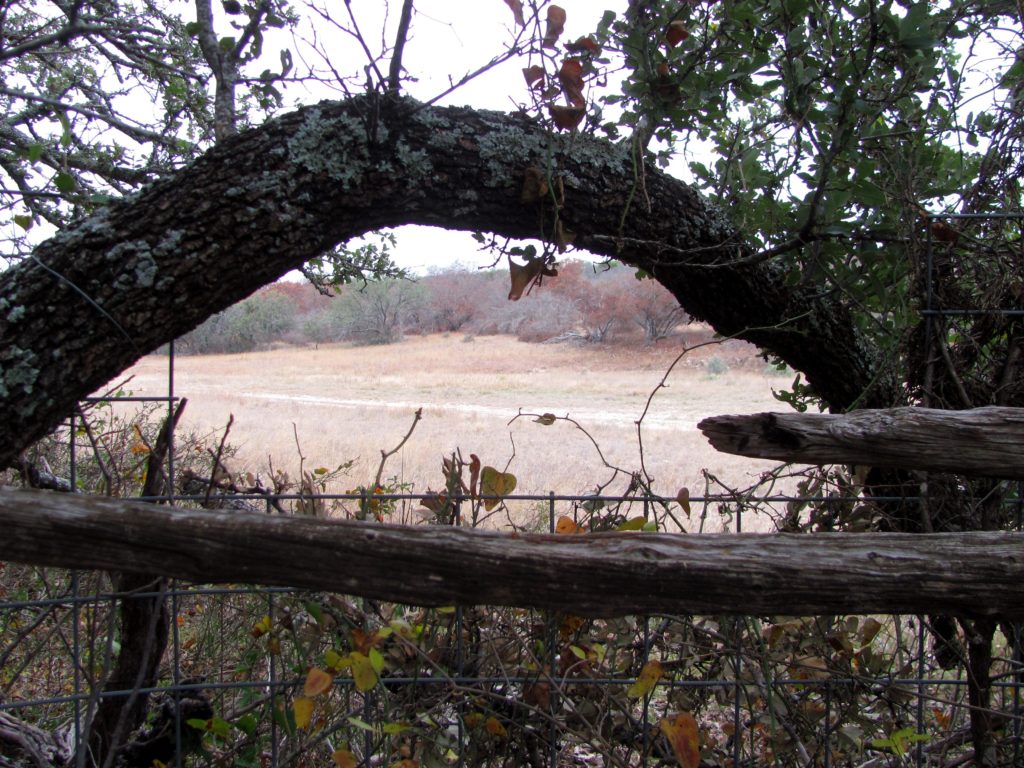
And then there was this. This is my view out the right side of my blind.
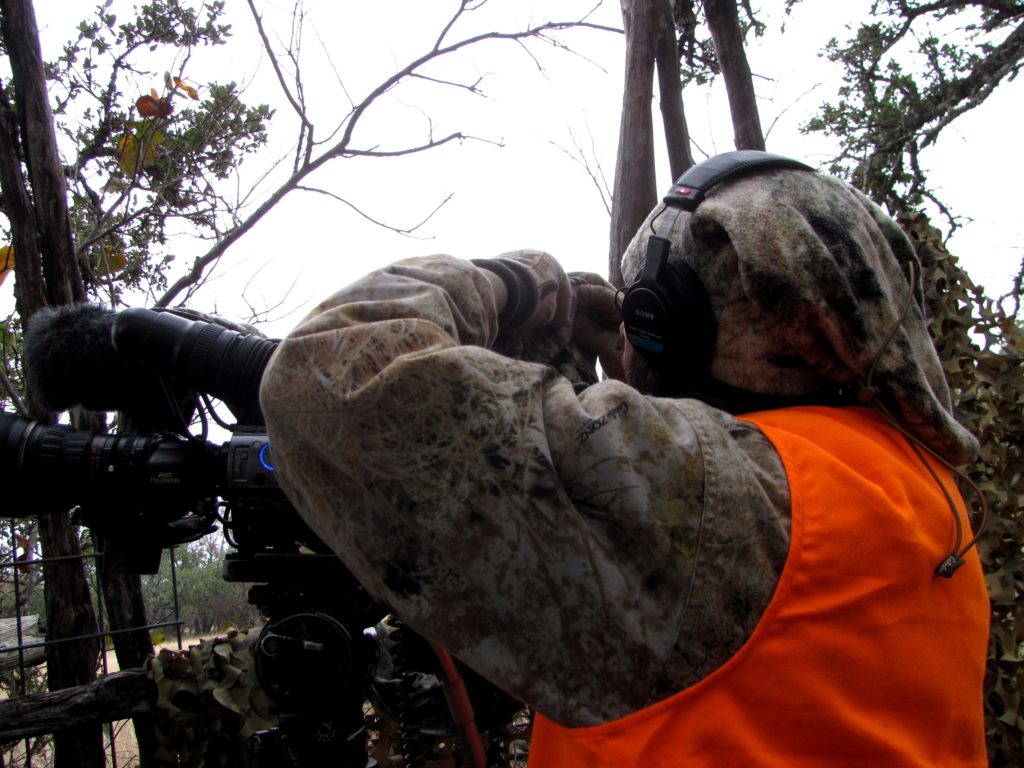
Well that is different. I can honestly say I have never had that view before.
This is Abe. He and I settled in and set up for a long and hopefully productive afternoon hunt. He made me feel comfortable with his presence and the camera. He was not aware until later just how important that comfort level was for me but I won’t get into that.
We had arrived at our stands at around 1:30. It took some time to get situated, camera set and everything ready in the event our star made an appearance. Still, we didn’t see our first animal, a scimitar horned Oryx, until 4:20. Oryx, by the way, are off limits this hunt. Dangit!
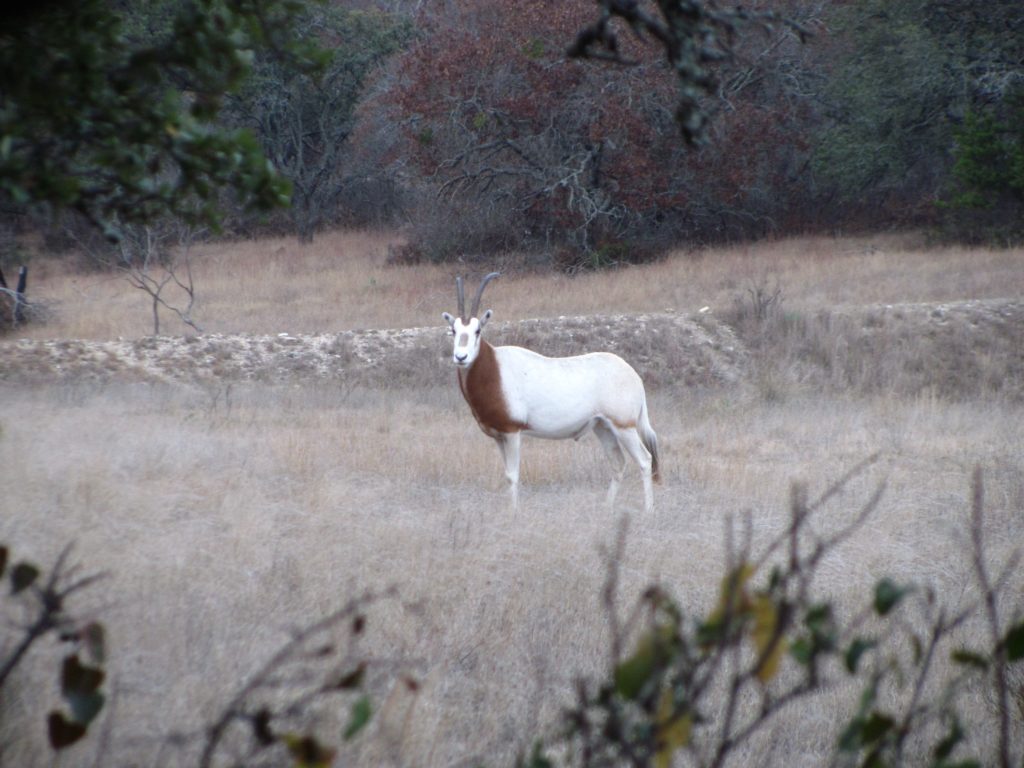
The compartment we had chosen was populated by around seventy of these interesting animals. They were no where near as skittish as a whitetail and gave us a chance to test out filming and moving with an animal in front. It cooperated for the most part and I was satisfied that the blind was hidden enough and we might even have a chance to, if not take a deer, at least maybe see one.
Although Abe was not a hunter he was very conscious of the necessity for silence, concealment and slow easy movements. Unfortunately, the need to tell a story and show what was going on demanded a certain level of conversation. This however, I happily provided. I love hunting and nature and am more than willing to share my experiences. Abe gave me a bit of guidance but for the most part just let me run. Poor guy. He didn’t know what he was getting into as I droned on and on about hunting, the Texas Public hunt system, fishing and even how Steve and I met. I was still hunting however, so hushed voices and constant scanning of the area was necessary even while mid sentence.
Abe did some videoing from various places while I kept hunting. I don’t know what that camouflage pattern is but it works great for this area.
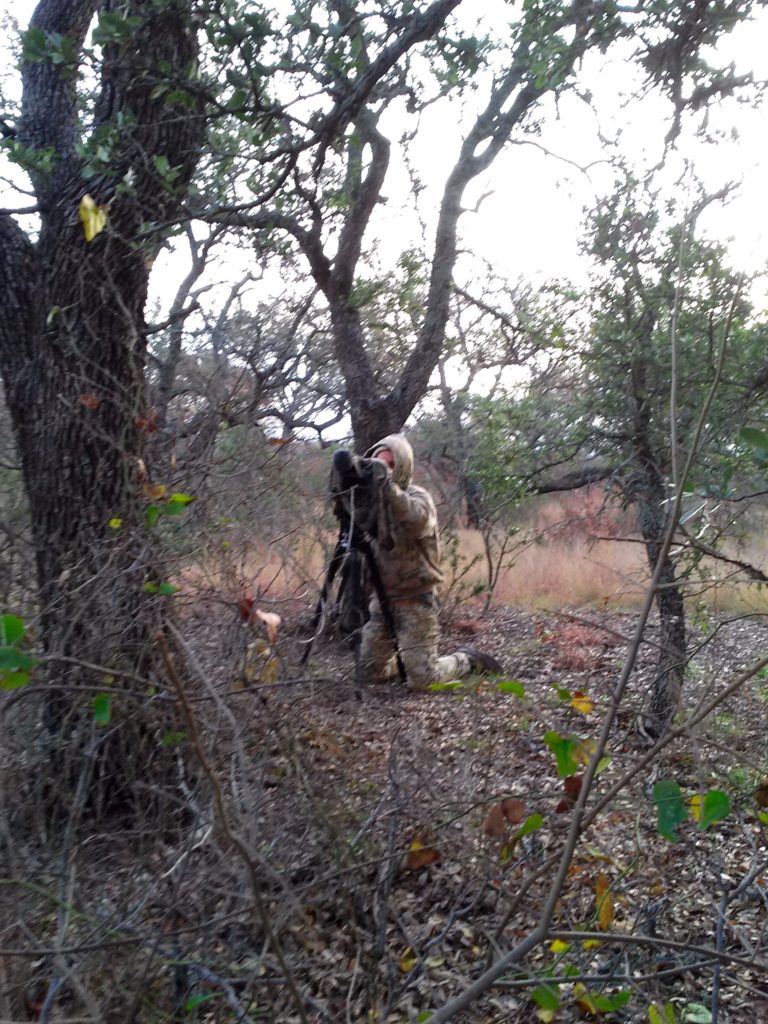
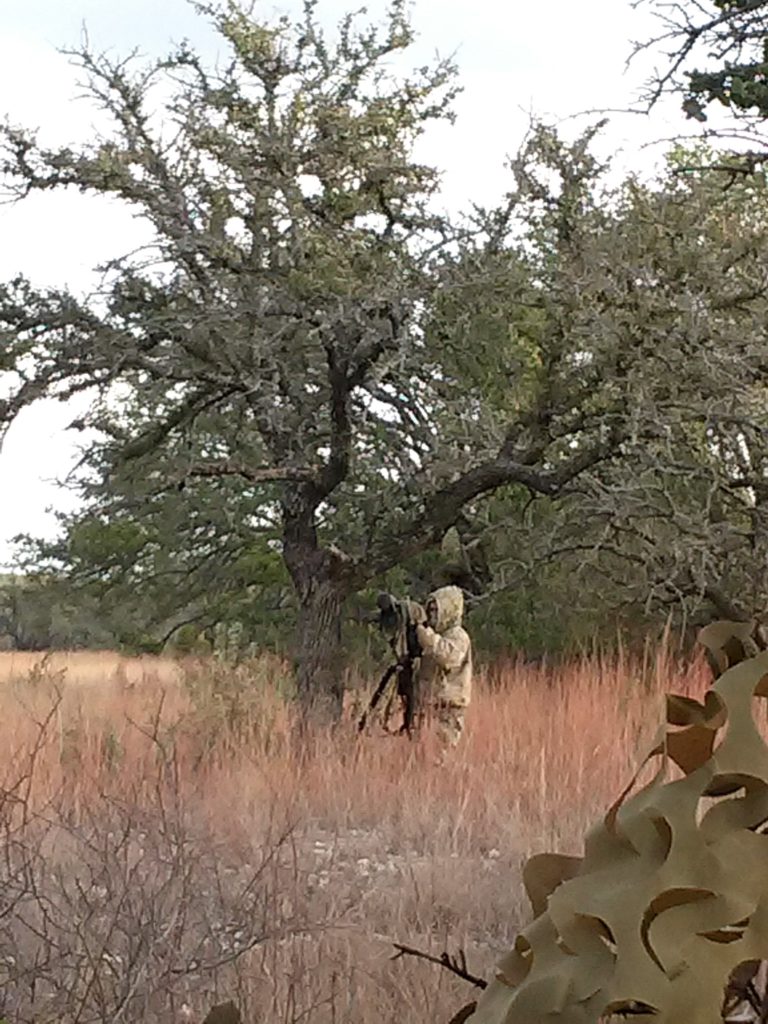
No other animals showed up for quite a while. Also, we hadn’t heard any shots from the other hunters which would have been a good indication that the deer were at least moving somewhere. We weren’t that worried though. It was not unusual to not see deer the first sitting even without the camera. There was just too much unusual movement in the woods with all of the unusual traffic on the roads and trails and hunters settling in for the deer to feel comfortable.
Still all hope was not lost and I kept watching and waiting. At about 5:00, after Abe got some of the filler shots he wanted and returned to the blind, I finally saw my first Mason Mountain whitetail. Two deer had magically appeared straight across from the blind on the other side of the dry water hole. One was a mature doe and the other was likely her fawn of the year. I whispered to Abe “DEER”! I think I whispered anyway. Then noticing the body positions of the deer I quickly followed up with “Don’t move!” Both deer were facing us and seemed to be on high alert. Heads were bobbing and ears were forward and alert. Had they seen us? Not good. They had us pinned but my gun was standing up next to me and not at all ready for the shot. Crap. I knew it was only a matter of one wrong move or small noise and they would be gone. The only thing that gave me even a glimmer of a chance of raising my rifle and settling down on them was that they would occasionally lower their heads for a second to eat. Remember that corn?
I knew Abe was not in a great position to see the deer and was likely dying to reposition a bit. An adamant “Don’t move” given by a woman wielding a high powered rifle did much to curb his eagerness. Besides, he told us from the beginning that this was our hunt. We had paid for our permits and neither of them, the camera crew, wanted to ruin any chance we might have to get a deer. If they were able to get it on film then fine but they would not purposely spoil a shot just for a better camera angle. For this I was thankful.
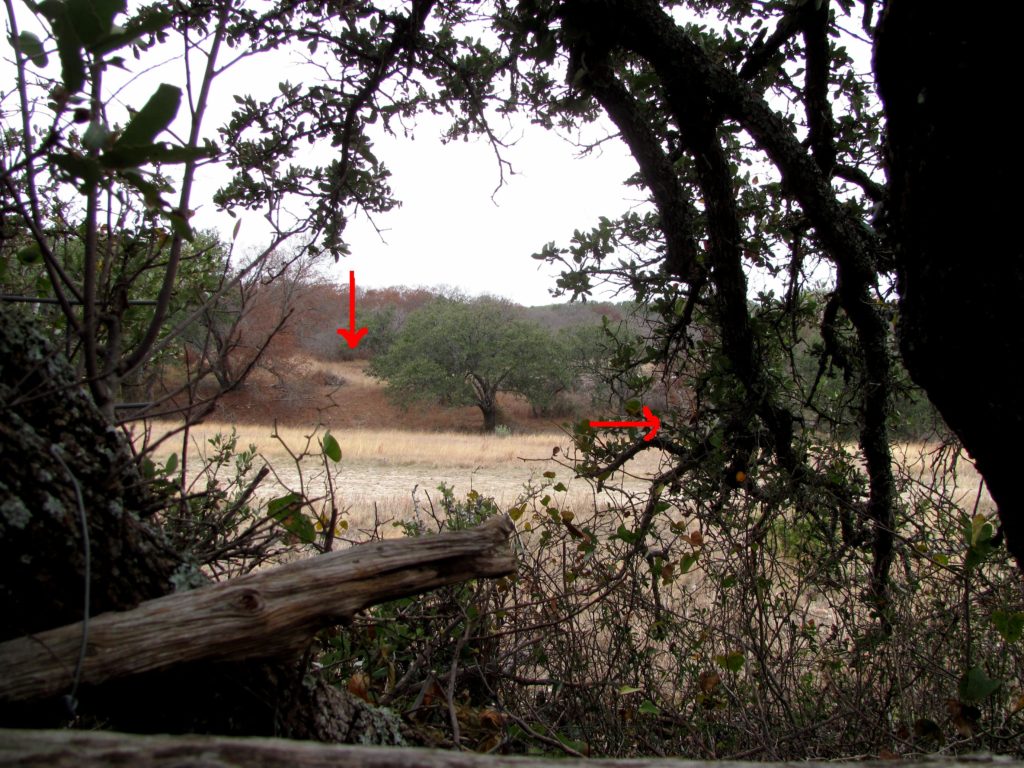
That spot right there in the upper middle. That is where the deer were standing, on that little rise with the grassy clearing. They were about one hundred and twenty five yards away. Now, do you see that limb right in front of the blind off to the right side? The one hanging down? Yeah, that is mostly what Abe saw from his position just two feet over.
I seldom took my eyes off the deer and moved a bit each time they lowered their heads. With slow and deliberate movements I worked the rifle up into shooting position. It took about five days to accomplish this feat. As I settled the gun for the shot I realized was having a hard time seeing the deer through the scope. For some reason the sight picture was jumping all over the place in time with my breathing and heartbeat. It is possible that I was just a bit excited. And in no way was I feeling any pressure from the presence of that camera over my right shoulder. It took me several calming breaths to steady the crosshairs and pick a spot. The deer were still facing us and, judging by their posture they were getting antsy. Something was just not right and they knew it. It was only a matter of a leaf falling wrong or a bird chirping loudly and they would be well into the next compartment before they stopped running.
But they didn’t bolt. I waited for the doe to turn a bit, breathed and squeezed the trigger. The 257 Roberts, which had thus far kept silent, finally got its chance to speak up. Abe was probably very glad of the headphones he was wearing because he was sitting just feet away from the gun when I fired. I understand that, to the one not behind the trigger, it can get a bit noisy. You hunters however know that the shooter is often so focused on the target that they seldom hear the shot.
I watched the doe kick out high from the impact, knew instantly that it was a good shot and was very happy when she only went twenty yards before crumpling up within sight. Later, during field dressing, I discovered that I had hit her mid heart. She was dead well before she hit the ground. Perfect. As a hunter, and believe it or not, a lover of animals, I practice diligently to make sure I make clean, quick shots. Anything else is an insult to the animal and myself. Sure, bad shots happen. Nobody wants them. But constant practice and an intimate familiarity with the weapon is a great way to minimize those occasions.
Suddenly I had a beautiful Hill Country doe down and I was elated. But this is where having a camera on you really changes things. At this point I would have walked up… OK, maybe ran up with a couple of happy skips thrown in along the way, to my deer assuming my feet were even touching the ground and basked in the blessing that I had just received. I always get excited when I am successful and this was certainly no exception. But no. Abe insists on getting out first, making me wait to get to my deer. This was very hard for me. I need to touch my deer. Badly. I exited the blind for the camera. Waited for him to jog ahead and get me walking toward the deer. I even allowed him to pass up the deer I had yet to put my hands on for that low down walking up on the deer angle. Then, just as I had finally gotten with touching distance of the big beautiful lady he says… “OK, go back and walk up again.” ARUGH! I take a deep breath and walk back for another take. I think Abe is sensing a bit of resistance from me and finally allows me to complete that sacred hunter/prey contract and finally touch my deer.
Hunting is so much more to me than the kill, but in the rare instance I do kill, I feel personally connected to the animal. I don’t know if I could hunt if such were not the case. When each kill gets to be just another dead animal then something inside me must have died as well. I have been hunting for nearly 20 years now and the final act, the taking of that life, is still a deeply moving moment.
Once the primal compulsion to lay hands upon my trophy was sated I was much more cooperative. And what a trophy she was. She was a big, mature, steel grey, Hill Country beauty and she was mine. All mine. I wish I had a photo of her. I usually do but, with one camera already there, it completely slipped my mind to take a photo for myself. Still I was so happy I didn’t really care.
After looking her over and basking in the sheer wonder that is this deer I grabbed her and drug her out onto the slope for ease of field dressing. I guess Abe was not aware of exactly what this process entailed. Like a trooper he set up to chronicle everything but I think he was a bit shaken when I began the coring out process. You hunters are smiling right now, aren’t you? Yep, I propped her up and began slicing away with the knife deep into her backside. Still, Abe stood his ground and videoed it all. I’m betting none of that makes it to the show. After that was done and I had opened and cleared the abdomen of entrails, including an unbroken and very full bladder, I repositioned her for the final process. Abe even got up and helped me by holding one of her front legs up while I went in to disconnect the heart and lungs from the inside. Sure he may have only used two fingers to hold up her leg by the tips of her hooves but I’m not faulting him. If you are not used to such carnage it can be a bit gruesome to the uninitiated. He did baulk however when I dipped my hand liberally in blood, and possibly other things, and went to shake his hand. Most mens’ natural reflex is the shake someone’s hand when it is offered. Abe started to lift his hand for the shake but then he saw the blood and withdrew it quickly. He settled for a fist bump from my opposite hand to seal the deal.
We did some more filming and waited for Steve and Kyle to either shoot a deer themselves or come and get us. The cell coverage out there was spotty at best. Even texts were not being delivered in the order sent making for some confusing conversations back and forth with answers arriving several questions later. I knew Steve had heard the shot and was anxious to know if I had gotten a deer. I finally slipped a call through the cell service desert and told him that it was indeed me that shot and that it was a nice big doe.
Around dark they finally drove up. At last I could show Steve my prize and give him a play-by-play of the encounter. He was almost as happy as I was. Almost. That done, we loaded her up and headed in to the check station to get her weighed, aged and tagged. The sunset put a beautiful cap on an already wonderful day.
Once again Mason Mountain shows just why it is one of the most sought after hunting areas in the Texas Public hunt system. The check station is covered, lighted and there is a walk in cooler. It even has electric hoists. Yes, I said electric hoists. This place will spoil you bad!
Check Station
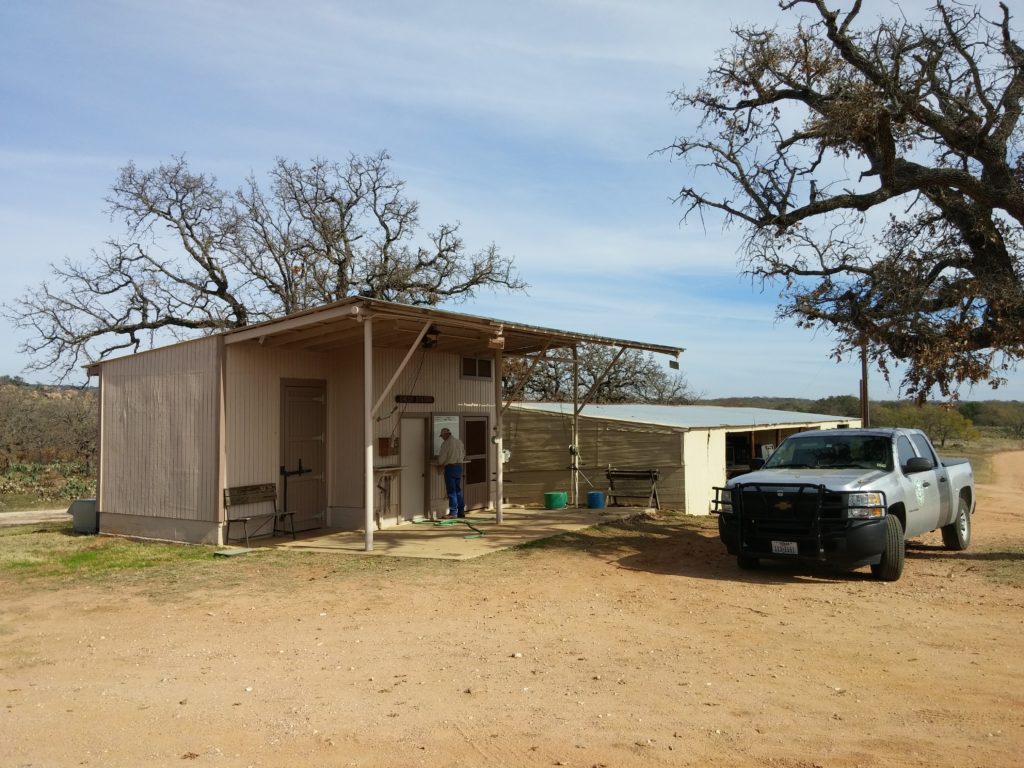
The walk in cooler is more of a freezer and it is roomy. I bet you could easily put thirty plus deer in there. Heck there is even a hanging rail and rollers for moving the deer around.
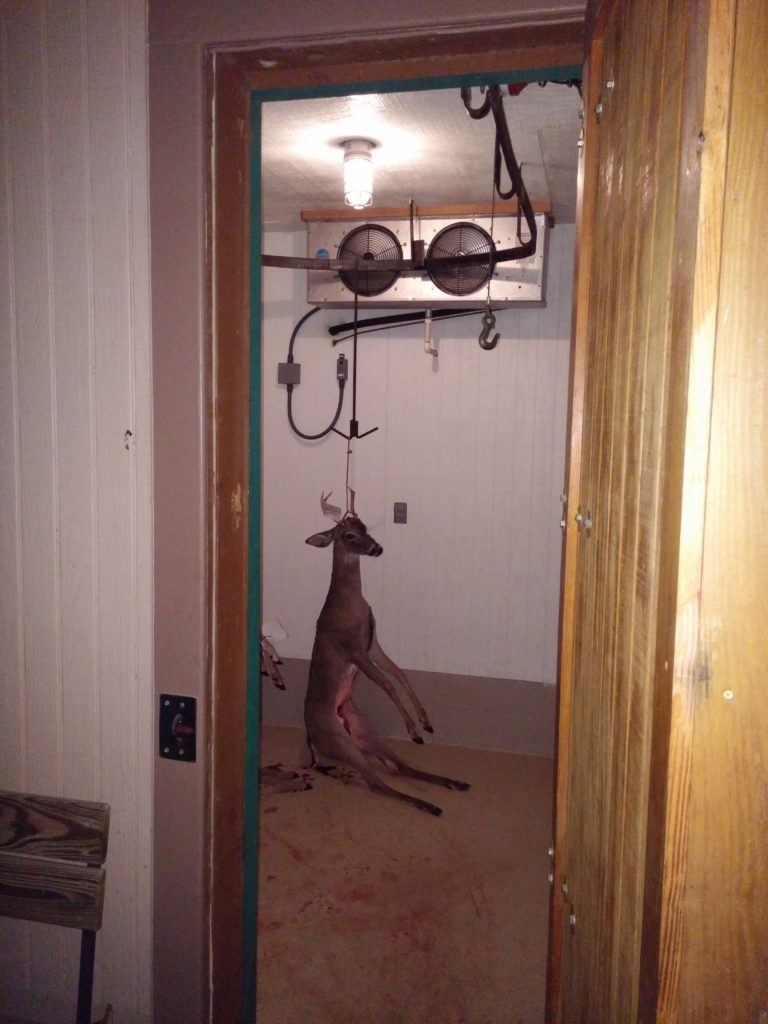
We pulled up to the check station and unloaded my doe. She weighed in at 68 pounds. Mark said that she was one of the heaviest they had ever checked. She aged at 4 ½ years old. Once she was tagged we placed her in the cooler with a couple of other deer that had already been checked. That is her hanging in the middle next to that smaller doe. Check out that slick, steel-grey coat compared to the other deer.
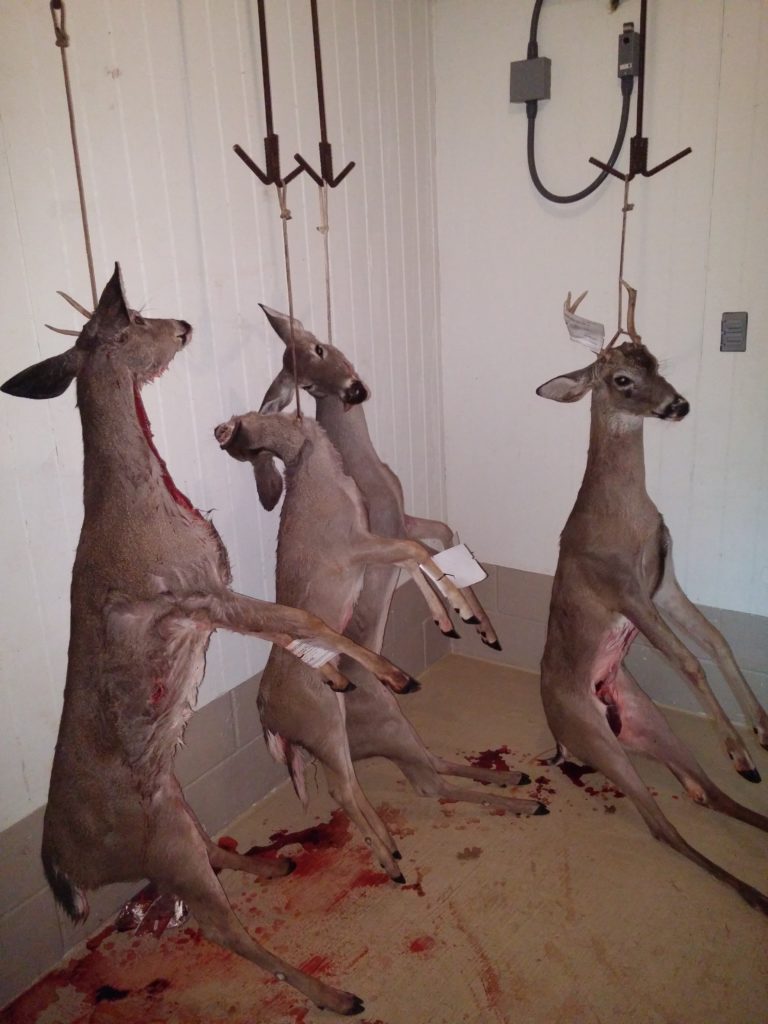
With the days hunt over it was time to settle in for the night, get some food and swap stories. We had brought some wild boar that had been previously brined, smoked and pressure cooked for everyone to enjoy. This boar came from another public hunt we had attended the week before. It seemed only fitting to serve it at this hunt. The pork was cubed, smothered in BBQ sauce and Monterey jack cheese before getting placed in the oven to melt the cheese. Steve also stuffed some of the jalapeno peppers he brought from our garden with cream cheese and spices before wrapping each one in bacon. That done they joined the pig the oven. Once cooked, these delicacies were shared out around the fire with everyone. Of course Abe and Kyle were on hand with cameras rolling to record it all.
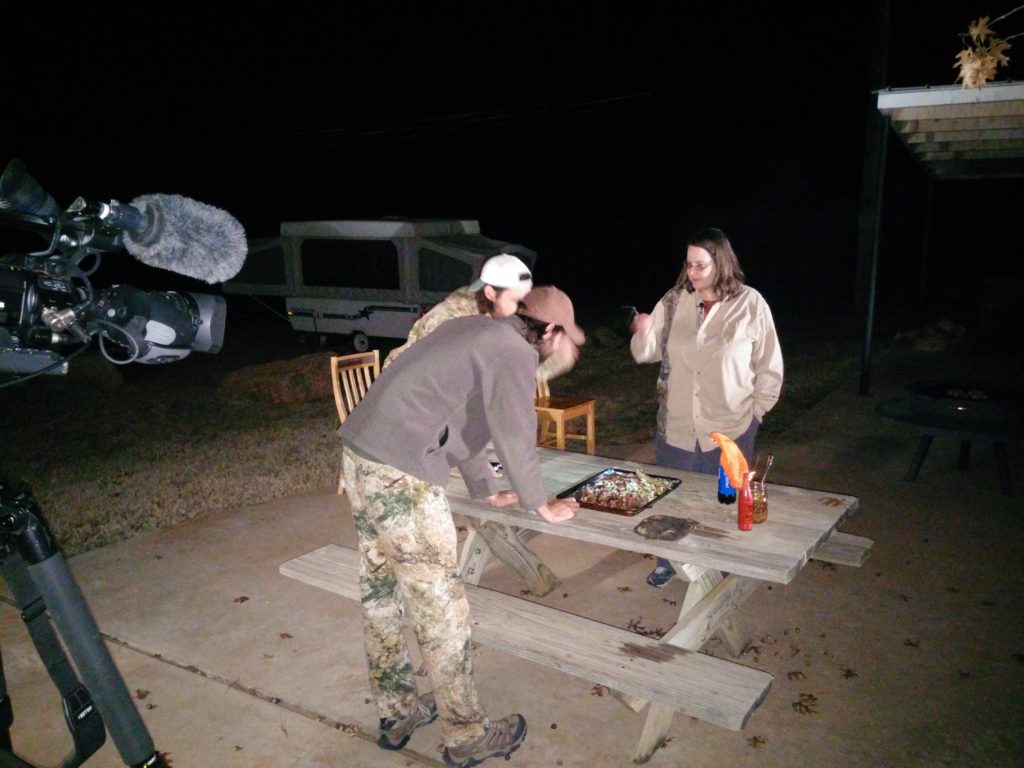
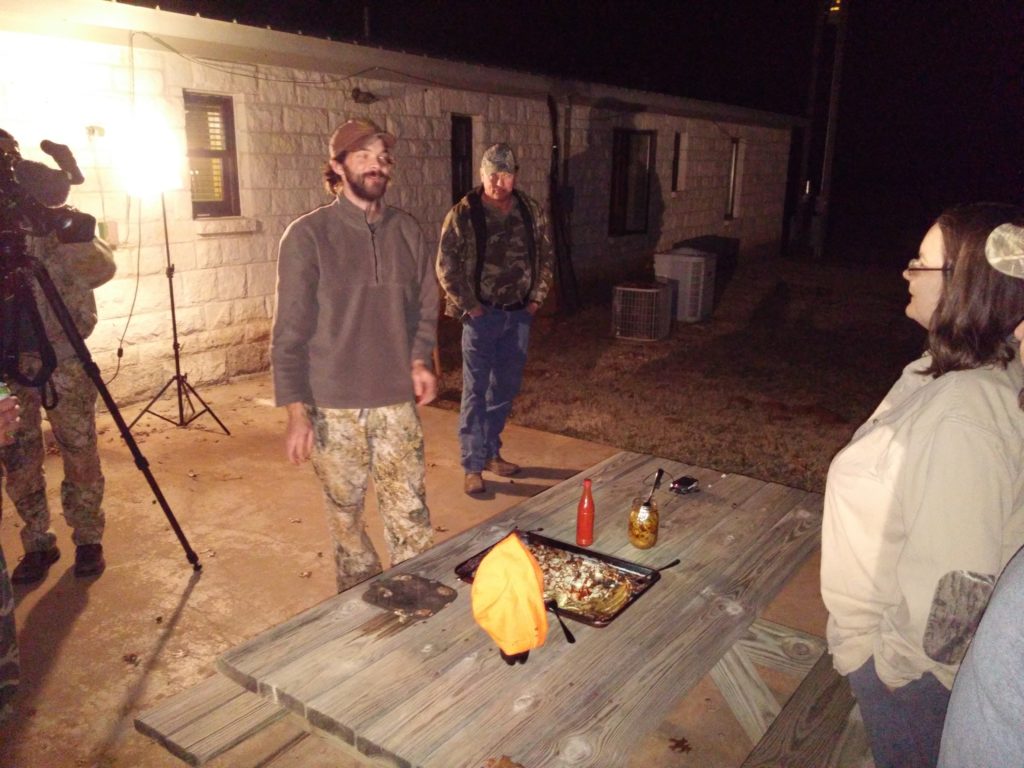
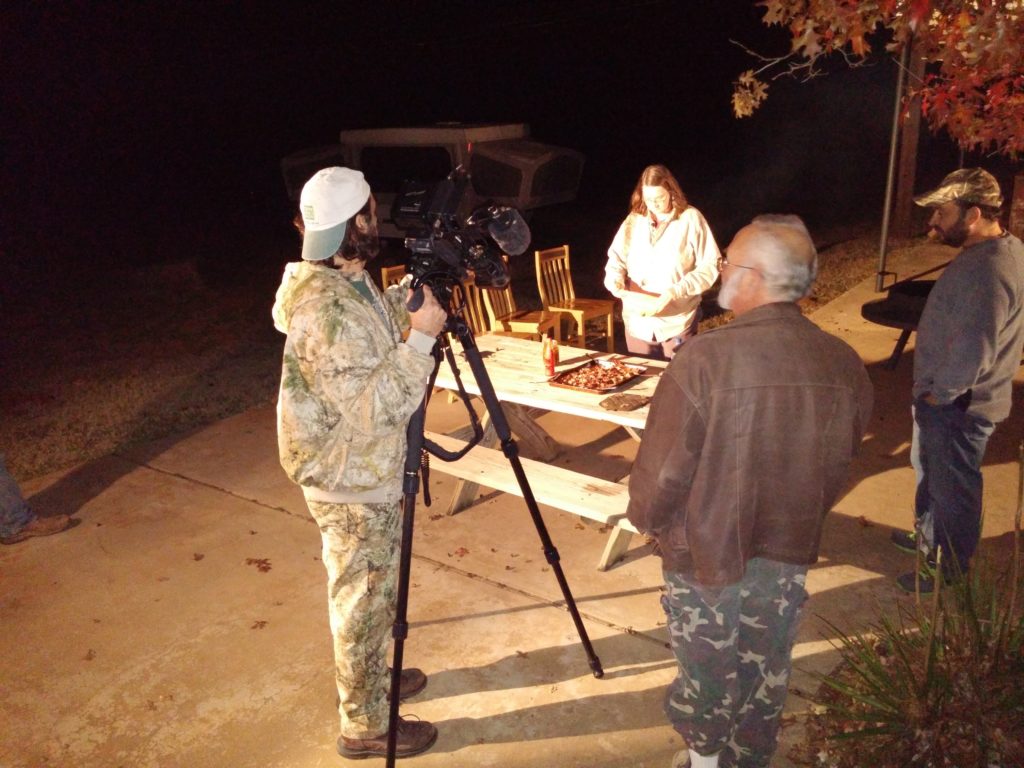
Around 10:00 we all filtered back into the bunkhouse to seek out our respective beds. Morning would be on top of us soon and the deer should be moving. After a long and exciting day 5:00 am came way too early. By 5:30 we were dressed and heading out to do it all over again.
Unfortunately, neither of us saw any deer that morning. Steve and Kyle had a pack of Oryx camped out in front of them but alas, no whitetails. We gave it up near noon and went back to camp for some lunch.
Abe wanted to pull Steve and me aside and do an interview with us for the show. They chose a stunning location in the rocks of the mountain for this.
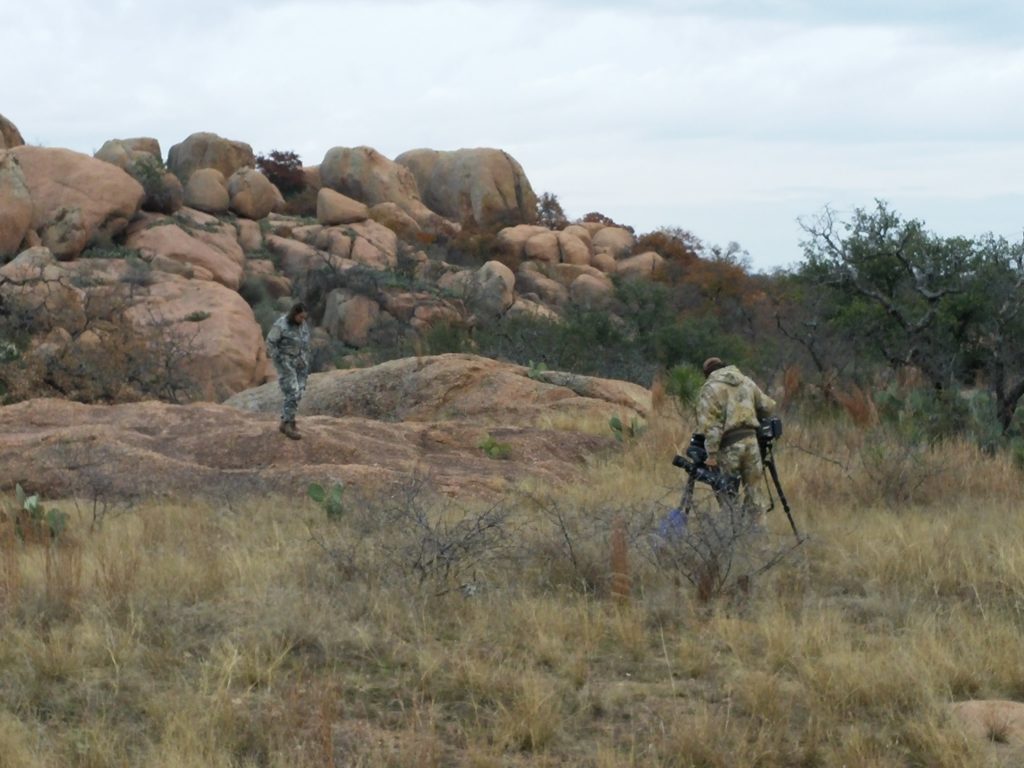
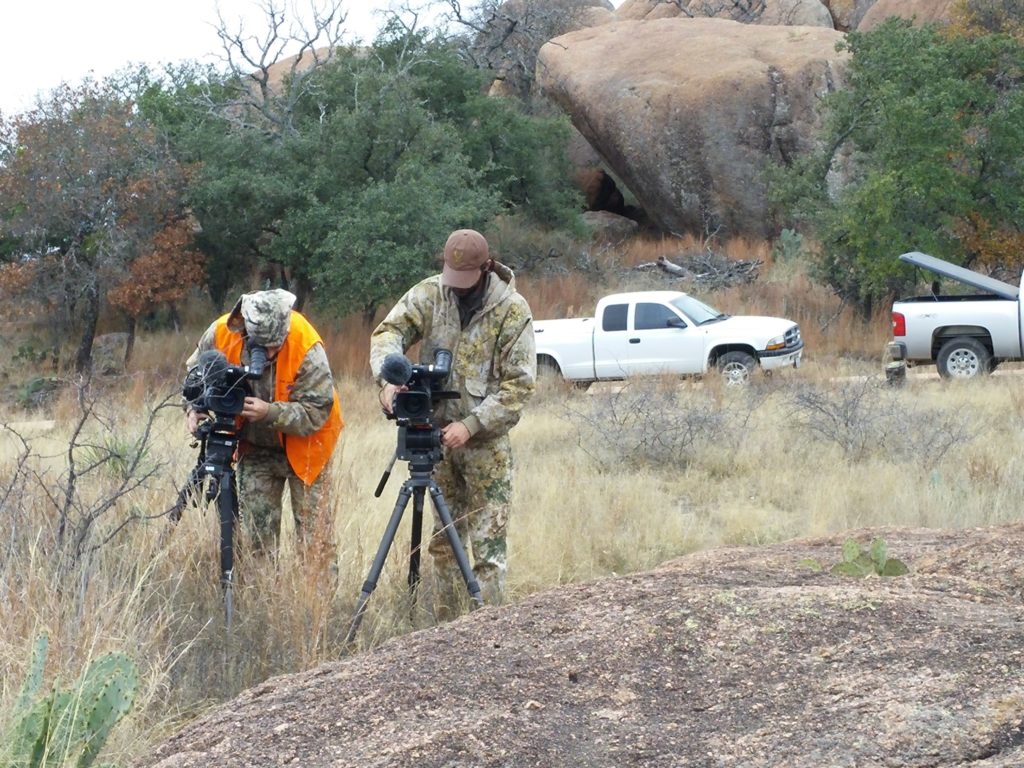
After the interview we went back out to our blinds to see if we could find another deer willing to become a movie star. You will notice however, in the above pictures that the clouds were rolling in and it was getting very overcast. Rain was in the forecast and it didn’t look like it was going to miss that appointment. Neither Abe nor I saw a deer that afternoon. Another Oryx came by but that was all. In fact we had just been talking about meeting up with Steve for some more interview stuff when I heard it. BOOM!
Lots of things were running through my mind. That came from Steve! He just shot. What did he shoot? Was it a buck? A Doe? If a doe it would have to be smaller than mine. Just sayin’.
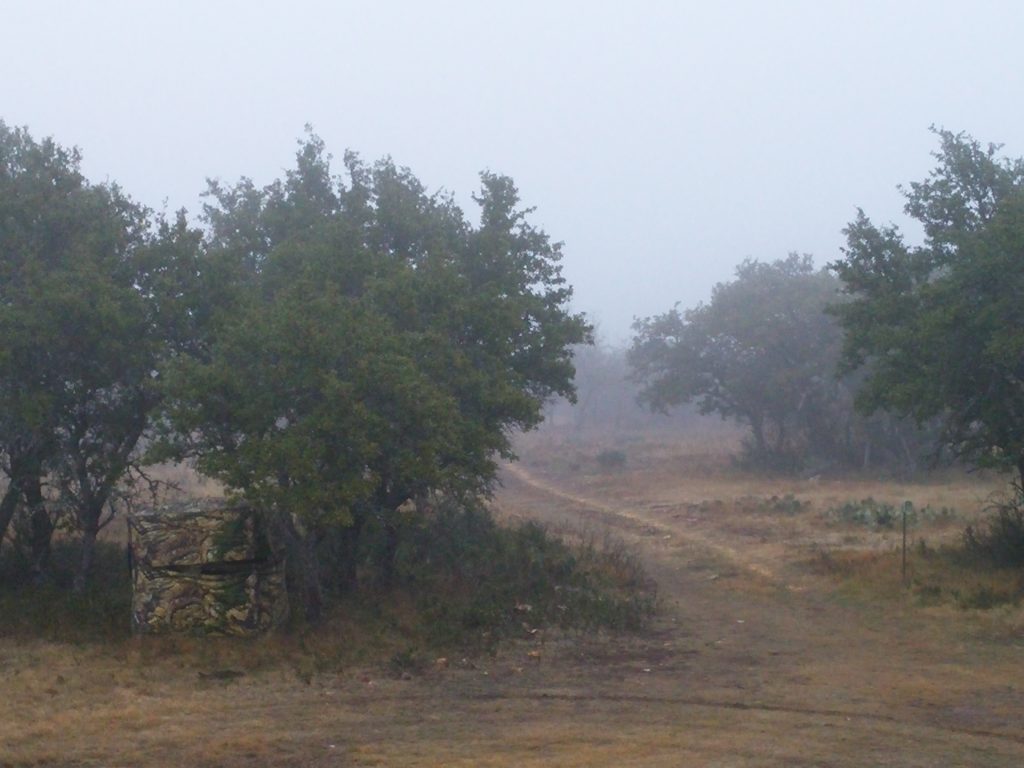
That is the pop up blind that Steve and Kyle shared for their first hunt. The deer Steve shot was coming up that trail on the right from behind the blind. Thankfully they had switched to the elevated blind that afternoon. That is where this photo was taken from. Had they been in the pop up they might not have see the deer at all.
Kyle was the first to see the deer coming and was probably more excited than Steve at their appearance. Steve couldn’t see the deer from his position so Kyle flipped the camera display for Steve to see what he saw. Sure enough, two deer were slowly making their way towards them. Steve readied for the shot and Kyle kept the camera rolling. One of the deer was well ahead of the other and it was the first to present Steve with a shot.
It was a young doe but we were told at orientation it was OK to shoot a young deer. They had certain management goals for the area and a smaller doe was good to take. Only “button” or “nubbin” bucks were heavily frowned upon. That is, a fawn buck which had not yet grown a set of antlers but did have the characteristic bump or nub where the future antlers would grow. Except in very rare instances, these are always given a pass.
But these deer were not bucks and so legal targets on this management hunt. Kyle had a clear view of the deer for the camera and Steve took aim as soon as the lead deer became visible. He waited for Kyle to get some more video and then waited a bit more for the now broadside deer to move its front leg forward. It did. Boom. The deer made it about five feet after the shot.
So that was the shot I had heard. I figured it was Steve but I was not able to get a call through to verify that a deer had been killed. The texts were still being flaky and made no sense when they did get through. Still we loaded up and headed his way. Abe hurried on ahead to get a shot of me arriving and the reaction and congratulating. I got there to find out that Steve had indeed taken a deer. It was a doe and Kyle had gotten it all on camera. WooHoo! Mission complete. To top it off it was NOT bigger than my doe. No, we aren’t competitive or anything. Not at all.
Darkness fell quickly with the overcast sky and looming rain so we loaded things up and headed back to the check station victorious once again. Abe and Kyle stayed a little longer to pack up their gear.
That evening after the weighing and tagging as well as the inevitable ribbing of Steve for letting me get a deer bigger then him, we all sat in the bunkhouse common area eating homemade chili and sharing stories. Even though we still had one more hunt to go we could not talk Abe and Kyle into joining us. They felt they had enough to make the piece they wanted and they were tired. They said they would meet back up with us in the morning when we got back from the hunt. Wusses!
It turned out to be a good decision though (Don’t tell them that part though.) as the promised rain fell light and steady all morning while mist cloaked the ground. But you can’t get a deer while lying in your bunk asleep, (Abe, Kyle) so we stuck it out. Steve and I chose to hunt together in the elevated box blind if only to get out of the mist and rain. It was decided that, since it was Steve’s area, if a shooter came out he would get the chance at it. We did see two deer that morning. Both were bucks and both had well over the maximum number of six points allowed for this hunt so they were off limits. One was a ten point and the other was an eight. It was still really cool to see them. Someday I might get on a hunt where I can actually kill a nice buck like that.
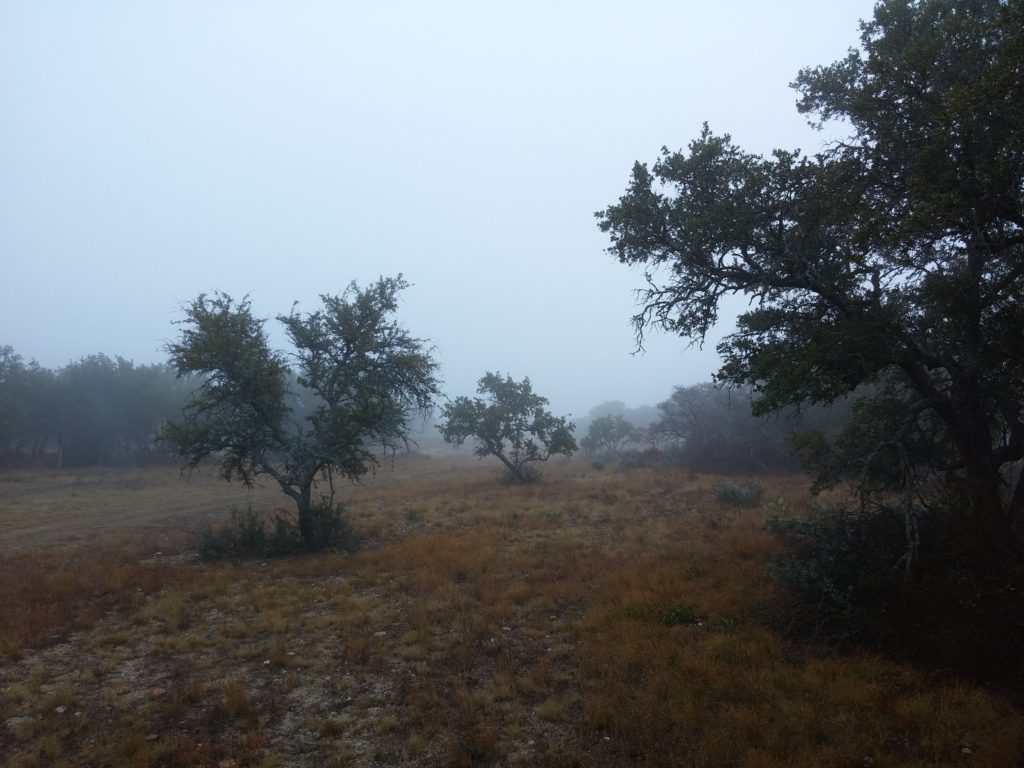
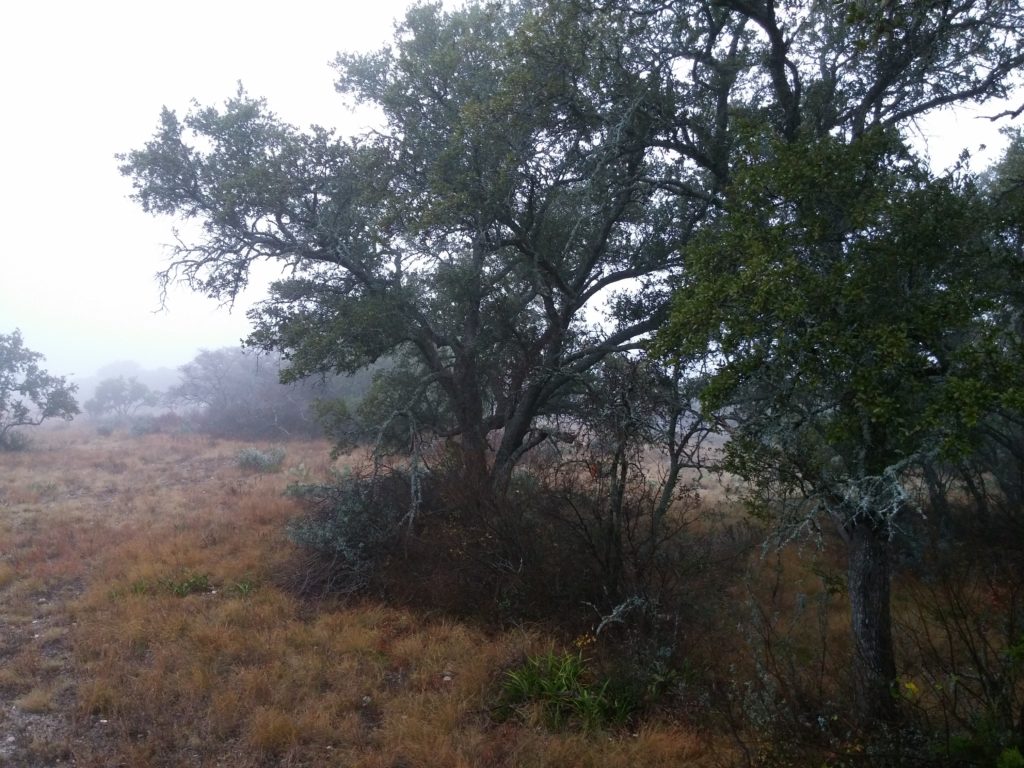
The rain never really slacked up so we called it and began loading up before the road out got too slick to drive. We were not the desperate for another deer to chance getting stuck.
We headed back to the camp one last time. This time there was no deer to unload but that was OK. We had a blast. Abe and Kyle met us as promised and we told them about the morning hunt. They were a bit disappointed that we hadn’t gotten another deer but also relieved that they didn’t miss anything while they slept.
After packing up and saying goodbye to all the other hunters around we gathered for one last picture with the Mason Mountain TV team. It was one heck of an adventure.
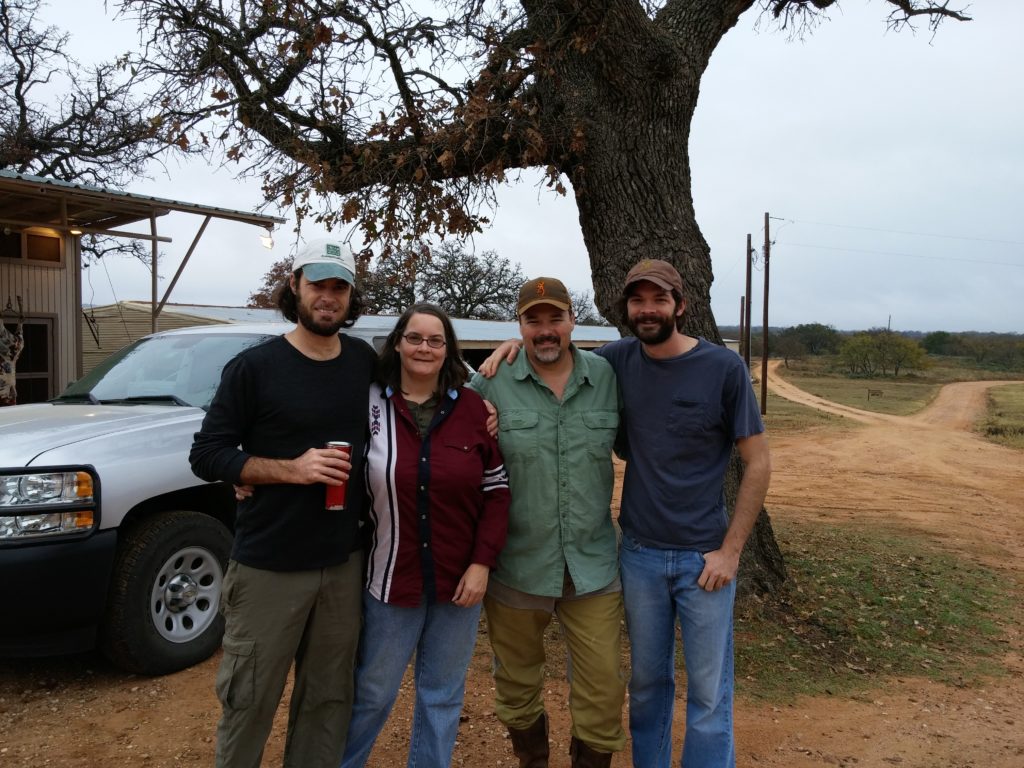
Mason Mountain is a beautiful place and Mark and his crew run one heck of an operation. They were always ready to help any way they could. This will remain one of my most memorable hunts. Maybe someday we will get drawn for one of the exotic hunts there and return for another go.
A special thanks to Abe, Kyle, Mark, Jeff, Kelsey, Jim and two very special whitetail does.
For more stories of our Texas Public Hunt Adventures go HERE.